
 Wildlife
of Mongolia
Brandt's Mountain Finch
Fringillidae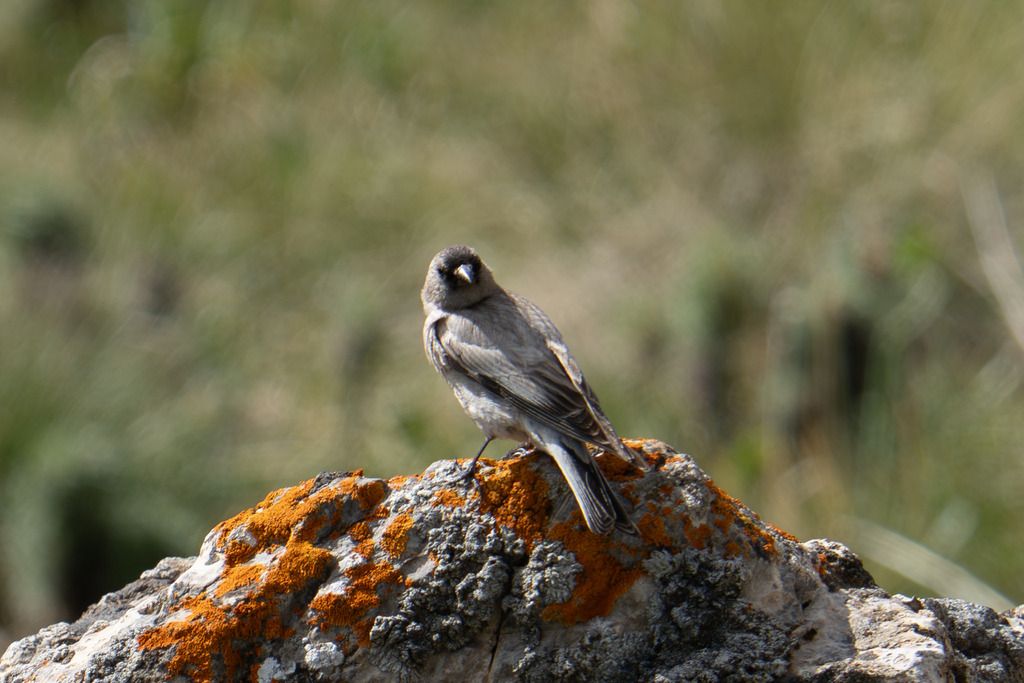
Photo: (c) condorr, some rights reserved (CC BY) · CC BY 4.0 (May be cropped or resized)
Leucosticte brandti
Basic stats
Diet
Seeds and shoots of small alpine plants and grasses, barley from fallow fields, rarely juniper berries
Habitat
Mountain cliffs and crags, barren treeless plateaus, stony fields, stony alpine meadows, high valleys and scree slopes, often in marshy areas or by streams
Range
Afghanistan, Bhutan, China, India, Kazakhstan, Myanmar, Nepal, Pakistan, Russia, Tajikistan, Kyrgyzstan, Tibet and Turkmenistan
Clutch size
3–5 white eggs
Size
16.5–19cm
Weight
26–34g
Brandt's mountain finch is 16.5–19 centimetres long and weighs 26–34 grams: slender or sturdy, light grey to blackish, with a pointed bill, long wings and a notched tail. The male of the nominate subspecies has a dark grey to grey head, blackish on the forehead and face, and a dark brown tail with all the outer feathers edged and tipped whitish. The lesser wing coverts are light grey with pale pink or white tips, the median coverts blackish with broad pale edges, and the throat and underparts grey-brown with a beige tint. Seven subspecies are recognised. (Russian Wikipedia, general species account)
In summer it nests on mountain cliffs and crags, barren treeless plateaus, stony fields, stony alpine meadows, high valleys and scree slopes, often in marshy areas or along streams, and in winter it uses similar places or farmland edges at lower altitude. It is resident and partly migratory, with high-altitude birds descending to the foothills after breeding. It feeds on the ground, often at the edge of melting snow, in flocks of up to 60 in summer and up to 1,000 outside the breeding season. It nests from June to August in a loose cup in a burrow, crevice or rodent hole, and the chicks fledge after 15–17 days. (Russian Wikipedia, general species account)
Quick answers
- What does the Brandt's Mountain Finch eat?
- Seeds and shoots of small alpine plants and grasses, barley from fallow fields, rarely juniper berries
- What habitat does the Brandt's Mountain Finch live in?
- Mountain cliffs and crags, barren treeless plateaus, stony fields, stony alpine meadows, high valleys and scree slopes, often in marshy areas or by streams
- Where is the Brandt's Mountain Finch found?
- Afghanistan, Bhutan, China, India, Kazakhstan, Myanmar, Nepal, Pakistan, Russia, Tajikistan, Kyrgyzstan, Tibet and Turkmenistan
- How many eggs does the Brandt's Mountain Finch lay?
- 3–5 white eggs
- How big is the Brandt's Mountain Finch?
- 16.5–19cm
- How much does the Brandt's Mountain Finch weigh?
- 26–34g