
 Wildlife
of Mongolia
Yellow-throated Bunting
Emberizidae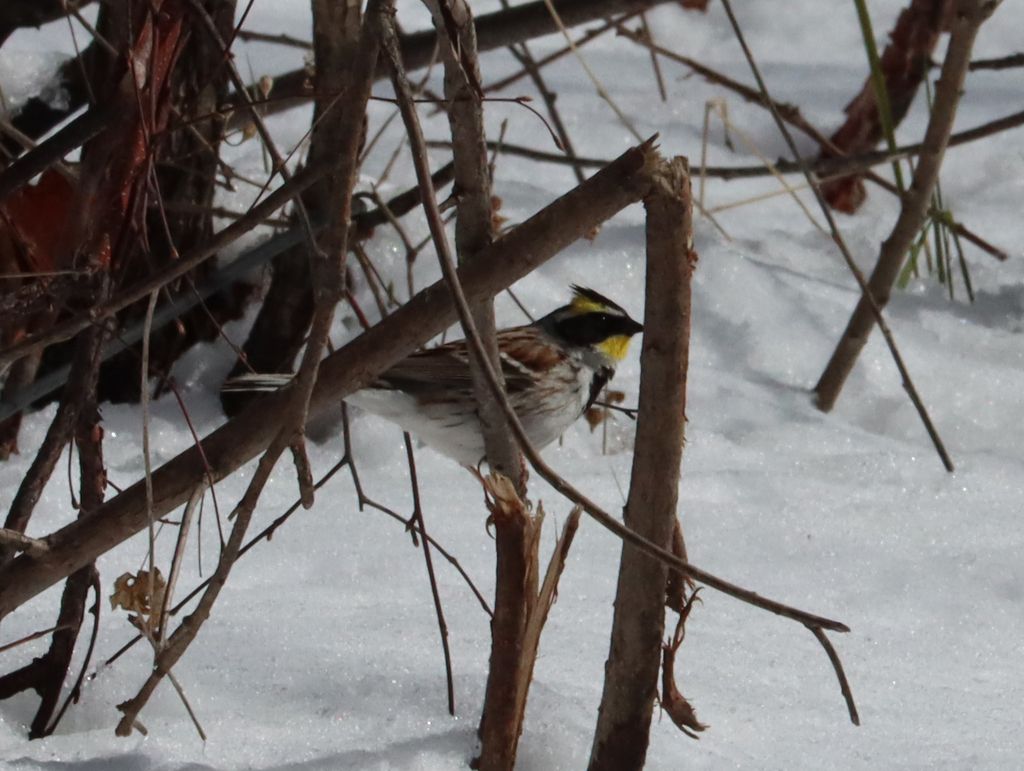
Photo: (c) 夏仲归, some rights reserved (CC BY) · CC BY 4.0 (May be cropped or resized)
Emberiza elegans
Basic stats
Diet
Mostly invertebrates in the breeding season, also seeds
Habitat
Dry broadleaf or mixed woodland, thickets, scrub and forest edges, often near rapids and streams; nests on the ground under a bush
Range
Breeds and winters in East Asia
Clutch size
4–6 eggs
Incubation period
12–14 days
Size
15–16cm
The Yellow-throated bunting is a medium-sized bunting, 15–16 centimetres long, and lives up to its name: the male is unmistakable in a handsome combination of black, white and bright yellow. He has black on the crown, which can be raised into a crest, on the chin and in a mask over the eye, and the rest of the head is yellow, the underside white with a few chestnut streaks and the upperside streaked brown. The tail is brown-black with white outer feathers. The female is less contrasting and never has a black chin. The song is a long, fairly monotonous twittering series, and the sharp tzik call is like the rustic bunting's. (Swedish Wikipedia, general species account)
It both breeds and winters in East Asia. It breeds in dry broadleaf or mixed woodland, in thickets, scrub and forest edges, often near rapids and streams. The female lays four to six eggs and incubates them alone for 12–14 days in a nest placed on the ground under a bush. In the breeding season it feeds mostly on invertebrates but also on seeds. Records in Europe, including Sweden, are not considered certain to be wild birds. (Swedish Wikipedia, general species account)
Quick answers
- What does the Yellow-throated Bunting eat?
- Mostly invertebrates in the breeding season, also seeds
- What habitat does the Yellow-throated Bunting live in?
- Dry broadleaf or mixed woodland, thickets, scrub and forest edges, often near rapids and streams; nests on the ground under a bush
- Where is the Yellow-throated Bunting found?
- Breeds and winters in East Asia
- How many eggs does the Yellow-throated Bunting lay?
- 4–6 eggs
- How long are the eggs of the Yellow-throated Bunting incubated?
- 12–14 days
- How big is the Yellow-throated Bunting?
- 15–16cm