
 Wildlife
of Mongolia
Jankowski's Bunting
Emberizidae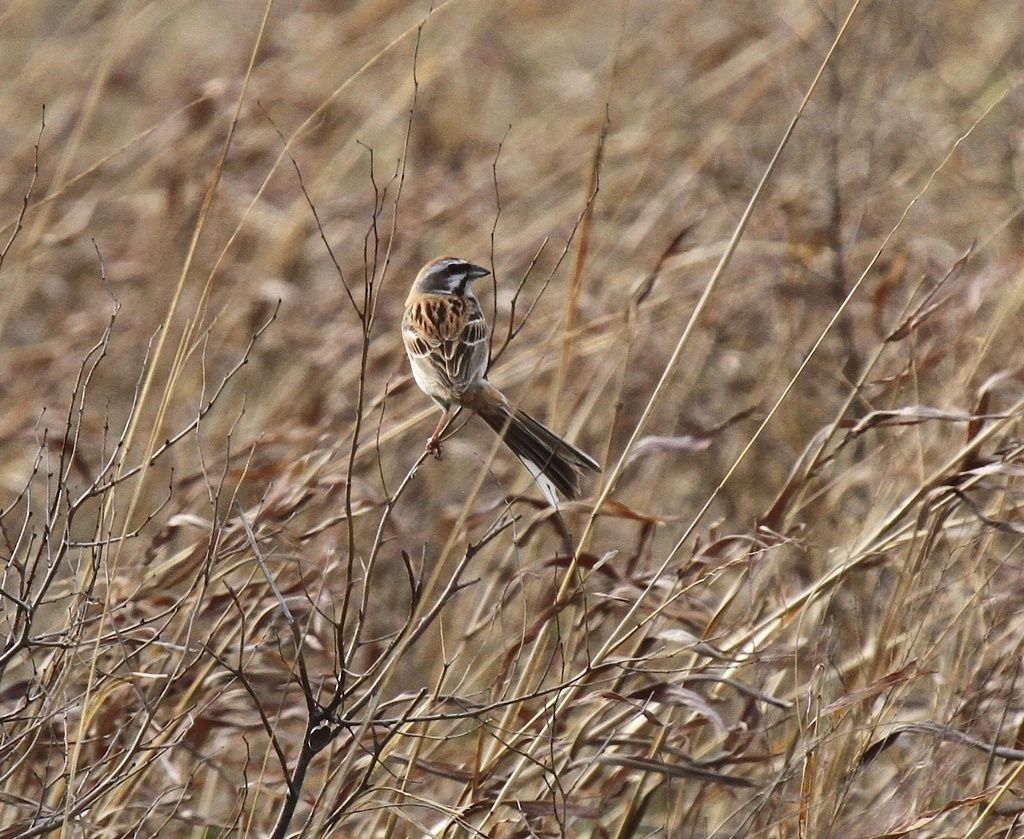
Photo: (c) Mikael Bauer, some rights reserved (CC BY) · CC BY 4.0 (May be cropped or resized)
Emberiza jankowskii
Basic stats
Habitat
Open lowland environments, usually grassland with scattered bushes or small trees on sandy soil
Clutch size
4–7 eggs
Incubation period
11–14 days
Size
16cm
Jankowski's bunting, also called the rufous-backed bunting, is a 16-centimetre, reddish-brown bunting with a clear face pattern, clear streaks on the mantle, white wing bars and a pale underside. The ear coverts are grey, as is the centre of the breast. A male in breeding dress has an oval dark chestnut patch on the belly. The song is rendered in English literature as a simple chu-chu cha-cha cheee, and calls include single or doubled tsitt, thin hsiu and an explosive sstlitt when in danger. (Swedish Wikipedia, general species account)
This East Asian bunting breeds in open lowland environments, most often grassland with scattered bushes or small trees on sandy ground. The breeding season runs from late April to late July, with four to seven eggs incubated for 11–14 days. It is threatened by habitat loss. The scientific name honours the Polish naturalist Michał Jankowski, and the Swedish name apricot bunting refers to its frequent presence near the Siberian apricot tree. (Swedish Wikipedia, general species account)
Quick answers
- What habitat does the Jankowski's Bunting live in?
- Open lowland environments, usually grassland with scattered bushes or small trees on sandy soil
- How many eggs does the Jankowski's Bunting lay?
- 4–7 eggs
- How long are the eggs of the Jankowski's Bunting incubated?
- 11–14 days
- How big is the Jankowski's Bunting?
- 16cm