
 Wildlife
of Mongolia
Yellow-browed Bunting
Emberizidae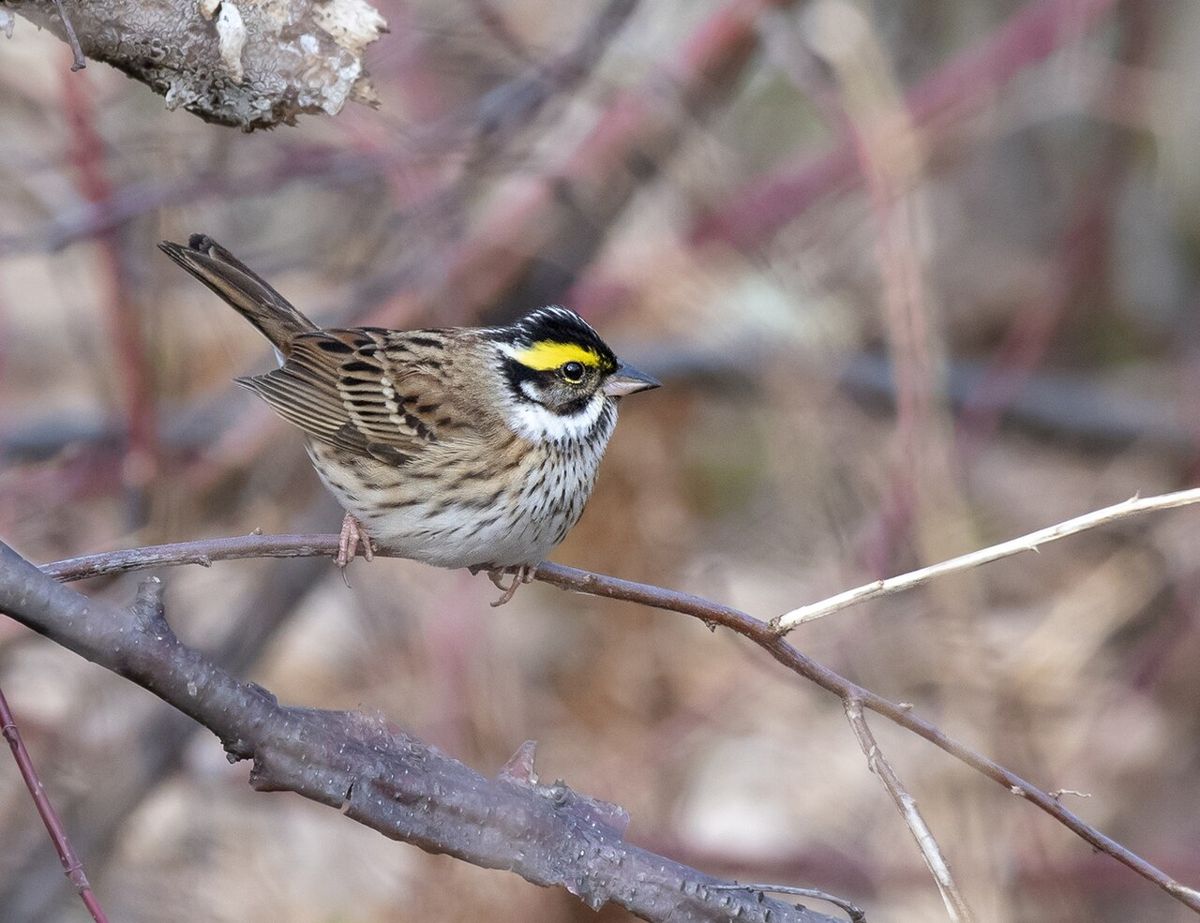
Photo: Griha Hasanov (grihahasanov) · CC BY 4.0 (May be cropped or resized)
Emberiza chrysophrys
Basic stats
Diet
Mostly insects when breeding; probably mainly seeds otherwise; feeds on the ground among low vegetation
Habitat
Damp mixed or coniferous (spruce, pine, larch) forest with well-developed undergrowth; scrub and forest edges in winter
Range
Breeds in central and southern Siberia; winters in eastern and southern China
Clutch size
Usually 4 eggs
Size
About 15cm
Wingspan
About 23cm
Weight
20–24g
The yellow-browed bunting is about 15 centimetres long with a wingspan of about 23 centimetres and a weight of 20–24 grams. This shy, strongly streaked bunting has a head pattern that is constant in all plumages: the sides of the crown are dark brown or blackish and contrast with a pale median stripe, and the ear coverts are dark brown or blackish with a clearly visible white spot at the rear. The supercilium is broad and white but bright yellow above the lores. It can be confused with a female rustic bunting. (Italian Wikipedia, general species account)
A typical taiga bird in the breeding season, it nests in central and southern Siberia, arriving around mid-May and leaving in early September for eastern and southern China. It is extremely shy: in danger it flies to a low perch with a characteristic movement of wings and tail, and it calls with a sharp tsic when it takes off. The well-hidden nest, usually 80–120 centimetres up in a small spruce, is made of dry grass stems lined with wool, hair or fine stems and usually holds four greyish eggs. (Italian Wikipedia, general species account)
Quick answers
- What does the Yellow-browed Bunting eat?
- Mostly insects when breeding; probably mainly seeds otherwise; feeds on the ground among low vegetation
- What habitat does the Yellow-browed Bunting live in?
- Damp mixed or coniferous (spruce, pine, larch) forest with well-developed undergrowth; scrub and forest edges in winter
- Where is the Yellow-browed Bunting found?
- Breeds in central and southern Siberia; winters in eastern and southern China
- How many eggs does the Yellow-browed Bunting lay?
- Usually 4 eggs
- How big is the Yellow-browed Bunting?
- About 15cm
- What is the wingspan of the Yellow-browed Bunting?
- About 23cm
- How much does the Yellow-browed Bunting weigh?
- 20–24g