
 Wildlife
of Mongolia
Yellowhammer
Emberizidae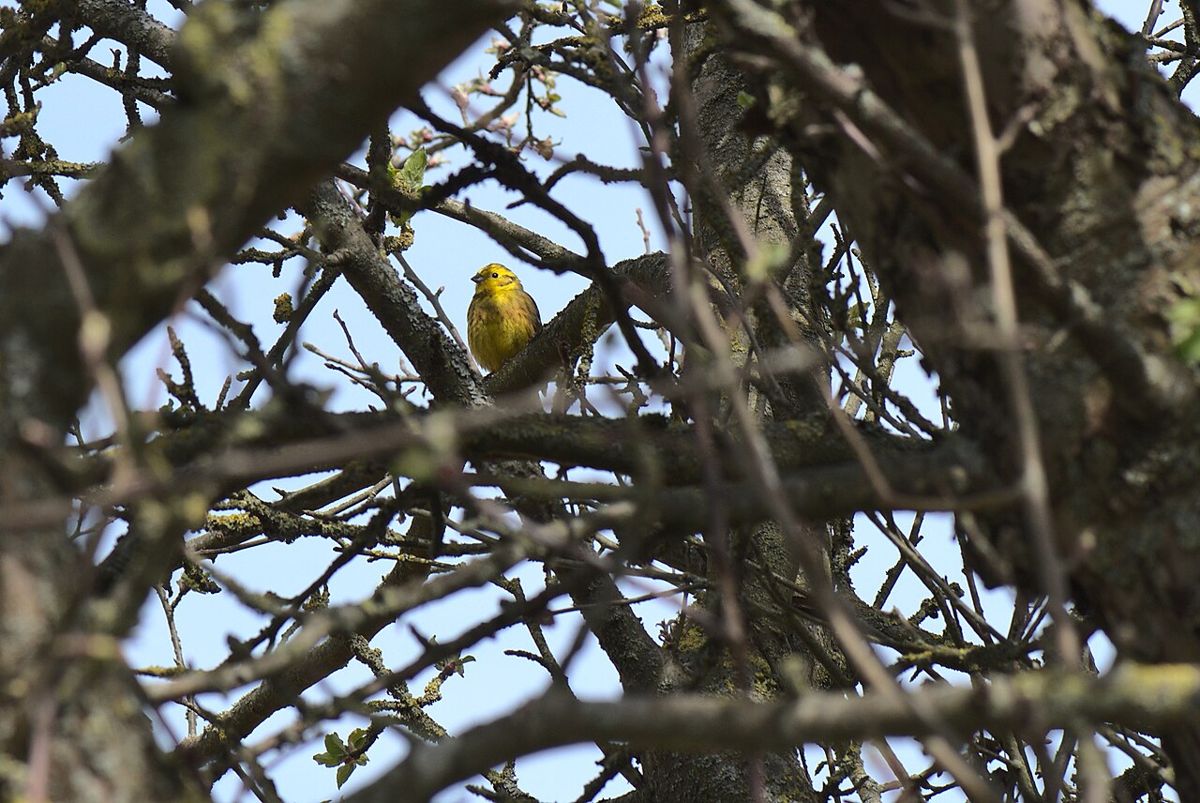
Photo: Flocci Nivis · CC BY 4.0 (May be cropped or resized)
Emberiza citrinella
Basic stats
Habitat
Open country with scattered shrubs or trees
Range
Native to Eurasia; introduced to New Zealand and Australia
Clutch size
3–5 eggs
Incubation period
12–14 days
The yellowhammer is a Eurasian bunting whose breeding male has a bright yellow head and underparts, a streaked brown back and a chestnut rump. Females, juveniles and nonbreeding birds retain the same basic pattern in duller colours. Its familiar song consists of a short repeated phrase followed by a longer final note. The song closely resembles that of the pine bunting, its nearest relative, and the two species can interbreed where their distributions meet. (Wikipedia, general species account)
Yellowhammers favour open landscapes that contain some bushes or trees and often gather in small flocks during winter. Many European birds remain within their breeding range, whereas the eastern subspecies is partly migratory and moves south for winter. Breeding starts mainly in April and May. The female builds a lined cup nest in concealment on or near the ground and lays three to five eggs marked with fine dark lines. She incubates for twelve to fourteen days, and the chicks fledge eleven to thirteen days after hatching. (Wikipedia, general species account)
Quick answers
- What habitat does the Yellowhammer live in?
- Open country with scattered shrubs or trees
- Where is the Yellowhammer found?
- Native to Eurasia; introduced to New Zealand and Australia
- How many eggs does the Yellowhammer lay?
- 3–5 eggs
- How long are the eggs of the Yellowhammer incubated?
- 12–14 days