 Wildlife
of Mongolia
Red-headed Bunting
Emberizidae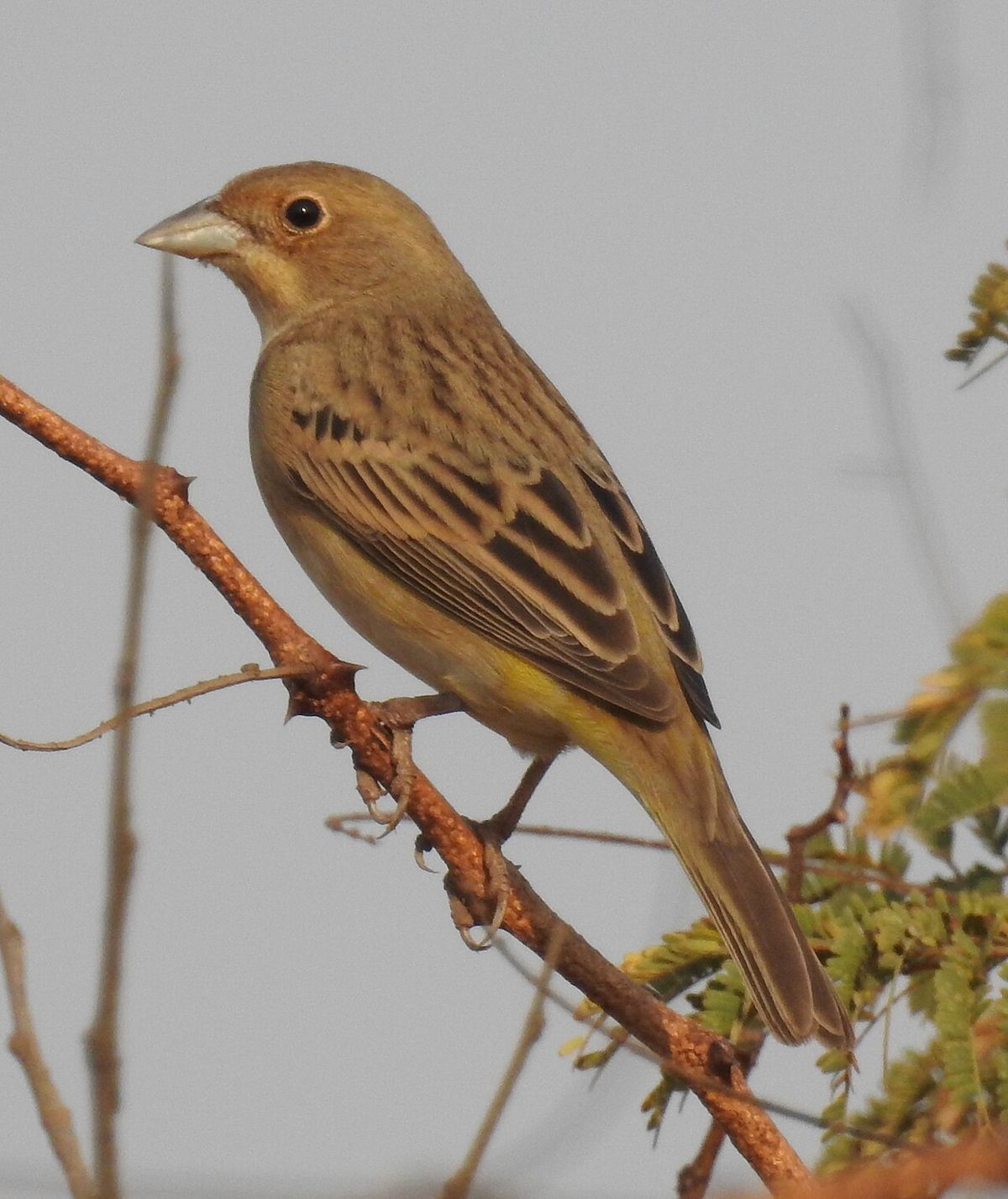
Photo: Dr. Raju Kasambe · CC BY-SA 4.0 (May be cropped or resized)
Emberiza bruniceps
Basic stats
Diet
Seeds and insects, the latter especially when breeding
Habitat
Open scrubland, including farmland; nests in trees or bushes
Range
Breeds in central Asia including Afghanistan, Iran, Kazakhstan, Kyrgyzstan, Mongolia, Tajikistan, Turkmenistan, Uzbekistan and China; winters in India and Bangladesh
Clutch size
3–5 eggs
Size
About 17cm
The red-headed bunting is about 17 centimetres long, with a robust grey bill and a long tail. Breeding males have bright yellow underparts and rump, a greenish streaked back, greyish-brown wing bars, and a chestnut-red head and breast. Females are a faded version of the males, with paler yellow underparts, a grey-brown back and a greyish head. Juveniles resemble females, and both are similar to those of the black-headed bunting and hard to tell apart. (Spanish Wikipedia, general species account)
It is a migrant that breeds in central Asia, in Afghanistan, Iran, Kazakhstan, Kyrgyzstan, Mongolia, Tajikistan, Turkmenistan, Uzbekistan and China, and moves to India and Bangladesh for the winter. It breeds in open scrubland, including farmland, building its nest in trees or bushes and usually laying three to five eggs. It feeds on seeds and insects, the latter especially while breeding. In western Europe records of this vagrant are confused by escaped cage birds. (Spanish Wikipedia and English Wikipedia, general species account)
Quick answers
- What does the Red-headed Bunting eat?
- Seeds and insects, the latter especially when breeding
- What habitat does the Red-headed Bunting live in?
- Open scrubland, including farmland; nests in trees or bushes
- Where is the Red-headed Bunting found?
- Breeds in central Asia including Afghanistan, Iran, Kazakhstan, Kyrgyzstan, Mongolia, Tajikistan, Turkmenistan, Uzbekistan and China; winters in India and Bangladesh
- How many eggs does the Red-headed Bunting lay?
- 3–5 eggs
- How big is the Red-headed Bunting?
- About 17cm