 Wildlife
of Mongolia
Northern Hawk-Owl
Strigidae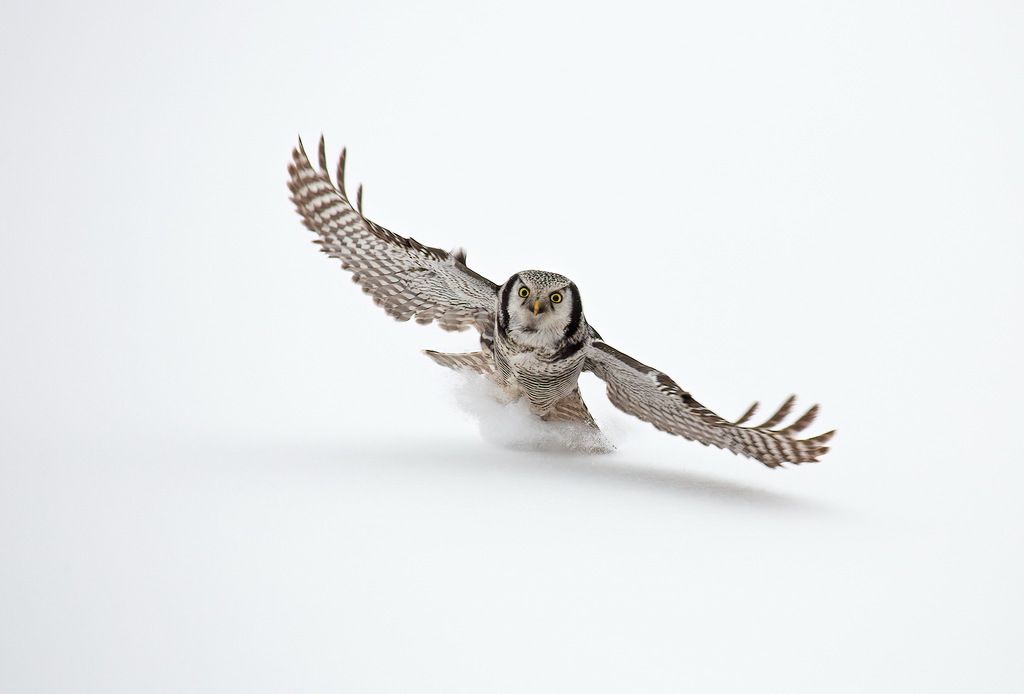
Photo: (c) Вячеслав Юсупов, some rights reserved (CC BY) · CC BY 4.0 (May be cropped or resized)
Surnia ulula
Basic stats
Diet
Rodents in summer; more birds in winter
Habitat
Open northern spruce and tamarack forest near clearings and bogs
Range
Northern forests, with some southward winter movements
Clutch size
3–9 eggs
Incubation period
25–30 days
Size
38–46cm
Wingspan
About 71cm
The Northern Hawk-Owl combines an owl-like face with a distinctly hawk-like outline and flight. It is a medium-sized owl about 38–46 centimetres long, spanning roughly 71 centimetres. The pointed tail is unusually long for an owl, and the pale face is bordered by bold black semicircles. Its back is brown, while the white chest and belly carry fine horizontal brown bars. A black forehead spotted with white adds another useful field mark. Birds often perch conspicuously atop trees or utility poles during daylight. (Minnesota DNR account)
Northern Hawk-Owls inhabit northern forest and bog country, favouring relatively open spruce and tamarack woodland beside clearings. Unlike many owls, they routinely hunt by day. Rodents form the favoured summer food, while birds become more important in winter. Breeding can begin at one year old. Pairs use tree cavities, abandoned nests, or the tops of old stumps. Females lay three to nine eggs between April and June; food supply affects clutch size. Hatching takes 25–30 days, and young fledge at about one month. (Minnesota DNR account)
Quick answers
- What does the Northern Hawk-Owl eat?
- Rodents in summer; more birds in winter
- What habitat does the Northern Hawk-Owl live in?
- Open northern spruce and tamarack forest near clearings and bogs
- Where is the Northern Hawk-Owl found?
- Northern forests, with some southward winter movements
- How many eggs does the Northern Hawk-Owl lay?
- 3–9 eggs
- How long are the eggs of the Northern Hawk-Owl incubated?
- 25–30 days
- How big is the Northern Hawk-Owl?
- 38–46cm
- What is the wingspan of the Northern Hawk-Owl?
- About 71cm