
 Wildlife
of Mongolia
Long-eared Owl
Strigidae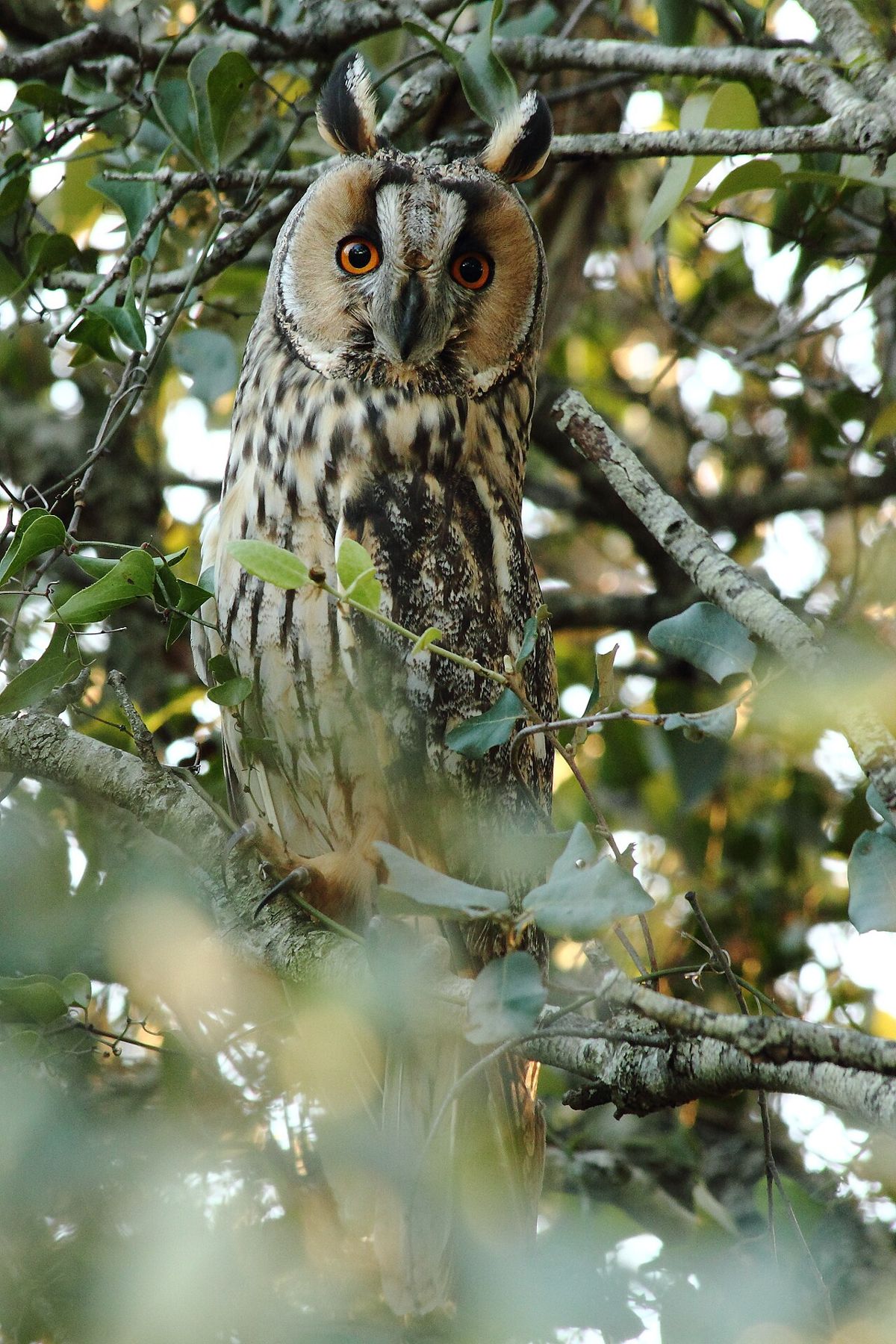
Photo: Luis nunes alberto · CC BY-SA 3.0 (May be cropped or resized)
Asio otus
Basic stats
Diet
Primarily small rodents, especially voles; also birds and insects
Habitat
Semi-open landscapes with dense woodland stands for roosting and nesting and open ground for hunting
Range
Europe, the Palearctic, and North America
The Long-eared Owl is a medium-sized owl with conspicuous erect ear tufts, a pale tawny facial disc edged in black, and mottled ochre, grey, and dark-brown upperparts. The visible tufts are display feathers rather than the openings used for hearing. Its actual ear slits are large and asymmetrically placed, an arrangement that helps locate sounds above and below the bird. In flight, relatively short broad wings and a squarer tail give it different proportions from the Short-eared Owl. (Wikipedia, Long-eared Owl account)
Long-eared Owls use semi-open landscapes, roosting and nesting in dense stands of trees while hunting across nearby open ground. Small rodents, particularly voles, dominate the diet, although birds and insects are taken when regular prey is scarce or local conditions differ. Instead of constructing a nest, a pair commonly occupies one built by another animal, especially a corvid. The species is not strongly territorial or sedentary, and some populations move or disperse in response to prey availability and seasonal conditions. (Wikipedia, Long-eared Owl account)
Quick answers
- What does the Long-eared Owl eat?
- Primarily small rodents, especially voles; also birds and insects
- What habitat does the Long-eared Owl live in?
- Semi-open landscapes with dense woodland stands for roosting and nesting and open ground for hunting
- Where is the Long-eared Owl found?
- Europe, the Palearctic, and North America