
 Wildlife
of Mongolia
Snowy Owl
Strigidae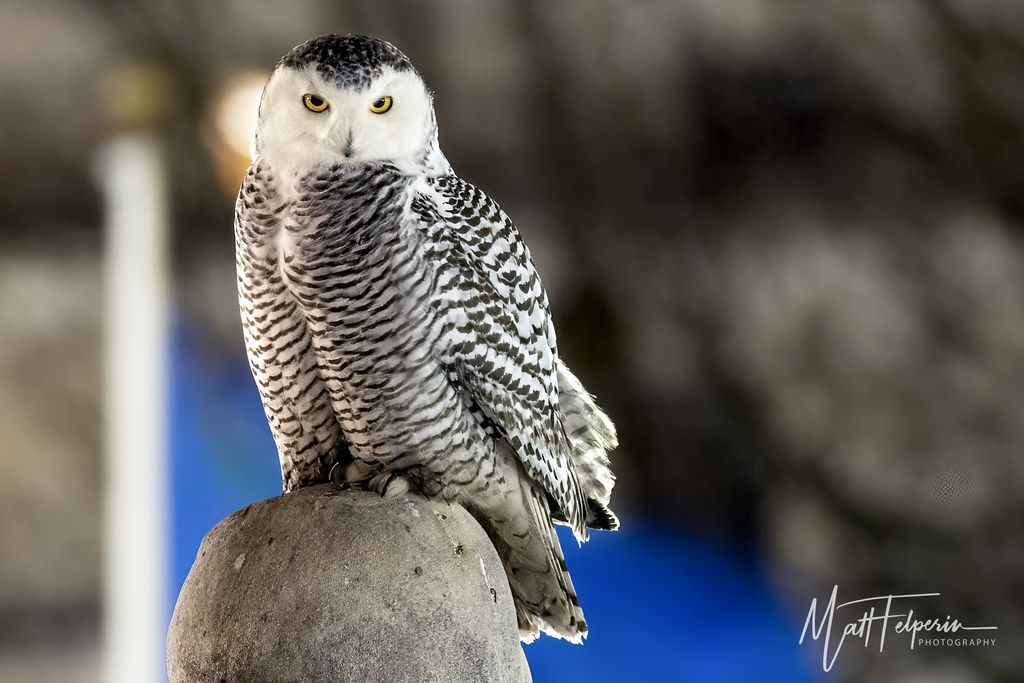
Photo: (c) Matt Felperin, some rights reserved (CC BY) · CC BY 4.0 (May be cropped or resized)
Bubo scandiacus
Basic stats
Diet
Mostly lemmings when breeding; also other mammals and birds
Habitat
Breeding tundra; winter coasts, sea ice, grassland, and farmland
Range
Circumpolar Arctic with highly dispersive seasonal movements
Clutch size
Average about 7 eggs
Incubation period
About 32 days
Size
About 58cm
Weight
About 1.96kg
The Snowy Owl is one of the world’s largest owls, averaging about 58 centimetres long and roughly 1.96 kilograms in one summarized dataset. Its predominantly white plumage suits open Arctic landscapes, while darker markings vary with age and sex. The species occupies a circumpolar range and is exceptionally mobile rather than following a fixed annual route. Breeding birds settle on mesic to dry tundra, often choosing slightly raised ground, while non-breeders also use open grassland, coastlines, ice-covered lakes, sea ice, marshes, fields, and pastures. (Canada Snowy Owl account)
Lemmings dominate the Snowy Owl’s breeding diet and strongly influence where birds settle and whether nesting succeeds. Outside that season, prey broadens to other small mammals and waterbirds. Pairs are monogamous within a breeding season, and laying usually starts around mid-May. The average clutch is about seven eggs, although food-rich years permit larger broods. Only the female incubates, beginning with the first egg, for approximately 32 days; chicks consequently hatch at intervals. Adults disperse from nesting areas mainly during August and September. (Canada Snowy Owl account)
Quick answers
- What does the Snowy Owl eat?
- Mostly lemmings when breeding; also other mammals and birds
- What habitat does the Snowy Owl live in?
- Breeding tundra; winter coasts, sea ice, grassland, and farmland
- Where is the Snowy Owl found?
- Circumpolar Arctic with highly dispersive seasonal movements
- How many eggs does the Snowy Owl lay?
- Average about 7 eggs
- How long are the eggs of the Snowy Owl incubated?
- About 32 days
- How big is the Snowy Owl?
- About 58cm
- How much does the Snowy Owl weigh?
- About 1.96kg