
 Wildlife
of Mongolia
Short-eared Owl
Strigidae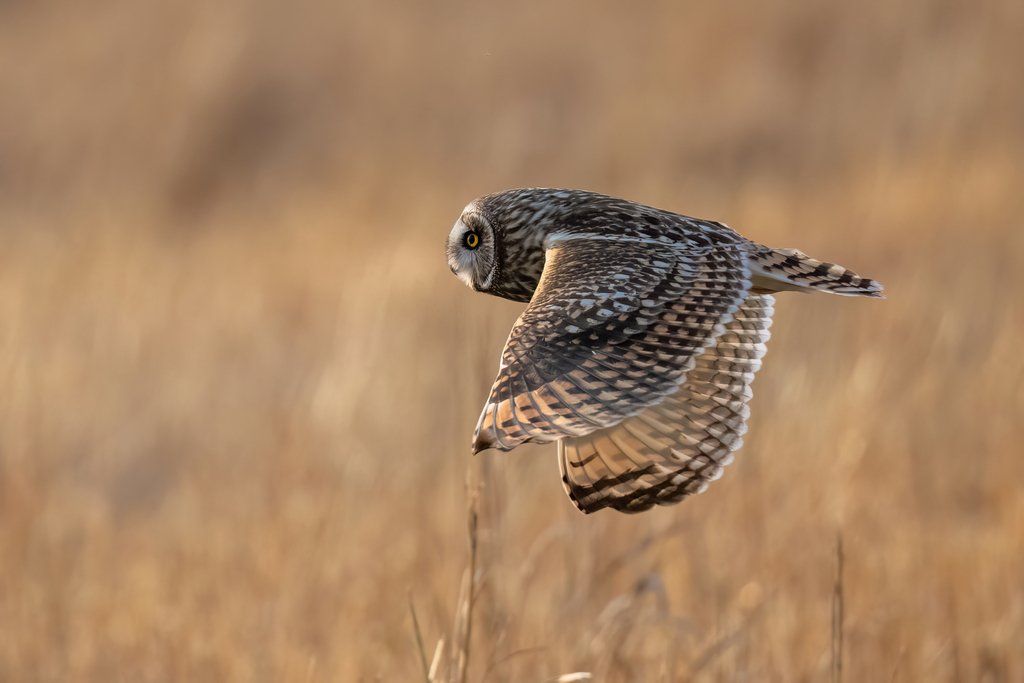
Photo: no rights reserved · CC0
Asio flammeus
Basic stats
Diet
Mostly voles and other small mammals; also small birds and insects
Habitat
Open grassland, prairie, tundra, savanna, and meadow
Range
Widespread across every continent except Antarctica and Australia
Clutch size
Usually 4–7 eggs
Incubation period
21–37 days
Size
34–43cm
Wingspan
85–110cm
Weight
206–475g
The Short-eared Owl is a medium-sized, broad-winged owl measuring 34–43 centimetres and weighing 206–475 grams. Its mottled tawny-brown plumage, barred wings and tail, strongly streaked upper breast, large head, short neck, and conspicuous pale facial discs create a distinctive open-country owl. Yellow-orange eyes are surrounded by dark patches, while the very short ear tufts usually remain hidden. In flight it looks buoyant and moth-like, with irregular wingbeats and long, slim wings spanning 85–110 centimetres. (Wikipedia, Short-eared Owl account)
Short-eared Owls inhabit grassland, prairie, tundra, savanna, and meadow across most of the world, and northern populations may migrate south. They hunt low over open ground, often around dawn, dusk, or even daylight, dropping feet-first onto voles and other small mammals; birds and insects are secondary prey. A lightly lined ground nest is concealed by low plants. Typical clutches contain four to seven eggs, though more may be laid when voles abound, and the female performs most incubation for 21–37 days. (Wikipedia, Short-eared Owl account)
Quick answers
- What does the Short-eared Owl eat?
- Mostly voles and other small mammals; also small birds and insects
- What habitat does the Short-eared Owl live in?
- Open grassland, prairie, tundra, savanna, and meadow
- Where is the Short-eared Owl found?
- Widespread across every continent except Antarctica and Australia
- How many eggs does the Short-eared Owl lay?
- Usually 4–7 eggs
- How long are the eggs of the Short-eared Owl incubated?
- 21–37 days
- How big is the Short-eared Owl?
- 34–43cm
- What is the wingspan of the Short-eared Owl?
- 85–110cm
- How much does the Short-eared Owl weigh?
- 206–475g