
 Wildlife
of Mongolia
Great Cormorant
Phalacrocoracidae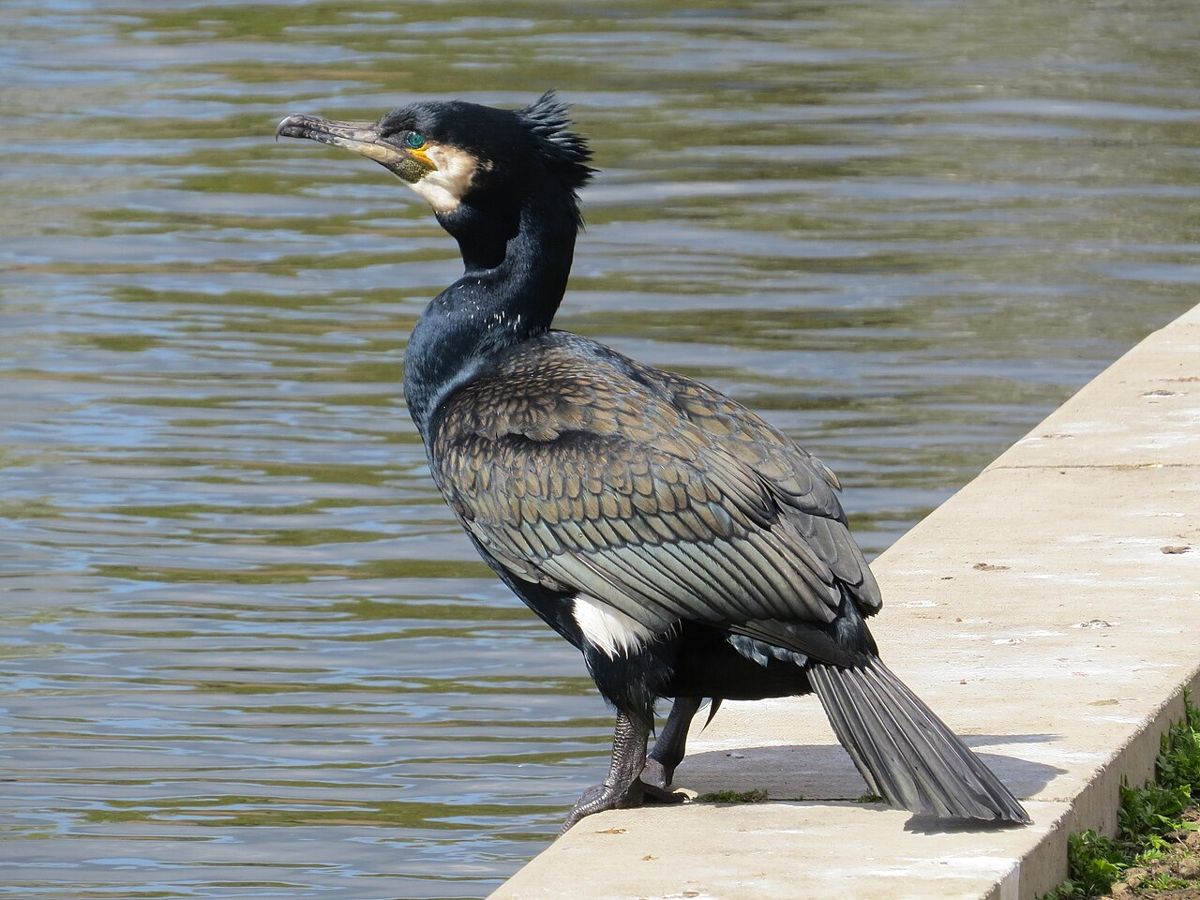
Photo: MPF · CC BY-SA 4.0 (May be cropped or resized)
Phalacrocorax carbo
Basic stats
Habitat
Inshore seas, estuaries, freshwater lakes and rivers; nests near wetlands, rivers and sheltered inshore waters
Range
Much of the Old World, Australasia and the Atlantic coast of North America
Clutch size
3–5 eggs
Incubation period
28–31 days
Weight
1.5–5.3kg depending on subspecies and region
The great cormorant is a large member of the cormorant family, widespread across the Old World, Australasia and the Atlantic coast of North America. Size varies widely across its range: reported weights run from 1.5 to 5.3 kilograms. Males are typically larger than females, and the nominate subspecies averages about 10 percent larger in linear measurements than the smaller continental subspecies sinensis. Six subspecies are accepted, and the closely related Japanese cormorant may be embedded within the species genetically. (Wikipedia, general species account)
A very common and widespread bird, it feeds at sea in inshore waters, in estuaries, and on freshwater lakes and rivers. Northern birds migrate south to escape freezing waters, moving to any unfrozen, fish-rich coast or freshwater, while birds in warmer areas disperse locally. It nests in colonies in trees, on cliff ledges, or on predator-free rocky islands, building a stick nest and often reusing the site year after year. Three to five pale blue or green eggs are incubated for about 28–31 days. (Wikipedia, general species account)
Quick answers
- What habitat does the Great Cormorant live in?
- Inshore seas, estuaries, freshwater lakes and rivers; nests near wetlands, rivers and sheltered inshore waters
- Where is the Great Cormorant found?
- Much of the Old World, Australasia and the Atlantic coast of North America
- How many eggs does the Great Cormorant lay?
- 3–5 eggs
- How long are the eggs of the Great Cormorant incubated?
- 28–31 days
- How much does the Great Cormorant weigh?
- 1.5–5.3kg depending on subspecies and region