
 Wildlife
of Mongolia
Hazel Grouse
Phasianidae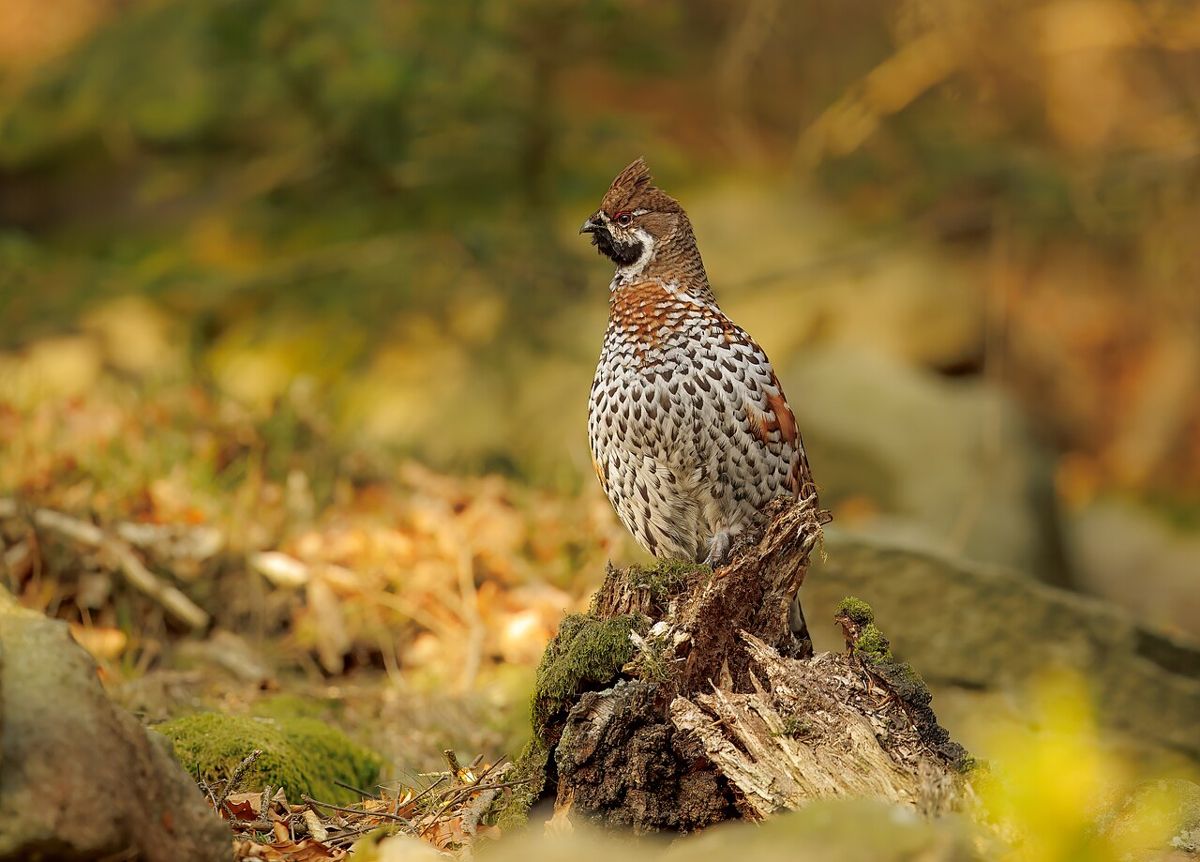
Photo: Lukas Kott · CC BY-SA 4.0 (May be cropped or resized)
Tetrastes bonasia
Basic stats
Diet
Mainly plant material, supplemented by insects during breeding
Habitat
Dense, damp mixed coniferous woodland, especially with spruce
Range
Palearctic from central Europe to Hokkaido
Clutch size
3–6 eggs
Size
35–39cm
The Hazel Grouse is a small, plump grouse measuring 35–39 centimetres. Its finely patterned plumage combines grey upperparts, brown wings, and white underparts flecked with chestnut. The male has a short erectile crest and a black throat sharply bordered in white; the female's crest is shorter and her throat lacks the black patch. In flight, both show a grey tail tipped in black. High, thin calls and the burr of rapidly beating wings often reveal this shy woodland bird before it is seen. (Wikipedia, Hazel Grouse account)
This sedentary grouse occupies dense, damp mixed coniferous woodland across the Palearctic, from central Europe east to Hokkaido. Spruce is particularly characteristic of preferred habitat, and a recognised subspecies extends through Siberia into northern Mongolia. Birds forage on the ground, eating chiefly plant material and supplementing it with insects during the breeding season. The nest is placed on the ground and normally contains three to six eggs. The female alone incubates them and cares for the newly hatched chicks. (Wikipedia, Hazel Grouse account)
Quick answers
- What does the Hazel Grouse eat?
- Mainly plant material, supplemented by insects during breeding
- What habitat does the Hazel Grouse live in?
- Dense, damp mixed coniferous woodland, especially with spruce
- Where is the Hazel Grouse found?
- Palearctic from central Europe to Hokkaido
- How many eggs does the Hazel Grouse lay?
- 3–6 eggs
- How big is the Hazel Grouse?
- 35–39cm