
 Wildlife
of Mongolia
Chukar Partridge
Phasianidae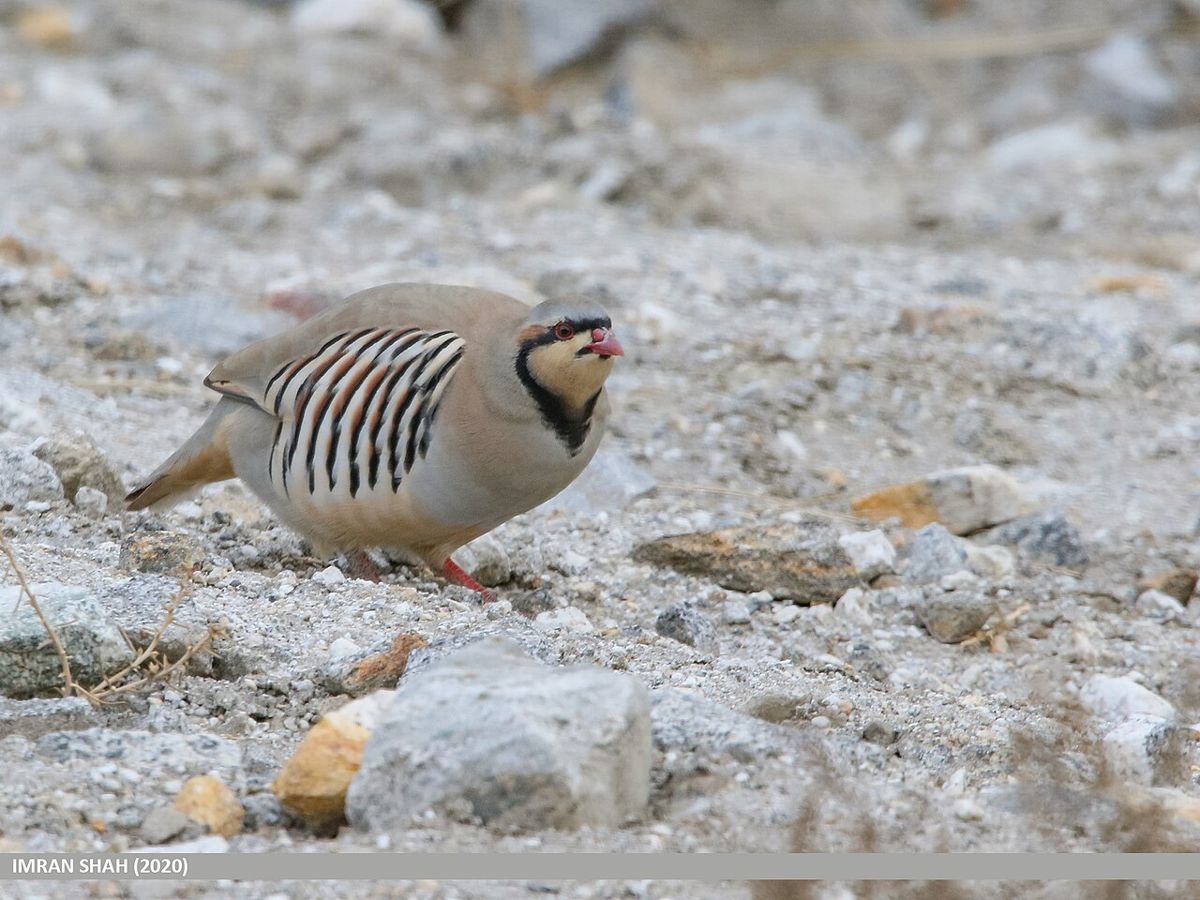
Photo: Imran Shah · CC BY-SA 4.0 (May be cropped or resized)
Alectoris chukar
Basic stats
Diet
Seeds and some insects
Habitat
Rocky open hillsides with grass or scattered scrub
Range
Temperate Asia; native range extends west to southeastern Europe
Clutch size
7–14 eggs
Incubation period
About 23–25 days
Size
32–35 cm
The chukar is a rotund partridge with a light-brown back, grey breast and buff belly. Its white face and throat are enclosed by a sharply defined black band that runs through the eye and forms a gorget. Bold black-and-white flank bars, red legs and a coral-red bill add further field marks. Females resemble males but average slightly smaller and lack the male's spur; the loud repeated chuck-chuck-chukar call gives the bird its English name. (Wikipedia, general species account)
Chukars inhabit rocky, open hillsides with grass, scattered scrub or cultivation, generally avoiding humid, high-rainfall country. The subspecies A. c. dzungarica occurs from northwestern Mongolia toward the Russian Altai, while A. c. potanini is associated with western Mongolia. Outside the breeding season birds gather in coveys, descending into valleys and fields in winter. They eat varied seeds and some insects, nest in a lightly lined ground scrape, and lay seven to fourteen eggs that hatch after about twenty-three to twenty-five days. (Wikipedia, general species account)
Quick answers
- What does the Chukar Partridge eat?
- Seeds and some insects
- What habitat does the Chukar Partridge live in?
- Rocky open hillsides with grass or scattered scrub
- Where is the Chukar Partridge found?
- Temperate Asia; native range extends west to southeastern Europe
- How many eggs does the Chukar Partridge lay?
- 7–14 eggs
- How long are the eggs of the Chukar Partridge incubated?
- About 23–25 days
- How big is the Chukar Partridge?
- 32–35 cm