
 Wildlife
of Mongolia
Black-billed Capercaillie
Phasianidae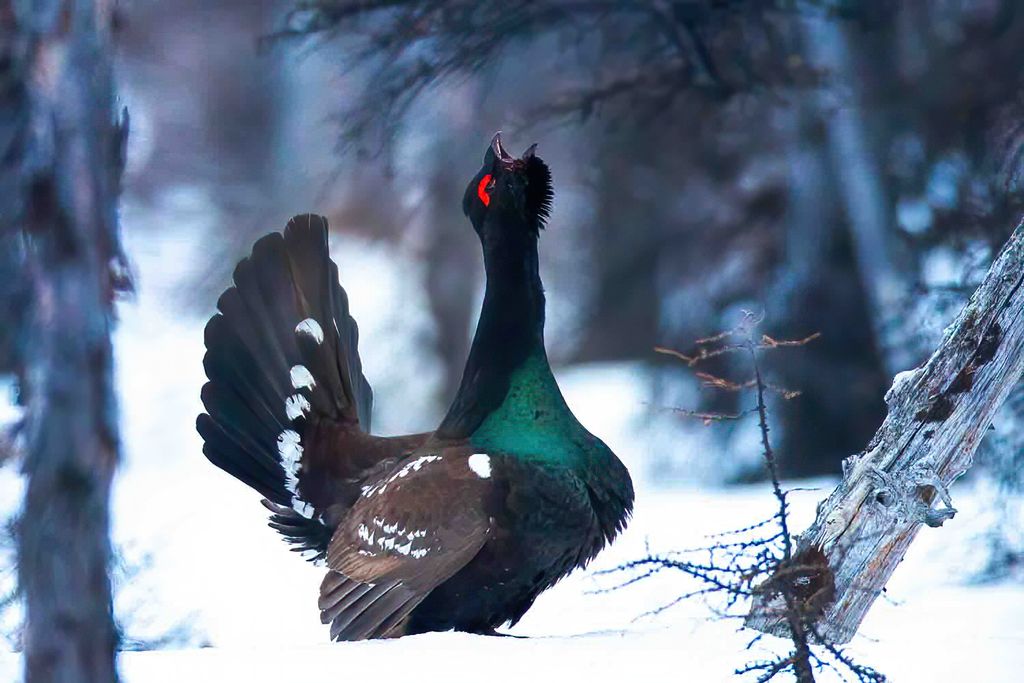
Photo: (c) egorbirder, some rights reserved (CC BY) · CC BY 4.0 (May be cropped or resized)
Tetrao urogalloides
Basic stats
Habitat
Larch taiga forests, more adaptable to open habitat than the western capercaillie
Range
Larch taiga of eastern Siberia and parts of northern Mongolia and China; sedentary
Size
Males 89–97cm; females 69–75cm
Wingspan
75–115cm
Weight
Males 3.4–4.6kg; females 1.7–2.2kg
The male black-billed capercaillie averages 89–97 centimetres long and weighs 3.4–4.6 kilograms, with females around 69–75 centimetres and 1.7–2.2 kilograms; the wingspan is about 75–115 centimetres. Compared with the western capercaillie it is slightly smaller, with a slimmer body and longer neck, a black beak instead of a horn-coloured one, and a longer, more spatulate tail. The eastern capercaillie has a somewhat glossy bluish-black head and neck down to a metallic turquoise breast. (Wikipedia, general species account)
A large grouse closely related to the more widespread western capercaillie, it is sedentary and breeds in the larch taiga forests of eastern Siberia and parts of northern Mongolia and China. In the far west of its range it has been known to hybridise with the western capercaillie. The larch forests it lives in are usually less dense than other taiga, so it is more adaptable to open habitat and tends to avoid thick coniferous forest. (Wikipedia, general species account)
Quick answers
- What habitat does the Black-billed Capercaillie live in?
- Larch taiga forests, more adaptable to open habitat than the western capercaillie
- Where is the Black-billed Capercaillie found?
- Larch taiga of eastern Siberia and parts of northern Mongolia and China; sedentary
- How big is the Black-billed Capercaillie?
- Males 89–97cm; females 69–75cm
- What is the wingspan of the Black-billed Capercaillie?
- 75–115cm
- How much does the Black-billed Capercaillie weigh?
- Males 3.4–4.6kg; females 1.7–2.2kg