 Wildlife
of Mongolia
Willow Ptarmigan
Phasianidae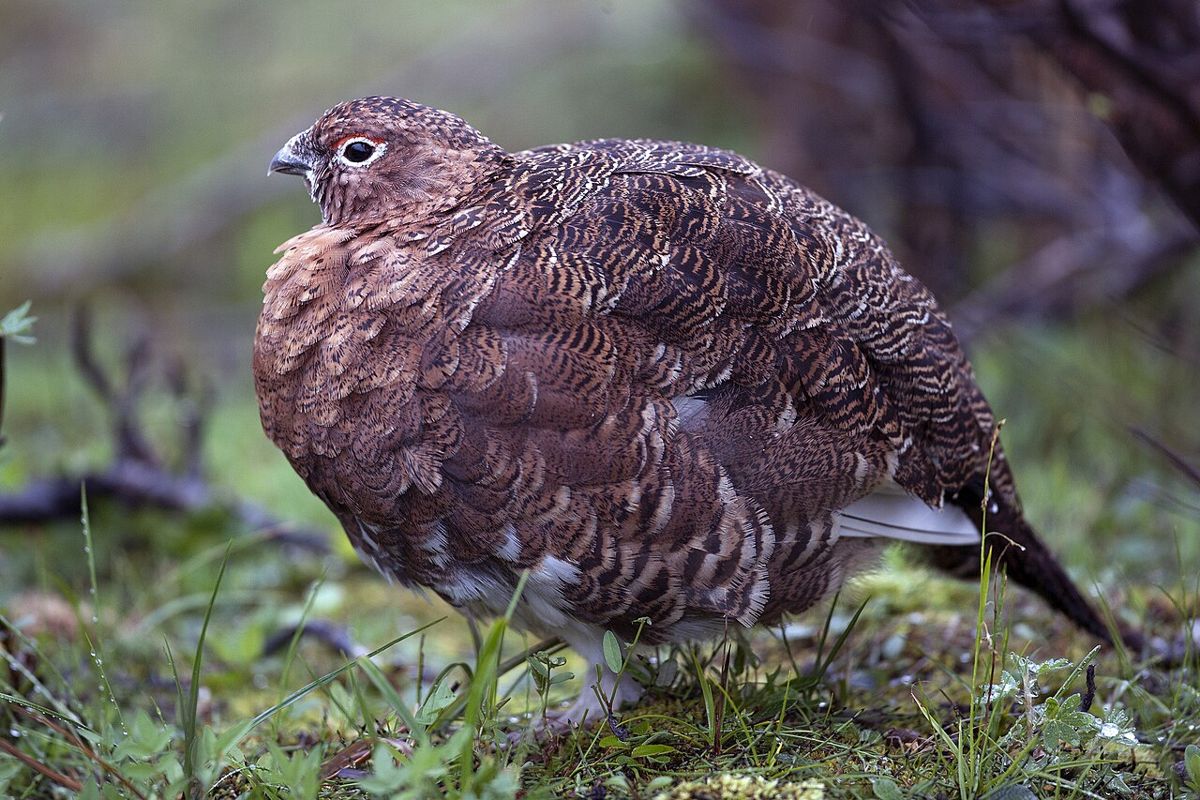
Photo: Yathin S Krishnappa · CC BY-SA 3.0 (May be cropped or resized)
Lagopus lagopus
Basic stats
Diet
Adults eat leaves, flowers, buds, seeds and berries; chicks also take insects
Habitat
Tundra, moorland, sparse birch or pine forest, and willow or alder thickets
Range
Circumboreal northern Eurasia and North America
Clutch size
4–10 eggs
Size
35–44cm
Wingspan
60–65cm
Weight
430–810g
The willow ptarmigan is a stocky, feather-footed grouse of cold northern regions. In summer, adults are marbled brown and reddish with a black tail and white wings; in winter, most of the plumage becomes white while the outer tail feathers remain black. Males show red combs above the eyes, especially during breeding. Adults are about thirty-five to forty-four centimetres long, span roughly sixty to sixty-five centimetres and weigh 430–810 grams. A thicker bill helps distinguish it from the rock ptarmigan. (Wikipedia, general species account)
The species occupies tundra, moorland, sparse birch or pine forest, willow and alder thickets, and subalpine slopes across northern Eurasia and North America. Adults are herbivorous, eating leaves, flowers, buds, seeds and berries in summer and relying heavily on woody buds and twigs in winter; chicks also take insects. Four to ten eggs are laid in a ground scrape. Young leave soon after hatching, and both parents may defend them. Several recognised subspecies occur in western, northern and northeastern Mongolia. (Wikipedia, general species account)
Quick answers
- What does the Willow Ptarmigan eat?
- Adults eat leaves, flowers, buds, seeds and berries; chicks also take insects
- What habitat does the Willow Ptarmigan live in?
- Tundra, moorland, sparse birch or pine forest, and willow or alder thickets
- Where is the Willow Ptarmigan found?
- Circumboreal northern Eurasia and North America
- How many eggs does the Willow Ptarmigan lay?
- 4–10 eggs
- How big is the Willow Ptarmigan?
- 35–44cm
- What is the wingspan of the Willow Ptarmigan?
- 60–65cm
- How much does the Willow Ptarmigan weigh?
- 430–810g