
 Wildlife
of Mongolia
Black-tailed Godwit
Scolopacidae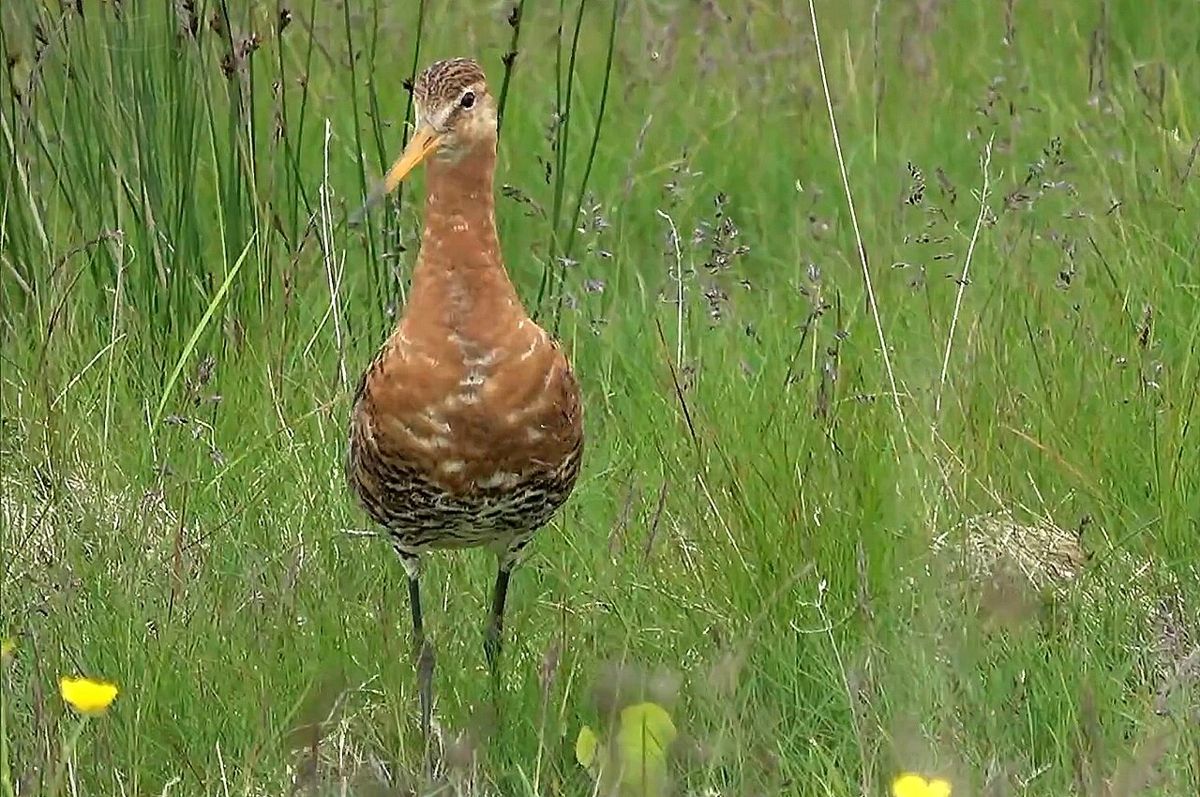
Photo: W. Bulach · CC BY-SA 4.0 (May be cropped or resized)
Limosa limosa
Basic stats
Diet
Mainly invertebrates; aquatic plants during winter and migration
Habitat
Lake margins, damp steppe, fens, bogs and wet grasslands
Range
Breeds from Iceland across Eurasia; winters in Europe, Africa, southern Asia and Australasia
Clutch size
3–6 eggs
Incubation period
22–24 days
The black-tailed godwit is a large shorebird with notably long legs and a long, straight bill. In breeding plumage, its head, neck and breast become orange, while winter plumage is subdued grey-brown. A bold black-and-white wing bar remains a useful feature throughout the year. Compared with the similar bar-tailed godwit, this species is more strongly associated with inland and freshwater sites rather than predominantly coastal settings. (Wikipedia, general species account)
Breeding habitat includes river-valley fens, flooded lake margins, damp steppe, bogs and moorland across a discontinuous Eurasian range. Migrating and wintering birds use muddy estuaries, marshes, floods and inland pools. They probe soft mud or soil for worms, molluscs and insects, while aquatic plants also enter the diet outside the breeding season. The shallow ground nest usually holds three to six eggs; both parents incubate for twenty-two to twenty-four days and lead the precocial chicks away after hatching. (Wikipedia, general species account)
Quick answers
- What does the Black-tailed Godwit eat?
- Mainly invertebrates; aquatic plants during winter and migration
- What habitat does the Black-tailed Godwit live in?
- Lake margins, damp steppe, fens, bogs and wet grasslands
- Where is the Black-tailed Godwit found?
- Breeds from Iceland across Eurasia; winters in Europe, Africa, southern Asia and Australasia
- How many eggs does the Black-tailed Godwit lay?
- 3–6 eggs
- How long are the eggs of the Black-tailed Godwit incubated?
- 22–24 days