
 Wildlife
of Mongolia
Little Stint
Scolopacidae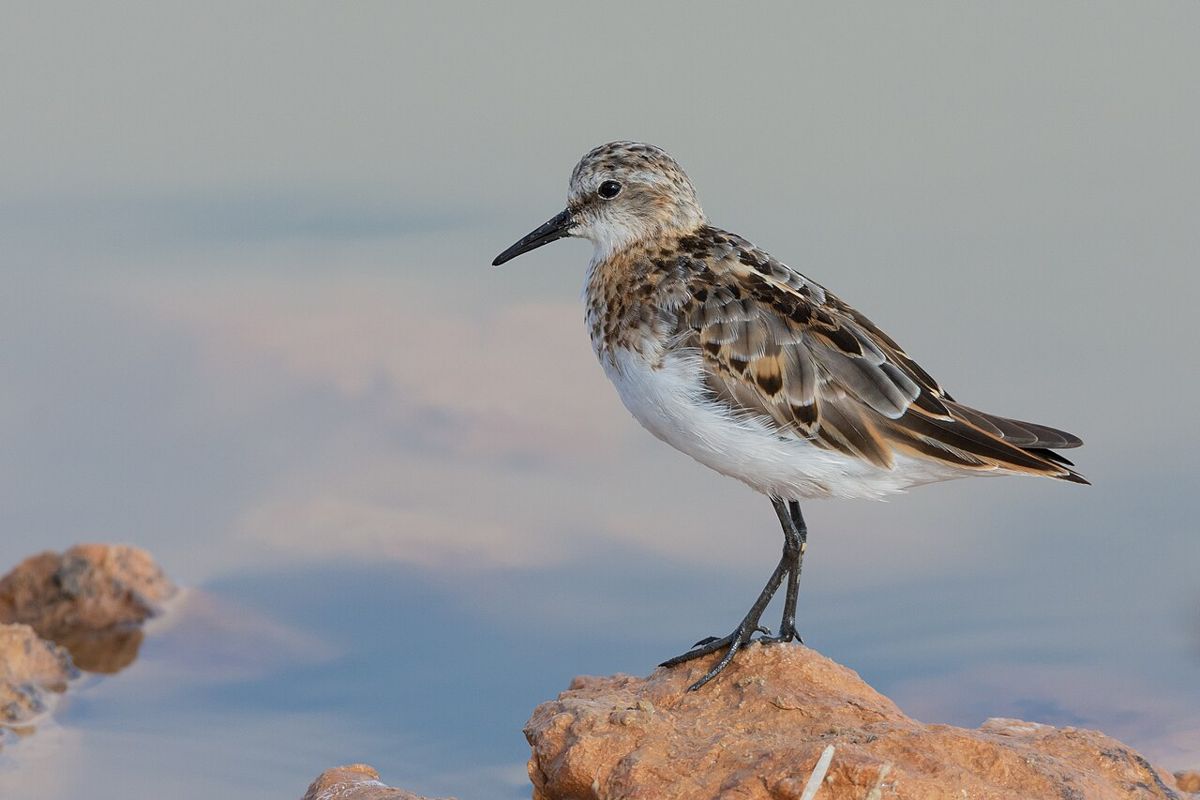
Photo: El Golli Mohamed · CC BY-SA 4.0 (May be cropped or resized)
Calidris minuta
Basic stats
Diet
Small invertebrates picked from mud
Habitat
Breeds on grassy Arctic tundra near wetlands; winters on mudflats and pool margins
Range
Breeds in Arctic Europe and Asia; winters in Africa and southern Asia
Clutch size
3–5 eggs
The little stint is a tiny wader distinguished by its fine dark bill, dark legs, rapid movements and long primary projection. Unlike some similar stints, its toes are unwebbed and the bill narrows to a fine tip. Breeding adults show an orange wash across the breast, a white throat and a strong white V on the back. Juveniles have pale crown stripes and a pinkish breast, while winter plumage is much plainer and more difficult to separate. Its flight call is a sharp stit. (Wikipedia, general species account)
This long-distance migrant breeds across Arctic Europe and Asia, then travels south to winter in Africa and southern Asia. Nesting occurs in low grassy tundra, often beside wetlands, where a bare-ground scrape holds three to five eggs. The species is polygamous, and males and females may incubate separate clutches. Birds take small invertebrates from mud; Arctic chicks depend heavily on flies, especially chironomids. In winter, little stints become gregarious and may form large mixed flocks with dunlins on coastal mudflats or beside inland pools. (Wikipedia, general species account)
Quick answers
- What does the Little Stint eat?
- Small invertebrates picked from mud
- What habitat does the Little Stint live in?
- Breeds on grassy Arctic tundra near wetlands; winters on mudflats and pool margins
- Where is the Little Stint found?
- Breeds in Arctic Europe and Asia; winters in Africa and southern Asia
- How many eggs does the Little Stint lay?
- 3–5 eggs