
 Wildlife
of Mongolia
Curlew Sandpiper
Scolopacidae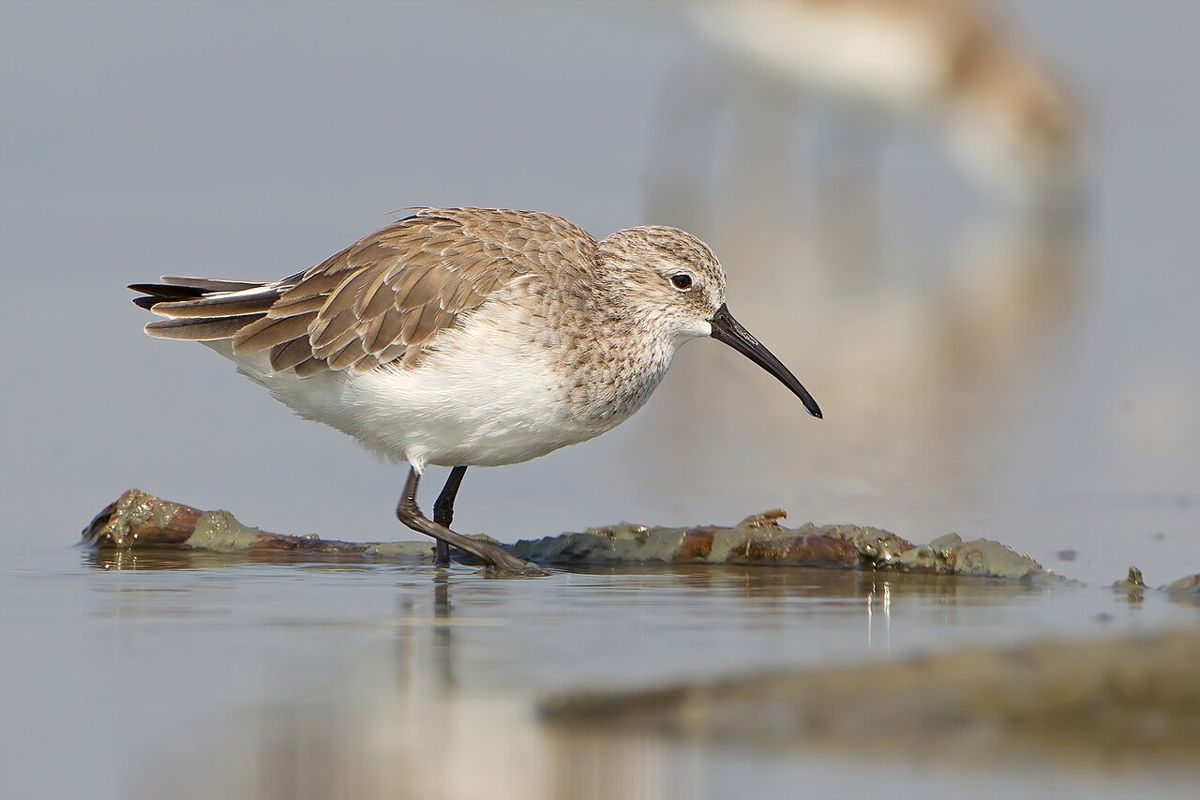
Photo: JJ Harrison · CC BY-SA 3.0 (May be cropped or resized)
Calidris ferruginea
Basic stats
Habitat
Bogs and coastal lowlands of the Siberian Arctic when breeding; tidal mudflats and saltpans in winter
Range
Breeds in the Siberian Arctic; winters in Africa, along the coasts of Oceania and southern Eurasia
Size
18–23cm
Wingspan
38–46cm
Weight
44–117g
The curlew sandpiper is a small wader, 18–23 centimetres long with a wingspan of 38–46 centimetres, weighing 44–117 grams, with a black bill of 32–44 millimetres, dark brown irises and dark grey to black feet. All plumages show a large white patch on the rump, occasionally barred with red in some adults, and a distinctive white stripe across the wing in flight. The non-breeding plumage is brown-greyish above and white below; the breeding plumage is far more striking, with the whole front a deep rusty colour, more intensely in males. (Wikipedia, general species account)
It is a long-distance migrant, breeding in the bogs and coastal lowlands of the Siberian Arctic, arriving in June and staying until August or September. After breeding it migrates south to spend the winter in Africa and along the coasts of Oceania and southern Eurasia, occupying tidal mudflats and saltpans. Like most waders it moults yearly, shedding old feathers and growing new ones, and it has three main plumages that change with maturity and season. (Wikipedia, general species account)
Quick answers
- What habitat does the Curlew Sandpiper live in?
- Bogs and coastal lowlands of the Siberian Arctic when breeding; tidal mudflats and saltpans in winter
- Where is the Curlew Sandpiper found?
- Breeds in the Siberian Arctic; winters in Africa, along the coasts of Oceania and southern Eurasia
- How big is the Curlew Sandpiper?
- 18–23cm
- What is the wingspan of the Curlew Sandpiper?
- 38–46cm
- How much does the Curlew Sandpiper weigh?
- 44–117g