
 Wildlife
of Mongolia
Common Greenshank
Scolopacidae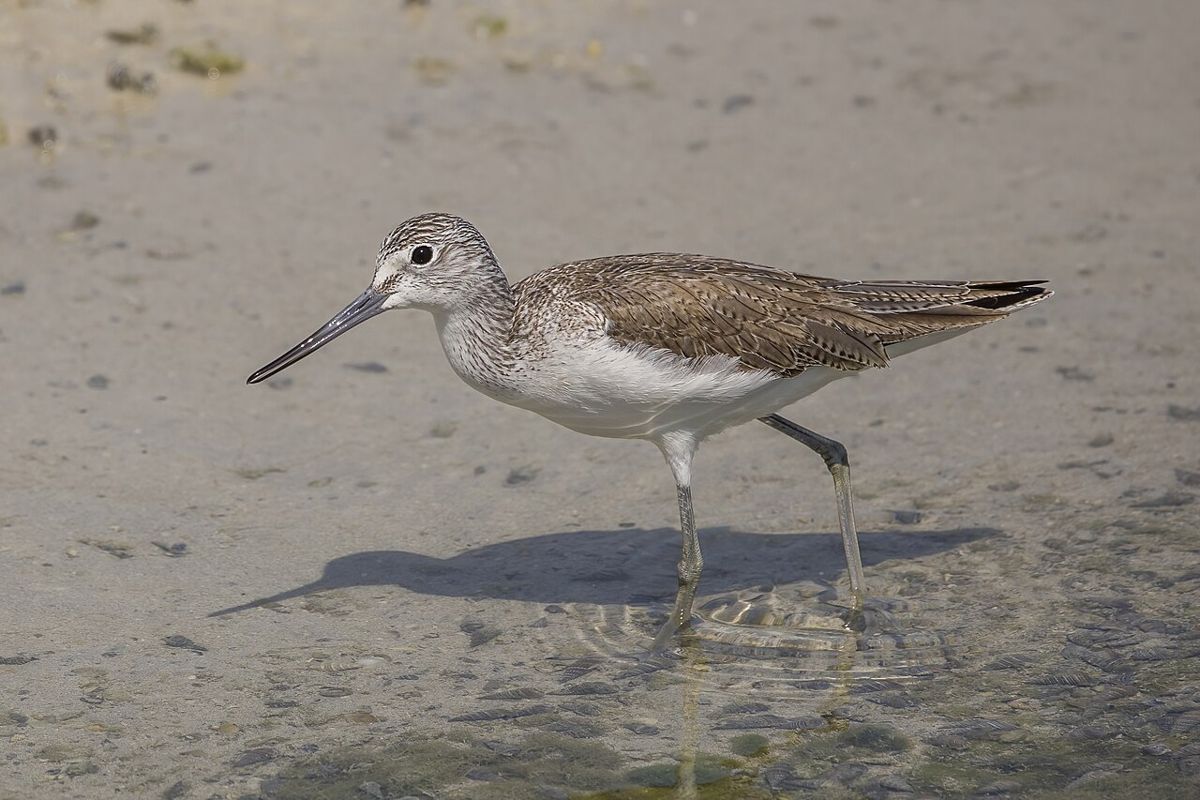
Photo: Charles J. Sharp · CC BY-SA 4.0 (May be cropped or resized)
Tringa nebularia
Basic stats
Diet
Small invertebrates, also small fish and amphibians
Habitat
Dry ground near marshy areas when breeding; usually fresh water in winter
Range
Breeds from northern Scotland east across northern Europe and the Palearctic; winters in Africa, the Indian subcontinent and Australasia
Clutch size
About 4 eggs
Common greenshanks are brown in breeding plumage and grey-brown in winter. Seen in water they can look very like marsh sandpipers, but the shape of the lower bill gives the greenshank's bill a slightly upturned appearance. They have long greenish legs and a long bill with a grey base, and show a white wedge on the back in flight. They are somewhat larger than the related common redshank. The usual call is a rapid series of three short fluty notes, teu-teu-teu. (Wikipedia, general species account)
This subarctic wader breeds from northern Scotland east across northern Europe and the Palearctic, on dry ground near marshy areas, laying about four eggs in a ground scrape. It is migratory, wintering in Africa, the Indian subcontinent and Australasia, usually on fresh water, and it has turned up as a vagrant in the Americas. Like most waders it feeds on small invertebrates but will also take small fish and amphibians. (Wikipedia, general species account)
Quick answers
- What does the Common Greenshank eat?
- Small invertebrates, also small fish and amphibians
- What habitat does the Common Greenshank live in?
- Dry ground near marshy areas when breeding; usually fresh water in winter
- Where is the Common Greenshank found?
- Breeds from northern Scotland east across northern Europe and the Palearctic; winters in Africa, the Indian subcontinent and Australasia
- How many eggs does the Common Greenshank lay?
- About 4 eggs