
 Wildlife
of Mongolia
Marsh Sandpiper
Scolopacidae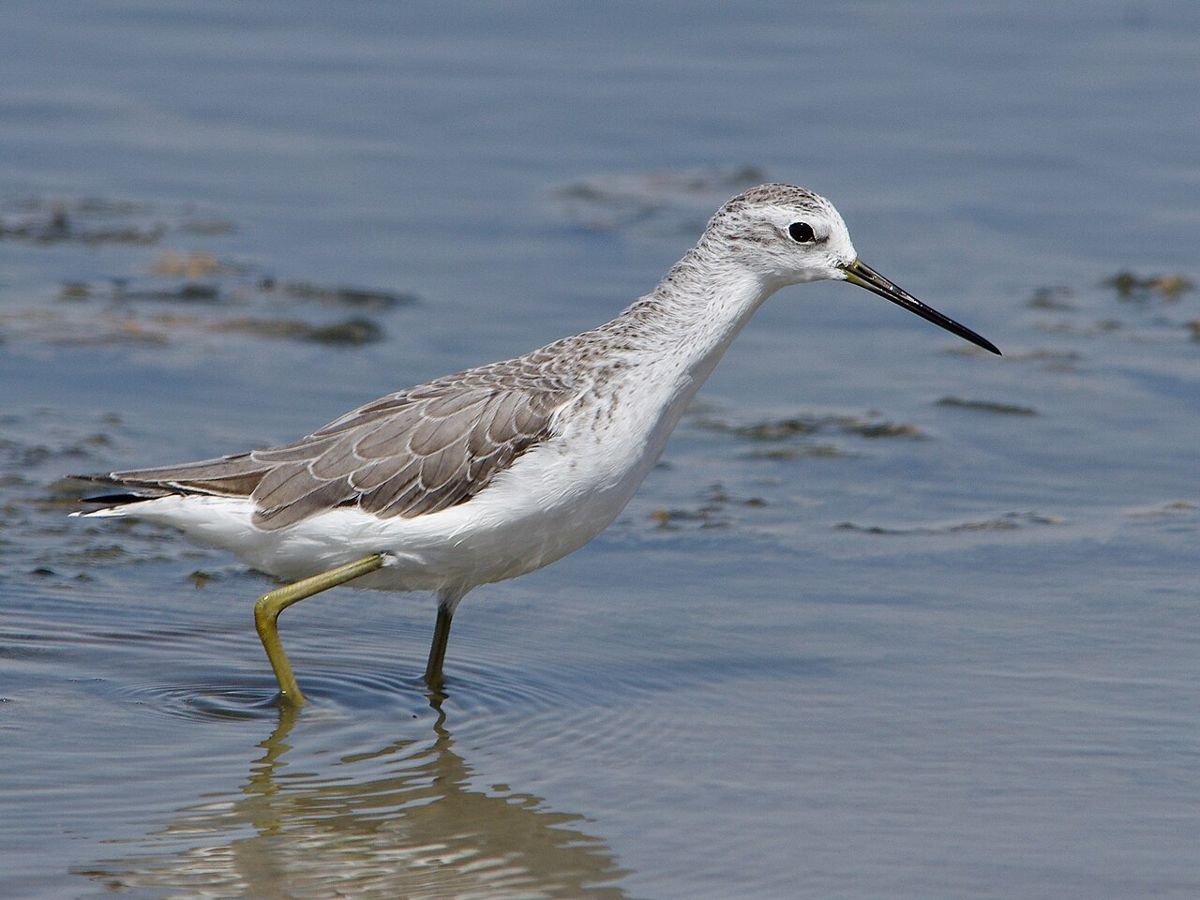
Photo: El Golli Mohamed · CC BY-SA 4.0 (May be cropped or resized)
Tringa stagnatilis
Basic stats
Habitat
Open grassy steppe and taiga wetlands when breeding; freshwater swamps and lakes in winter
Range
Breeds from easternmost Europe to the Russian Far East; winters mainly in Africa and India, some to Southeast Asia and Australia
The marsh sandpiper resembles a small, elegant greenshank, with a long fine bill and very long yellowish legs. Like the greenshank it is greyish brown in breeding plumage and paler in winter, and shows a white wedge up the back in flight. It is more closely related to the common redshank and the wood sandpiper, a group of smallish shanks that tend to have reddish legs and, in breeding plumage, a subdued light brown back with darker mottling and diffuse small brownish spots on the breast and neck. (Wikipedia, general species account)
A small wader, it breeds in the Palearctic in open grassy steppe and taiga wetlands from easternmost Europe to the Russian Far East. It is migratory, with most birds wintering in Africa and India and some going to Southeast Asia and Australia. It prefers freshwater wetlands such as swamps and lakes in winter and is usually seen singly or in small groups. It is a rare vagrant to North America, mostly in Alaska and California. (Wikipedia, general species account)
Quick answers
- What habitat does the Marsh Sandpiper live in?
- Open grassy steppe and taiga wetlands when breeding; freshwater swamps and lakes in winter
- Where is the Marsh Sandpiper found?
- Breeds from easternmost Europe to the Russian Far East; winters mainly in Africa and India, some to Southeast Asia and Australia