
 Wildlife
of Mongolia
Pallas's Reed Bunting
Emberizidae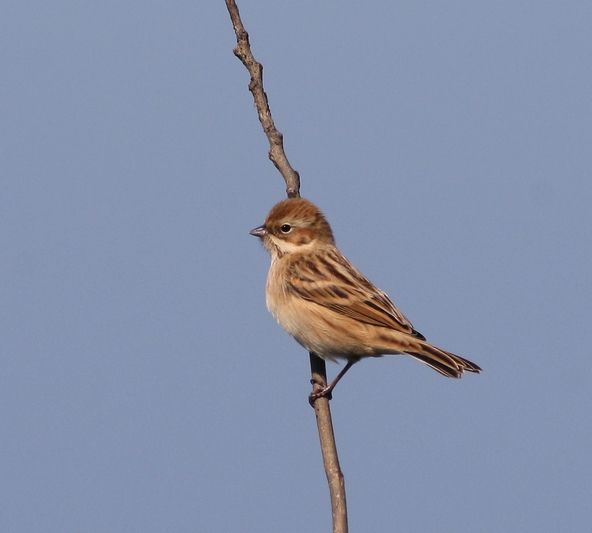
Photo: Rémi Bigonneau · CC BY-SA 3.0 (May be cropped or resized)
Emberiza pallasi
Basic stats
Diet
Seeds; insects when feeding young
Habitat
Tundra scrub near water and open larch forest
Range
Northern and central Asia; breeds to Mongolia
Clutch size
3–5 eggs
Incubation period
11 days
Pallas's reed bunting is a small Old World bunting with a compact, seed-eating bill. A breeding male shows a black head and throat, a white collar and white underparts, and a heavily streaked grey back. Females are duller, with a streaked brown head and relatively little streaking below. The male's song is a repeated, short sherp note. These features help separate it from the larger and browner common reed bunting. (Wikipedia, general species account)
The species breeds across northern and central Asia, including Mongolia, and migrates to southeastern Asia for winter. It frequents tundra scrub beside water and also uses drier open country such as open larch forest. Adults eat seeds, while insects become important when young are being fed. Breeding falls between June and August; a grass-and-sedge nest is placed in a bush, and the clutch contains three to five cream eggs marked with fine lines. (Wikipedia, general species account)
Quick answers
- What does the Pallas's Reed Bunting eat?
- Seeds; insects when feeding young
- What habitat does the Pallas's Reed Bunting live in?
- Tundra scrub near water and open larch forest
- Where is the Pallas's Reed Bunting found?
- Northern and central Asia; breeds to Mongolia
- How many eggs does the Pallas's Reed Bunting lay?
- 3–5 eggs
- How long are the eggs of the Pallas's Reed Bunting incubated?
- 11 days