
 Wildlife
of Mongolia
White-headed Duck
Anatidae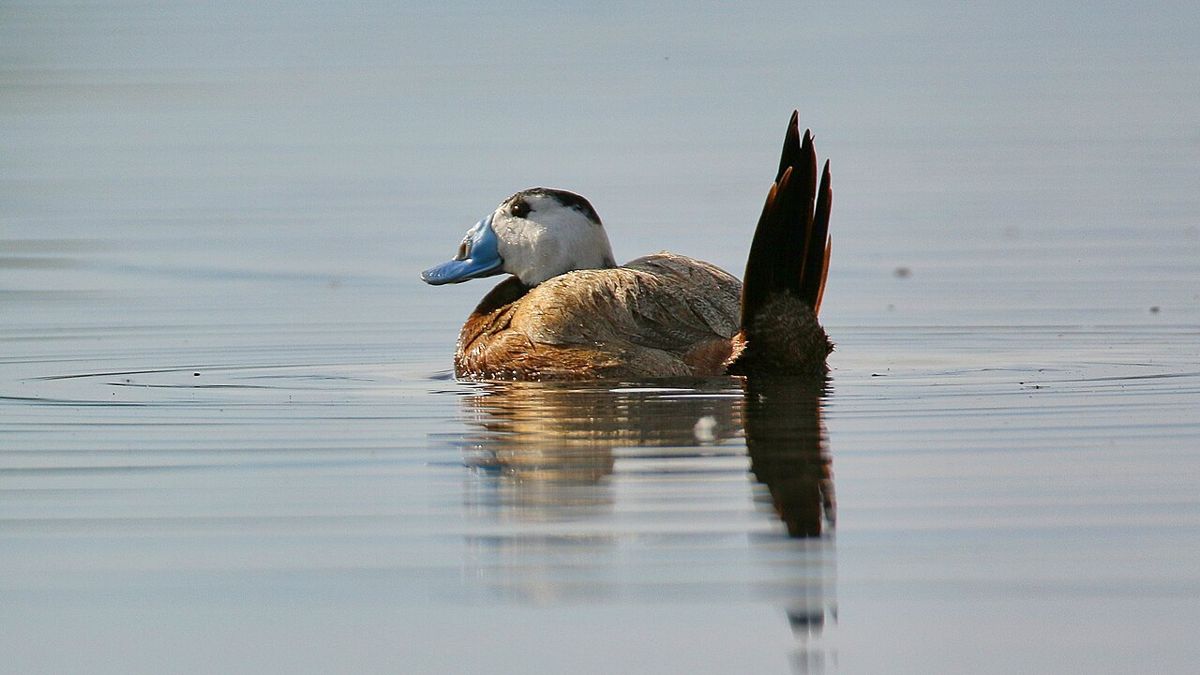
Photo: Adnan Bozkurt · CC BY-SA 4.0 (May be cropped or resized)
Oxyura leucocephala
Basic stats
Diet
Aquatic vegetation, seeds and aquatic invertebrates
Habitat
Lakes and ponds with open water and dense marginal vegetation
Range
Spain and North Africa through western and central Asia
Clutch size
4–9 eggs
Incubation period
About 25 days
Size
43–48cm
Weight
580–750g
The white-headed duck is a compact diving duck with a short neck and a long, stiff tail. A breeding male has a largely white head, black crown, vivid blue bill and reddish-grey body. Females are browner, with a dark bill, dark crown and a pale face crossed by a darker cheek stripe. The legs sit far back on the body, an arrangement useful for swimming and diving but awkward on land. Adults measure roughly forty-three to forty-eight centimetres and weigh 580–750 grams. (Wikipedia, general species account)
The species breeds on lakes and ponds that combine open water with dense aquatic vegetation for shelter and nesting. It normally feeds by diving, taking aquatic plants and seeds as well as benthic insect larvae and other invertebrates. Birds tend to swim or dive away from danger rather than immediately taking flight. Nests are concealed among reeds near the water; the female alone incubates four to nine eggs for about twenty-five days and then cares for the precocial young. (Wikipedia, general species account)
Quick answers
- What does the White-headed Duck eat?
- Aquatic vegetation, seeds and aquatic invertebrates
- What habitat does the White-headed Duck live in?
- Lakes and ponds with open water and dense marginal vegetation
- Where is the White-headed Duck found?
- Spain and North Africa through western and central Asia
- How many eggs does the White-headed Duck lay?
- 4–9 eggs
- How long are the eggs of the White-headed Duck incubated?
- About 25 days
- How big is the White-headed Duck?
- 43–48cm
- How much does the White-headed Duck weigh?
- 580–750g