
 Wildlife
of Mongolia
Greater White-fronted Goose
Anatidae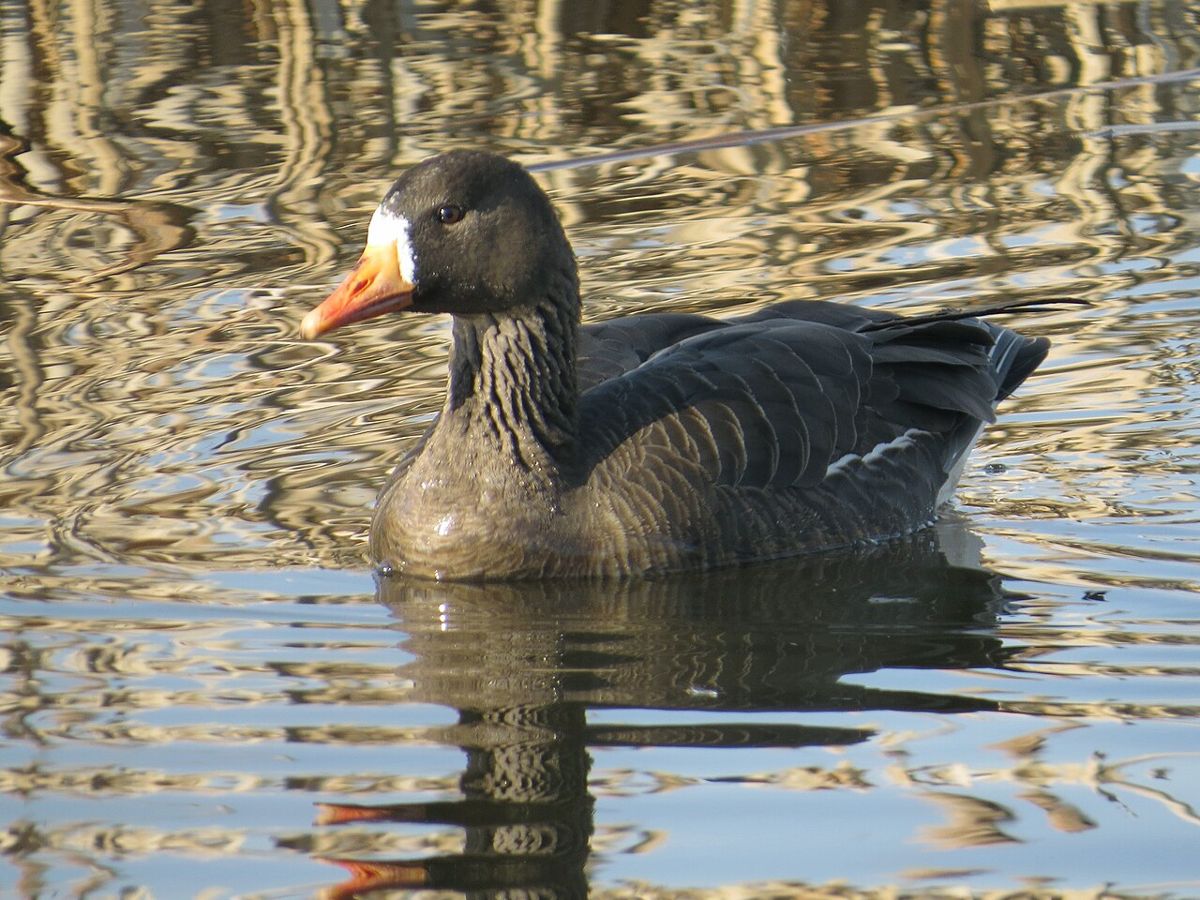
Photo: MPF · CC BY-SA 4.0 (May be cropped or resized)
Anser albifrons
Basic stats
Habitat
Arctic breeding grounds; temperate wetlands and agricultural land in winter
Range
Breeds in northern Canada, Alaska, Greenland and Russia; winters farther south in North America, Europe and Asia
The greater white-fronted goose is named for the white feathering around the base of its bill. Adults also develop irregular black barring across the belly, producing the North American nickname specklebelly. Otherwise, the plumage is mostly brown-grey, and the bill colour and overall darkness vary among subspecies. It resembles the lesser white-fronted goose but is larger. Five geographic forms are commonly recognised, differing mainly in size, bill proportions, colour and the amount of dark marking on the underparts. (Wikipedia, general species account)
This is a strongly migratory goose. It breeds across northern Russia, Greenland, Alaska and Arctic Canada, then winters farther south in Europe, Asia and North America. The nominate form nests in far northern Russia and moves southwest for winter. Timing is constrained by the short Arctic season: birds arrive around late May or early June and begin leaving for autumn staging areas in early September. Late snowmelt or spring storms can therefore shorten the limited period available for nesting and raising young. (Wikipedia, general species account)
Quick answers
- What habitat does the Greater White-fronted Goose live in?
- Arctic breeding grounds; temperate wetlands and agricultural land in winter
- Where is the Greater White-fronted Goose found?
- Breeds in northern Canada, Alaska, Greenland and Russia; winters farther south in North America, Europe and Asia