
 Wildlife
of Mongolia
Lesser White-fronted Goose
Anatidae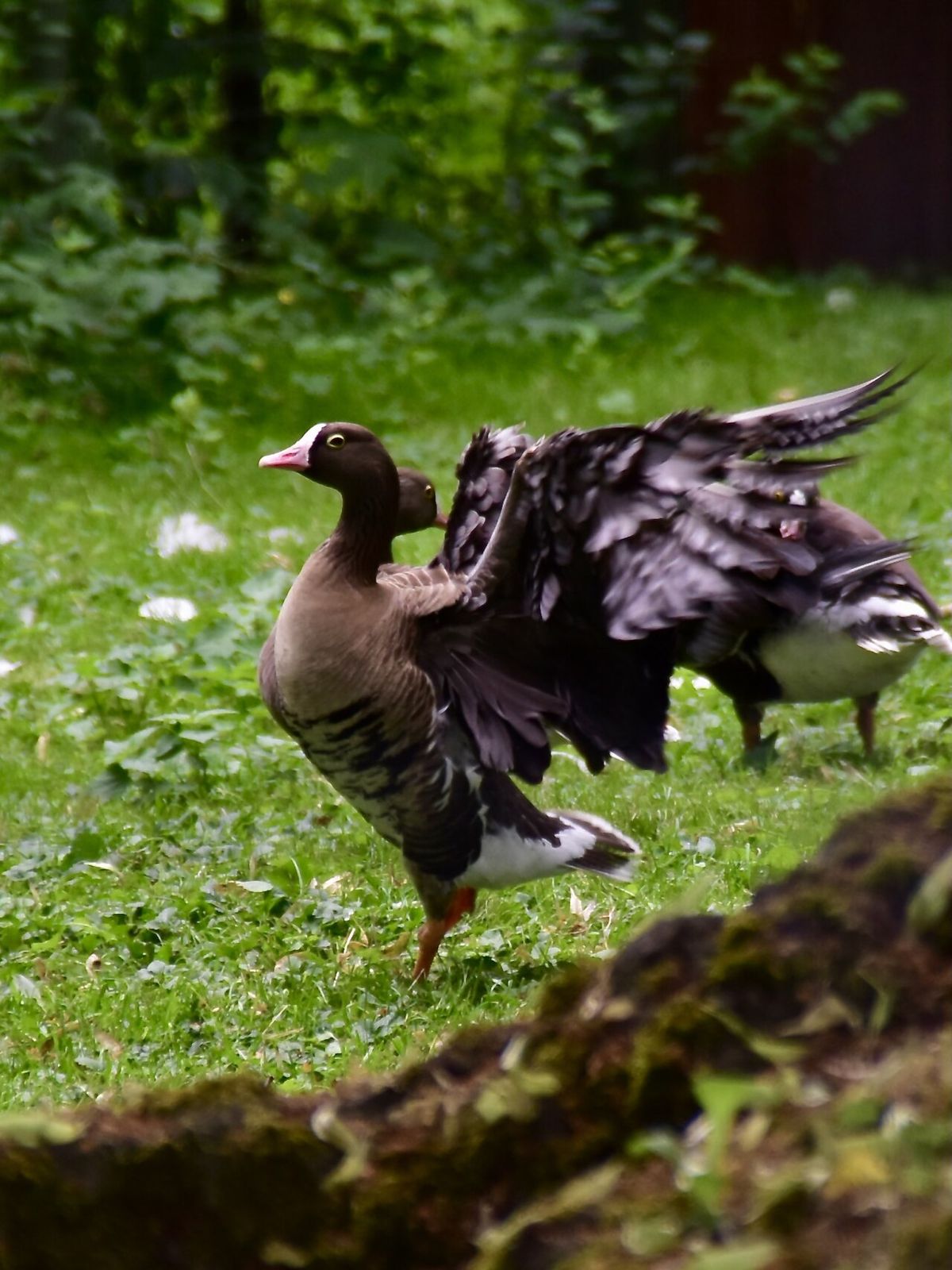
Photo: NasserHalaweh · CC BY-SA 4.0 (May be cropped or resized)
Anser erythropus
Basic stats
Habitat
Forest tundra of Eurasia, partly the northern forest zone and the south of the shrub tundra
Range
Winters in western Europe, the Near East and Asia Minor, south of the Caspian Sea, the Nile plain, southern Japan, Korea and southeast China
Size
53–66cm
Wingspan
120–135cm
Weight
1.4–2.2kg
The lesser white-fronted goose is 53–66 centimetres long with a wingspan of 120–135 centimetres, weighing 1.4–2.2 kilograms. It resembles the European subspecies of the greater white-fronted goose in build and colour but is smaller and darker. The white forehead patch reaches higher than in the greater white-fronted goose and ends between the eyes. It also differs in its bright yellow eye-ring, which even young birds develop, first appearing after the juvenile moult in November of the first year and still yellow-green in juvenile plumage. (German Wikipedia, general species account)
It is the rarest goose in Europe. Its breeding range covers the forest tundra of Eurasia, partly the northern forest zone and the south of the shrub tundra. In the winter half of the year it can also be seen in western Europe, with wintering sites in the Near East and Asia Minor, south of the Caspian Sea, on the Nile plain, in southern Japan, Korea and southeast China. Linnaeus first described it in 1758. (German Wikipedia, general species account)
Quick answers
- What habitat does the Lesser White-fronted Goose live in?
- Forest tundra of Eurasia, partly the northern forest zone and the south of the shrub tundra
- Where is the Lesser White-fronted Goose found?
- Winters in western Europe, the Near East and Asia Minor, south of the Caspian Sea, the Nile plain, southern Japan, Korea and southeast China
- How big is the Lesser White-fronted Goose?
- 53–66cm
- What is the wingspan of the Lesser White-fronted Goose?
- 120–135cm
- How much does the Lesser White-fronted Goose weigh?
- 1.4–2.2kg