
 Wildlife
of Mongolia
Greater Scaup
Anatidae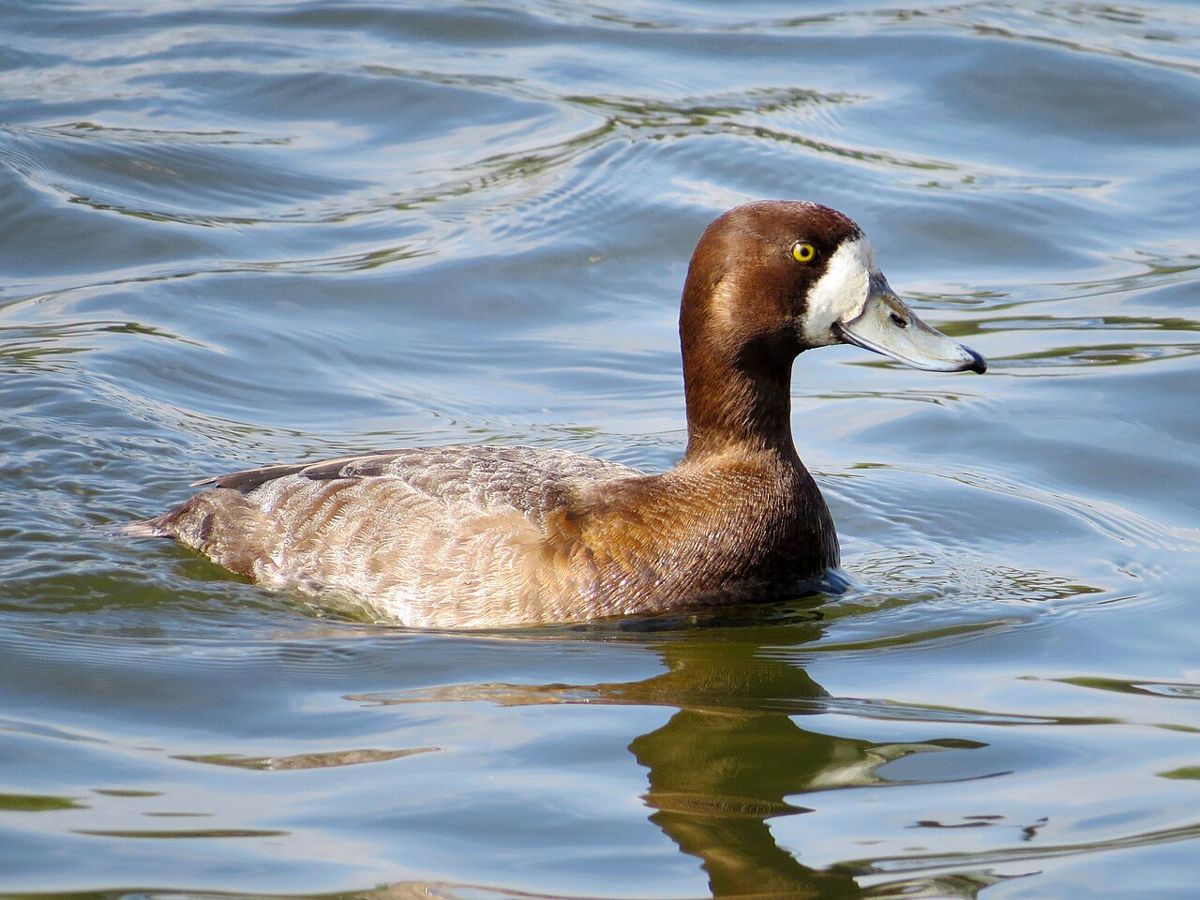
Photo: MPF · CC BY-SA 4.0 (May be cropped or resized)
Aythya marila
Basic stats
Habitat
Northern lakes and coastal wintering waters
Range
Breeds across northern Eurasia and North America; winters on temperate coasts
Clutch size
6–9 eggs
Incubation period
24–28 days
The greater scaup is a medium-sized diving duck, larger than the closely related lesser scaup and tufted duck. Adult males have yellow eyes and a pale blue-grey bill, with a dark head that can show green or purple gloss, a black breast, white belly and finely grey upperparts. A broad white wing stripe is conspicuous in flight. Females are mostly brown, retain white in the wing, and show a dull blue bill with a contrasting white patch around its base. (Wikipedia, general species account)
Greater scaup breed beside northern lakes from Iceland and Scandinavia across Russia and Siberia, with other populations in Alaska and northern Canada. They migrate to coastal waters in Europe, eastern Asia and North America for winter. Nests are placed close to water, commonly on islands or floating vegetation. Courtship occurs during the return migration and ends in pair formation. Females lay six to nine olive-buff eggs, which hatch after twenty-four to twenty-eight days; breeding generally begins when birds are two years old. (Wikipedia, general species account)
Quick answers
- What habitat does the Greater Scaup live in?
- Northern lakes and coastal wintering waters
- Where is the Greater Scaup found?
- Breeds across northern Eurasia and North America; winters on temperate coasts
- How many eggs does the Greater Scaup lay?
- 6–9 eggs
- How long are the eggs of the Greater Scaup incubated?
- 24–28 days