
 Wildlife
of Mongolia
Long-tailed Duck
Anatidae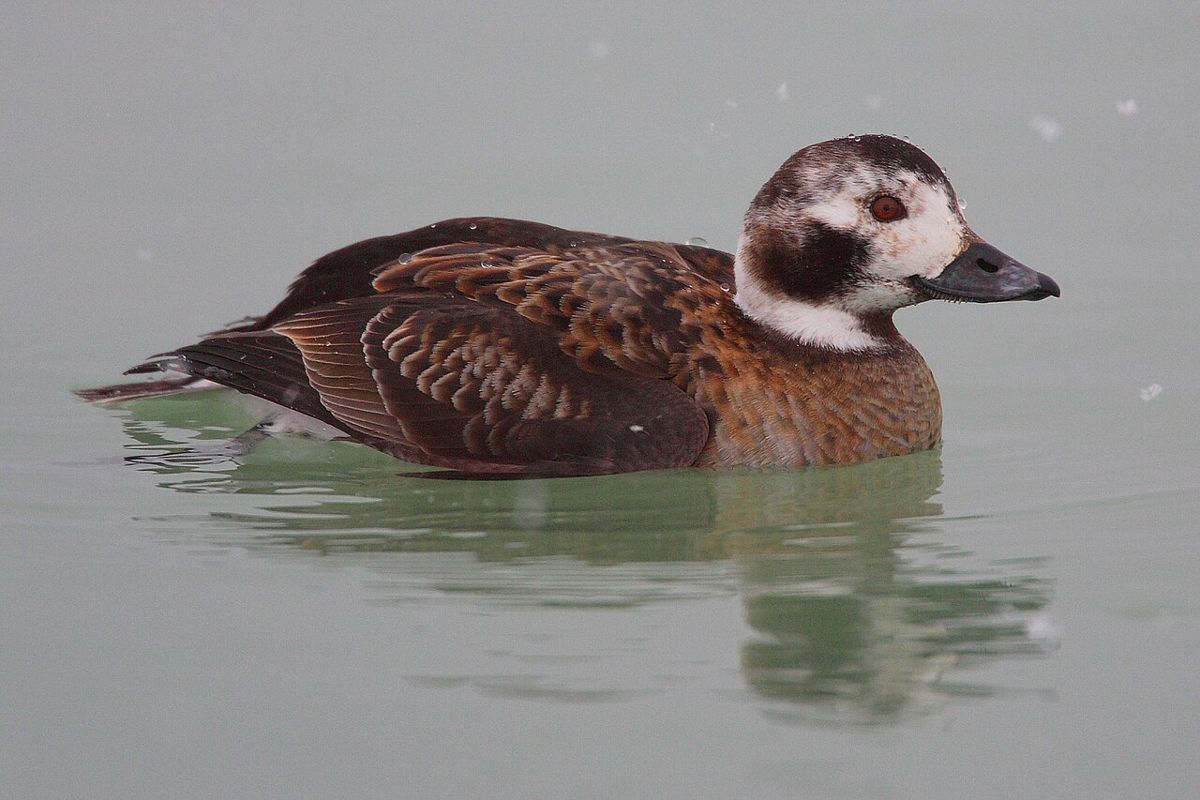
Photo: No machine-readable author provided. Mdf assumed (based on copyright claims). · CC BY-SA 3.0 (May be cropped or resized)
Clangula hyemalis
Basic stats
Habitat
Tundra and taiga when breeding; large bodies of seawater in winter
Range
Breeds across northern Eurasia and northern North America; winters on the northern Pacific and Atlantic coasts, Hudson Bay and the Great Lakes
The long-tailed duck is a medium-sized sea duck with white underparts, while the rest of the plumage goes through a complex moulting process. The male has a long pointed tail, 10–15 centimetres long, and a dark grey bill crossed by a pink band. In winter the male has a dark cheek patch on a mainly white head and neck, a dark breast and a mostly white body; in summer he is dark on the head, neck and back with a white cheek patch. The female has a brown back and a relatively short pointed tail, with a white head and dark crown in winter and a dark head in summer. (Wikipedia, general species account)
It breeds in the tundra and taiga regions of the Arctic across northern Eurasia, in Siberia, Kamchatka and Karelia for example, and across northern North America, Iceland, Norway and parts of Greenland. In winter it is found on and near large bodies of seawater, such as the northern Pacific and Atlantic, Hudson Bay and the Great Lakes, with small numbers on the Missouri River. It is the only member of its genus. (Wikipedia, general species account)
Quick answers
- What habitat does the Long-tailed Duck live in?
- Tundra and taiga when breeding; large bodies of seawater in winter
- Where is the Long-tailed Duck found?
- Breeds across northern Eurasia and northern North America; winters on the northern Pacific and Atlantic coasts, Hudson Bay and the Great Lakes