
 Wildlife
of Mongolia
Taiga Flycatcher
Muscicapidae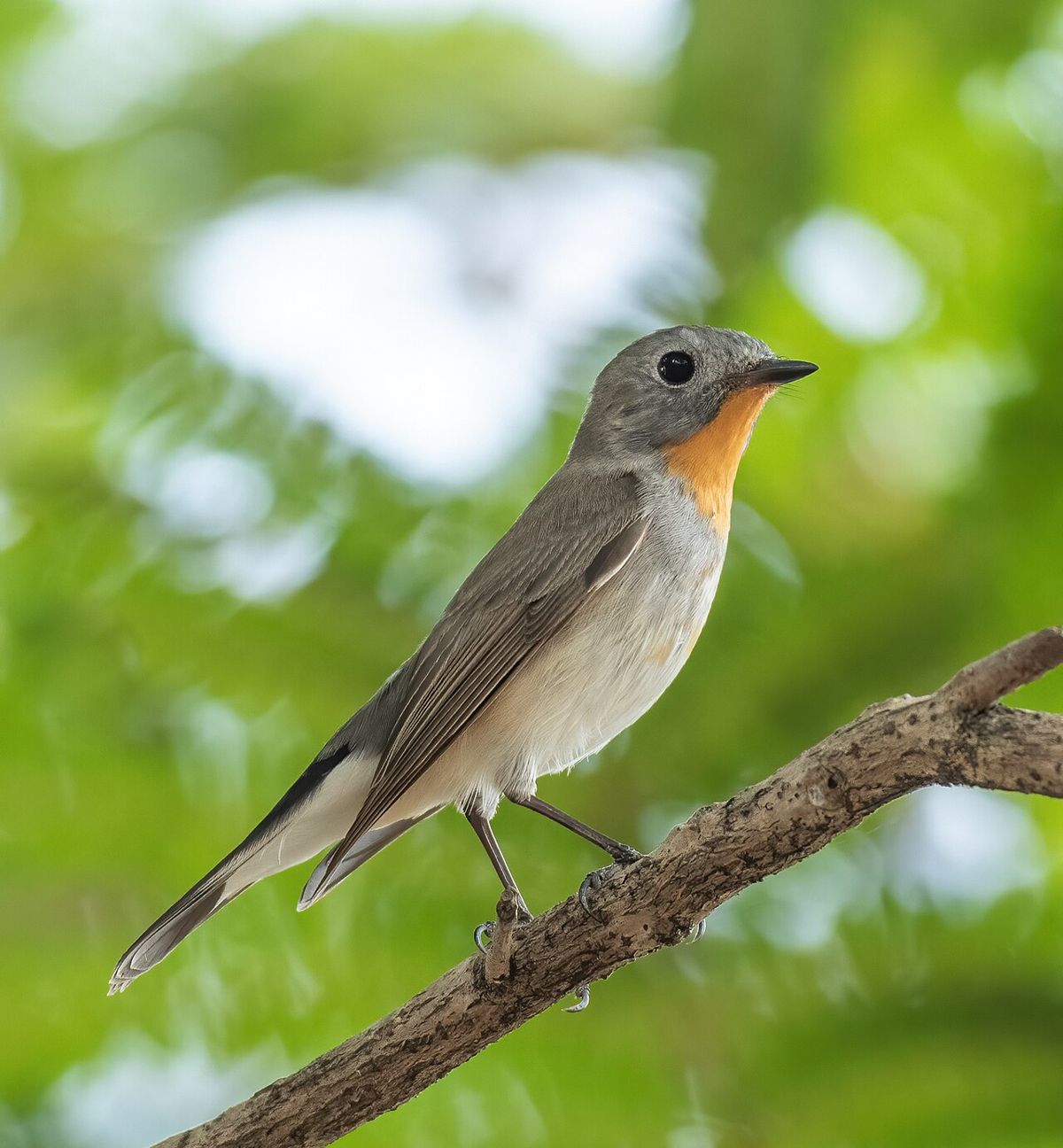
Photo: Lawrence Hylton · CC BY 4.0 (May be cropped or resized)
Ficedula albicilla
Basic stats
Habitat
Taiga of mixed broadleaf and conifer forest when breeding; clearings, clear-cuts and forest edges on migration and in winter
Range
Breeds in Siberia from the Urals to Kamchatka and as far south as northern Mongolia; winters in southern and Southeast Asia
Clutch size
5–6 eggs
Incubation period
12–15 days
Size
11–12.5cm
The adult taiga flycatcher is 11–12.5 centimetres long, olive-brown above and white below. It is restless and moves quickly in the foliage, unlike several others in its genus, and it has a small all-dark bill and a distinct white orbital ring. When perched it often flicks its tail, and in flight white sides at the base of the otherwise black tail show, somewhat as in a wheatear. The adult male has a brick-red throat sharply bounded by a grey upper breast. The commonest call is a rolling, hard, quick trill, trrrt, faster than the red-breasted flycatcher's. (Swedish Wikipedia, general species account)
It breeds in Siberia from the Urals to Kamchatka and as far south as northern Mongolia and winters in southern and Southeast Asia. As the name suggests, it breeds in taiga of mixed broadleaf and conifer forest. The female builds a cup nest of moss, grass, leaves, roots and animal hair, placed up to four metres up in a tree hole, a wall or on a branch near the trunk, and nest boxes are used. She lays five or six eggs and incubates them alone for 12–15 days, and the young fly after about 11–15 days. It was long treated as a subspecies of the red-breasted flycatcher. (Swedish Wikipedia, general species account)
Quick answers
- What habitat does the Taiga Flycatcher live in?
- Taiga of mixed broadleaf and conifer forest when breeding; clearings, clear-cuts and forest edges on migration and in winter
- Where is the Taiga Flycatcher found?
- Breeds in Siberia from the Urals to Kamchatka and as far south as northern Mongolia; winters in southern and Southeast Asia
- How many eggs does the Taiga Flycatcher lay?
- 5–6 eggs
- How long are the eggs of the Taiga Flycatcher incubated?
- 12–15 days
- How big is the Taiga Flycatcher?
- 11–12.5cm