
 Wildlife
of Mongolia
Common Rock Thrush
Muscicapidae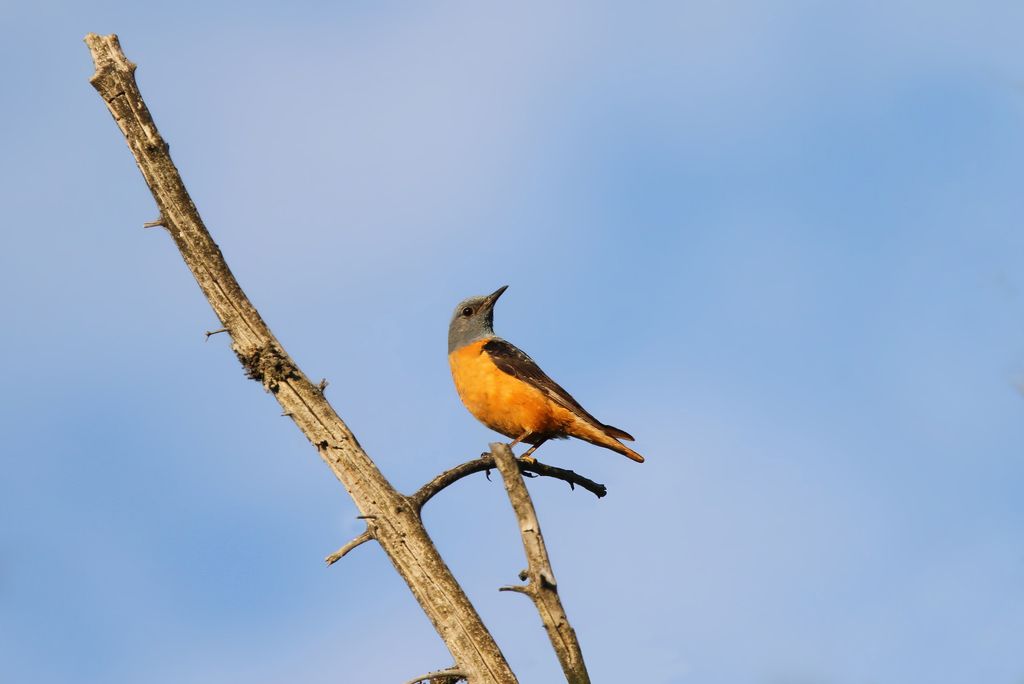
Photo: (c) Christoph Moning, some rights reserved (CC BY) · CC BY 4.0 (May be cropped or resized)
Monticola saxatilis
Basic stats
Diet
Insects, berries and small reptiles
Habitat
Open dry hilly areas, usually above 1,500m; nests in rock cavities
Range
Breeds from southern Europe across Central Asia to northern China; winters in Africa south of the Sahara
Clutch size
4–5 eggs
Size
17–20cm
The common rock thrush is a medium-sized but stocky chat, 17–20 centimetres long. The summer male is unmistakable, with a blue-grey head, orange underparts and outer tail feathers, dark brown wings and a white back. Females and immatures are much less striking, with dark brown scaly upperparts, paler brown scaly underparts and reddish outer tail feathers like the male's. The male has a clear, tuneful song. (Wikipedia, general species account)
The species breeds in open, dry hilly areas, usually above 1,500 metres, from southern Europe across Central Asia to northern China, nesting in rock cavities and laying four or five eggs. It is strongly migratory, with all populations wintering in Africa south of the Sahara, and is an uncommon visitor to northern Europe. It is omnivorous, eating a wide range of insects, berries and small reptiles, and its range has contracted somewhat at the edges in recent decades through habitat destruction. (Wikipedia, general species account)
Quick answers
- What does the Common Rock Thrush eat?
- Insects, berries and small reptiles
- What habitat does the Common Rock Thrush live in?
- Open dry hilly areas, usually above 1,500m; nests in rock cavities
- Where is the Common Rock Thrush found?
- Breeds from southern Europe across Central Asia to northern China; winters in Africa south of the Sahara
- How many eggs does the Common Rock Thrush lay?
- 4–5 eggs
- How big is the Common Rock Thrush?
- 17–20cm