
 Wildlife
of Mongolia
Eurasian Curlew
Scolopacidae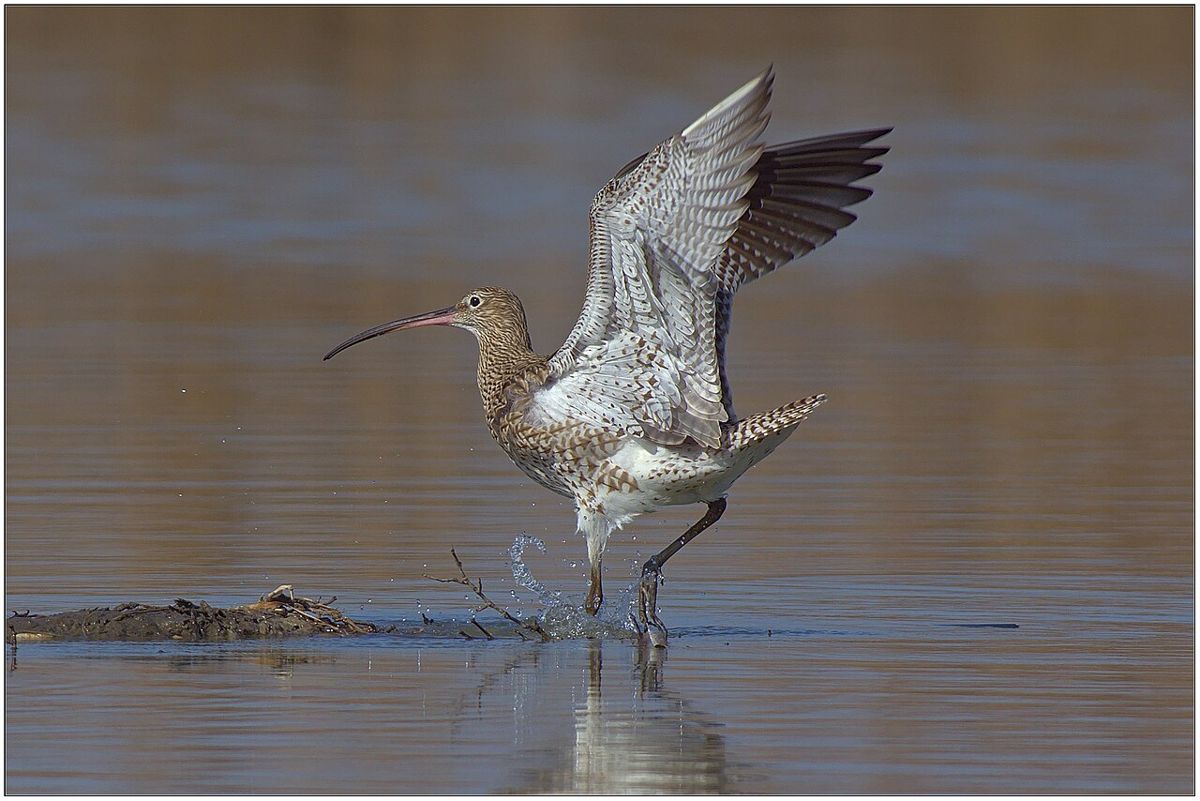
Photo: Artemio Terna · CC BY-SA 3.0 (May be cropped or resized)
Numenius arquata
Basic stats
Diet
Small invertebrates, crabs and earthworms
Habitat
Meadows, marshy fields, moorland and soft tidal mud
Range
Breeds across temperate Europe and Asia; winters in Africa, southern Europe and southern Asia
Clutch size
4 eggs
Incubation period
4 weeks
Size
50–60cm
Wingspan
89–106cm
Weight
410–1,360g
The Eurasian curlew is a very large wader, measuring 50–60cm long with an 89–106cm wingspan and weighing 410–1,360g. Its plumage is mainly greyish brown, set off by a white back, greyish-blue legs and an exceptionally long, smoothly downcurved bill. The sexes look alike, although an adult female generally has the longer bill. A whimbrel is smaller and has a shorter bill with a distinct kink rather than the curlew's even curve. (Wikipedia, Eurasian curlew account)
Across most of its range the Eurasian curlew migrates, wintering in Africa, southern Europe and southern Asia; the eastern orientalis subspecies breeds from western and central Siberia to northeast China. Outside breeding time the birds are highly social but generally wary. They probe soft mud for small invertebrates and also take crabs and earthworms from the surface. The nest is a bare meadow scrape, where four eggs are incubated by both adults for roughly four weeks. (Wikipedia, Eurasian curlew account)
Quick answers
- What does the Eurasian Curlew eat?
- Small invertebrates, crabs and earthworms
- What habitat does the Eurasian Curlew live in?
- Meadows, marshy fields, moorland and soft tidal mud
- Where is the Eurasian Curlew found?
- Breeds across temperate Europe and Asia; winters in Africa, southern Europe and southern Asia
- How many eggs does the Eurasian Curlew lay?
- 4 eggs
- How long are the eggs of the Eurasian Curlew incubated?
- 4 weeks
- How big is the Eurasian Curlew?
- 50–60cm
- What is the wingspan of the Eurasian Curlew?
- 89–106cm
- How much does the Eurasian Curlew weigh?
- 410–1,360g