
 Wildlife
of Mongolia
Whooper Swan
Anatidae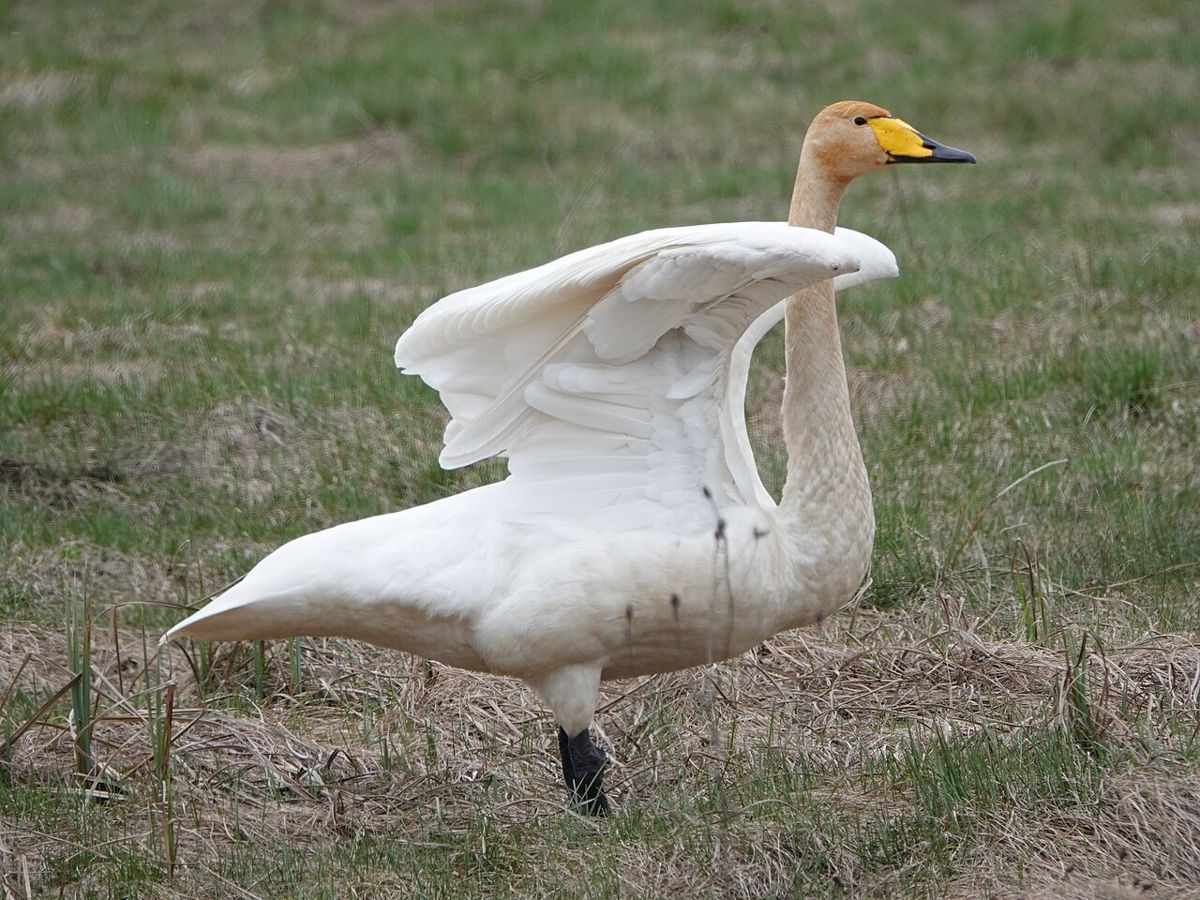
Photo: Astroliabius · CC0
Cygnus cygnus
Basic stats
Habitat
Taiga lakes, marshes and other wetlands
Range
Breeds across subarctic Eurasia; winters farther south
Clutch size
Usually 2–7 eggs
Incubation period
About 35 days
Size
140–165 cm
Wingspan
205–275 cm
Weight
Typically 7.4–14.0 kg
The Whooper Swan is a very large white swan, 140–165 centimetres long with a 205–275-centimetre wingspan. Its long bill is patterned yellow and black, with yellow occupying more of the bill than on Bewick's Swan, and the head has a distinctly angular profile. Adults are white, though iron-rich water may stain the head and neck rusty yellow. Young birds are pale grey-brown with pink replacing the adult bill's yellow. A short rounded tail separates all ages from the pointed-tailed Mute Swan. (Wikipedia, Whooper Swan account)
Whooper Swans breed beside water in the Eurasian taiga and migrate long distances to wintering wetlands farther south. Their deep, resonant honking carries over feeding and resting flocks. Pairs remain together for life; the female builds a vegetation nest in or near water and normally lays two to seven eggs, incubating them for about 35 days while the male guards nearby. Before group departures, birds use head bobs, head shakes and wing flaps as signals that help coordinate which individual initiates flight. (Wikipedia, Whooper Swan account)
Quick answers
- What habitat does the Whooper Swan live in?
- Taiga lakes, marshes and other wetlands
- Where is the Whooper Swan found?
- Breeds across subarctic Eurasia; winters farther south
- How many eggs does the Whooper Swan lay?
- Usually 2–7 eggs
- How long are the eggs of the Whooper Swan incubated?
- About 35 days
- How big is the Whooper Swan?
- 140–165 cm
- What is the wingspan of the Whooper Swan?
- 205–275 cm
- How much does the Whooper Swan weigh?
- Typically 7.4–14.0 kg