
 Wildlife
of Mongolia
Corsac Fox
Canidae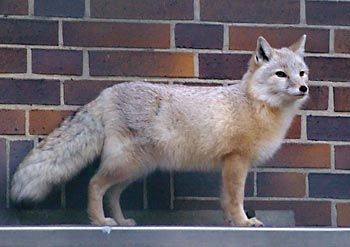
Photo: Unknown · CC BY-SA 3.0 (May be cropped or resized)
Vulpes corsac
Basic stats
Diet
Rodents, pikas, insects, other small vertebrates, carrion, and some fruit
Habitat
Open steppe and semidesert
Range
Central and northeast Asia, including most of Mongolia
Litter size
Usually 2–6
Gestation period
52–60 days
Size
45–65cm head-and-body length
Weight
1.6–3.2kg
The corsac is a medium-sized fox measuring 45–65cm from head to body and weighing 1.6–3.2kg. Its coat is grey to yellowish above and paler below, with pale markings around the mouth, chin, and throat. In winter the fur becomes much thicker and silkier, straw-grey with a darker line along the back. Compared with the red fox it is smaller and adapted to more open, arid country. The ears are moderately large, while the tail is 19–35cm long and well furred. (Wikipedia, general species account)
Corsac foxes occur across most of Mongolia outside the far north, favouring open steppe and semidesert while avoiding dense vegetation, high mountains, shifting-sand desert, and deep snow. They hunt rodents, pikas, insects, and other small vertebrates, also scavenging and occasionally eating fruit. Activity is mainly nocturnal, but animals may appear by day when feeding kits or when winter food is scarce. They use their own shallow dens or take over marmot, ground-squirrel, and badger burrows. Mating occurs from January to March, and two to six kits are usual after 52–60 days. (Wikipedia, general species account)
Quick answers
- What does the Corsac Fox eat?
- Rodents, pikas, insects, other small vertebrates, carrion, and some fruit
- What habitat does the Corsac Fox live in?
- Open steppe and semidesert
- Where is the Corsac Fox found?
- Central and northeast Asia, including most of Mongolia
- What is the litter size of the Corsac Fox?
- Usually 2–6
- How long is the gestation period of the Corsac Fox?
- 52–60 days
- How big is the Corsac Fox?
- 45–65cm head-and-body length
- How much does the Corsac Fox weigh?
- 1.6–3.2kg