
 Wildlife
of Mongolia
Wapiti
Cervidae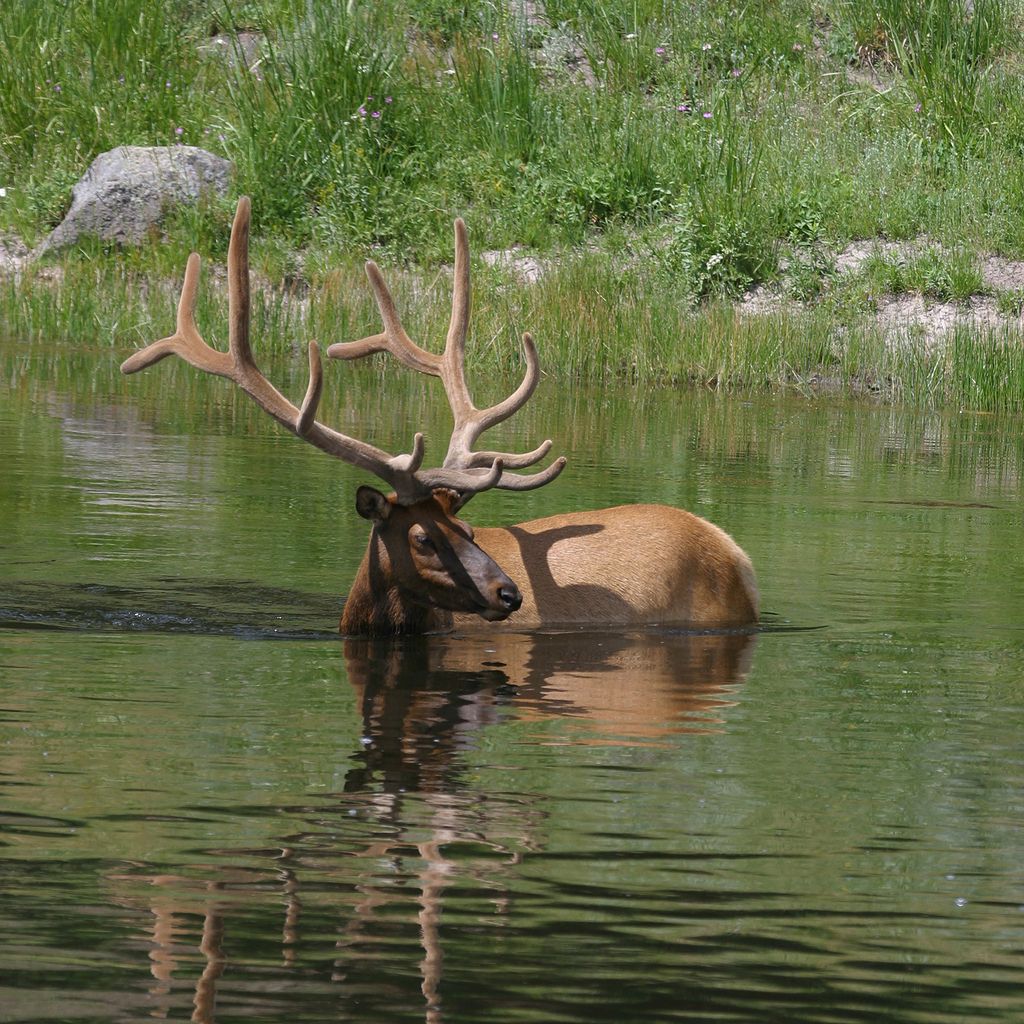
Photo: (c) Dan Vickers, some rights reserved (CC BY) · CC BY 4.0 (May be cropped or resized)
Cervus canadensis
Basic stats
Diet
Grasses, sedges, leaves, twigs, and bark
Habitat
Open forest and forest edge
Range
North America and Central, East, and northern Asia
The wapiti is one of the largest deer. It has a substantial body, long legs, and a conspicuous pale rump patch; adult males carry large branching antlers that are shed and regrown annually. The broad rump patch and relatively pale antlers help distinguish wapiti from the closely related red deer, with which it was formerly combined. Sources now treat Cervus canadensis as a separate species based in part on mitochondrial evidence. Females lack antlers and are smaller and more lightly built than mature bulls. (Wikipedia, general species account)
Across its range, wapiti use open woodland and forest edge. They graze grasses and sedges and browse leaves, twigs, and bark. During the mating season, males posture, spar with their antlers, and bugle to establish dominance and attract females. The native range includes Central, East, and northern Asia as well as North America. Mongolia is included in the Mammal Diversity Database country list used for this site's checklist, but the biological source opened for this entry did not support a more precise Mongolian locality. (Wikipedia, general species account; Mammal Diversity Database)
Quick answers
- What does the Wapiti eat?
- Grasses, sedges, leaves, twigs, and bark
- What habitat does the Wapiti live in?
- Open forest and forest edge
- Where is the Wapiti found?
- North America and Central, East, and northern Asia