
 Wildlife
of Mongolia
Willow Tit
Paridae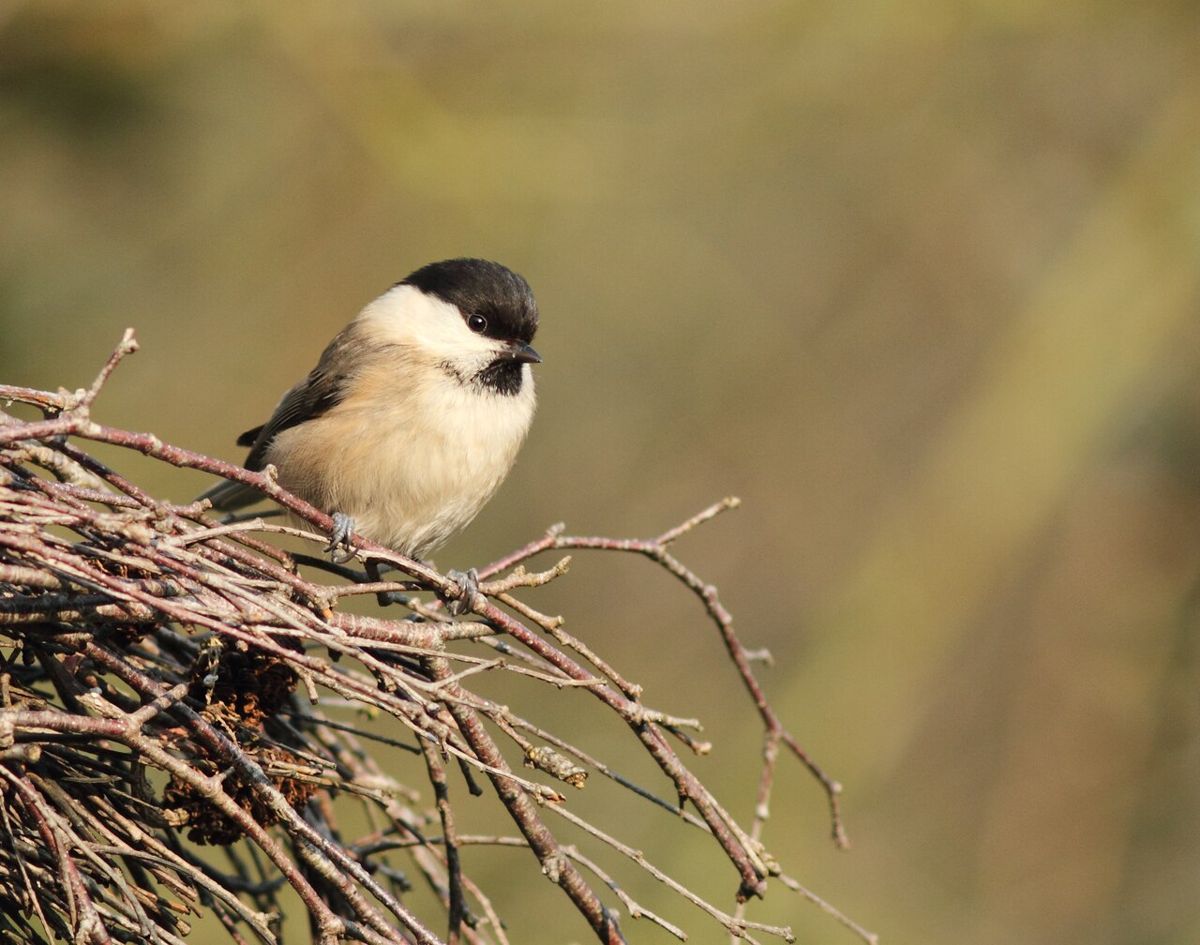
Photo: Bouke ten Cate · CC BY 4.0 (May be cropped or resized)
Poecile montanus
Basic stats
Habitat
Temperate and subarctic woodland, more of a conifer specialist than the marsh tit
Range
Temperate and subarctic Europe and across the Palearctic
Clutch size
Typically 6–9 eggs
Incubation period
13–15 days
Size
11.5cm
Wingspan
17–20.5cm
Weight
About 11g
The willow tit is 11.5 centimetres long, with a wingspan of 17–20.5 centimetres, and weighs about 11 grams. It has a large head, a thin bill, a long dull black cap that runs down to the mantle and a black bib; the sides of the face are white, the back grey-brown and the underparts buff. The sexes look alike. In the east of its range it is much paler than the marsh tit, but towards the west the races become so similar that it was not recognised as a breeding bird in Britain until the end of the nineteenth century. (Wikipedia, general species account)
A widespread and common resident breeder across temperate and subarctic Europe and the Palearctic, the willow tit is more of a conifer specialist than the closely related marsh tit, which explains its breeding much farther north. Most birds do not migrate. It excavates its own nest hole, even piercing hard bark, usually in a rotten stump or decayed tree, and lines a felted cup with fur, hair and wood chips. The female alone incubates six to nine eggs, which hatch after 13–15 days. (Wikipedia, general species account)
Quick answers
- What habitat does the Willow Tit live in?
- Temperate and subarctic woodland, more of a conifer specialist than the marsh tit
- Where is the Willow Tit found?
- Temperate and subarctic Europe and across the Palearctic
- How many eggs does the Willow Tit lay?
- Typically 6–9 eggs
- How long are the eggs of the Willow Tit incubated?
- 13–15 days
- How big is the Willow Tit?
- 11.5cm
- What is the wingspan of the Willow Tit?
- 17–20.5cm
- How much does the Willow Tit weigh?
- About 11g