
 Wildlife
of Mongolia
Snow Bunting
Calcariidae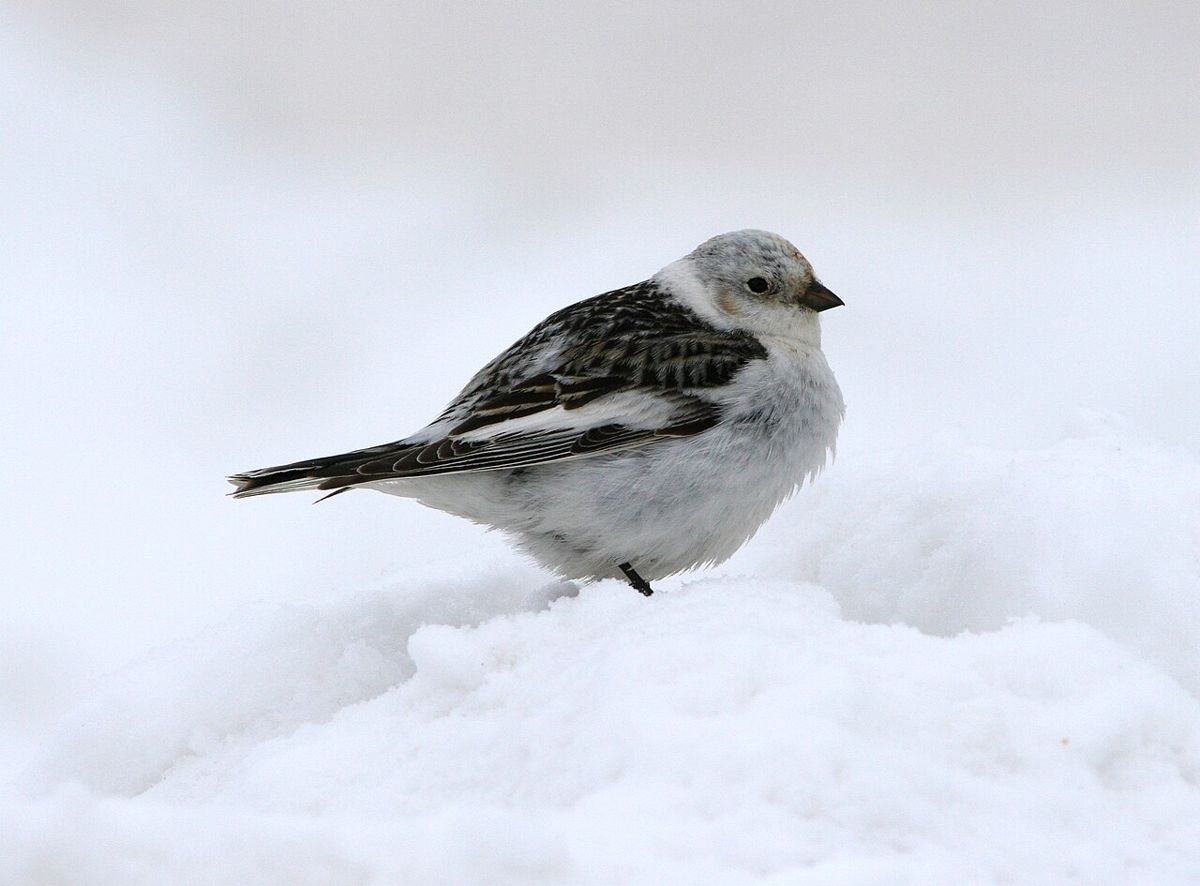
Photo: Unknown · Public domain
Plectrophenax nivalis
Basic stats
Diet
Seeds, leaf buds, insects, and some coastal crustaceans
Habitat
Rocky breeding slopes; winter fields, salt marshes, and farmland
Range
Holarctic; northern Europe, Russia, Canada, and wintering farther south
Clutch size
Usually 4–6 eggs
Incubation period
About 10–14 days
Size
16.5–19.1cm
Wingspan
30.5–33cm
Weight
About 40g
Snow Buntings are compact, strongly patterned birds about 16.5–19.1 centimetres long, with a 30.5–33-centimetre wingspan and a weight near 40 grams. White wings are their most conspicuous feature. Breeding males are mainly black and white, with white underparts and face, a black-tipped tail, and black bill and feet. Females replace much of the male’s black with grey-brown and show a smaller white wing patch. In winter both sexes become browner and develop a yellowish-orange bill. (Animal Diversity Web account)
A migratory Holarctic bird, the Snow Bunting breeds on bare, rocky slopes and winters in coastal fields, salt marshes, and agricultural land. It feeds on the ground, taking seeds, leaf buds, and insects; nestlings receive almost entirely arthropods, while some coastal birds add crustaceans after moving south. Males arrive early to defend territories. Nests of grass and moss, lined with feathers and fur, are hidden among rocks. A normal clutch contains four to six eggs, and fledging follows roughly ten to fifteen days after hatching. (Animal Diversity Web account)
Quick answers
- What does the Snow Bunting eat?
- Seeds, leaf buds, insects, and some coastal crustaceans
- What habitat does the Snow Bunting live in?
- Rocky breeding slopes; winter fields, salt marshes, and farmland
- Where is the Snow Bunting found?
- Holarctic; northern Europe, Russia, Canada, and wintering farther south
- How many eggs does the Snow Bunting lay?
- Usually 4–6 eggs
- How long are the eggs of the Snow Bunting incubated?
- About 10–14 days
- How big is the Snow Bunting?
- 16.5–19.1cm
- What is the wingspan of the Snow Bunting?
- 30.5–33cm
- How much does the Snow Bunting weigh?
- About 40g