 Wildlife
of Mongolia
Greater Sandplover
Charadriidae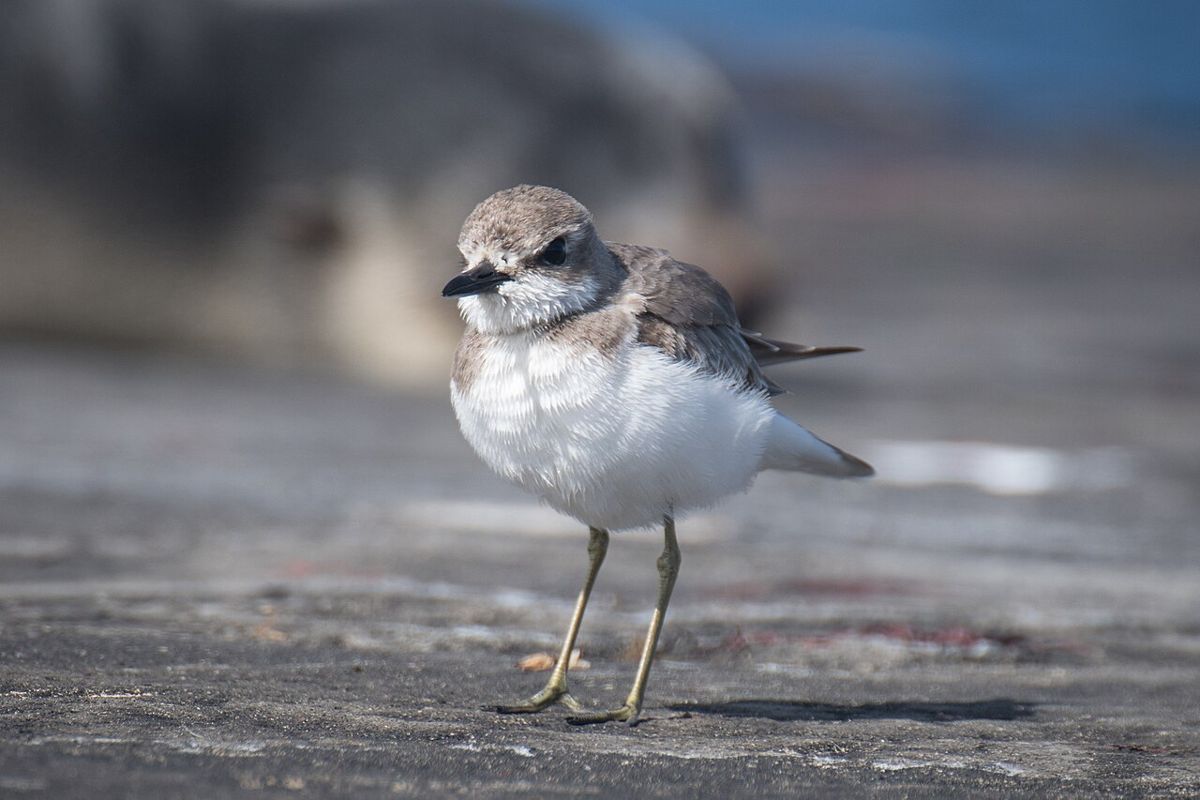
Photo: Antoine Lamielle · CC BY-SA 4.0 (May be cropped or resized)
Charadrius leschenaultii
Basic stats
Diet
Insects, crustaceans and annelid worms
Habitat
Breeds in semi-desert; winters on sandy coasts
Range
Central Asia to Mongolia and northwestern China; winters from East Africa to Australasia
Size
19–22 cm
The greater sand plover is a chunky, long-legged plover measuring about nineteen to twenty-two centimetres. Its notably thick black bill and greenish-yellow legs help define its structure. Breeding males show sandy-buff upperparts, white underparts, variable orange on the breast, forehead and nape, and a black eye mask. Females are greyer and duller, while winter birds and juveniles are browner. It closely resembles Siberian and Tibetan sand plovers, so size, build and bill proportions are important when comparing them. (Wikipedia, general species account)
The species breeds in semi-deserts from Turkey east through Central Asia, placing its nest in a bare ground scrape. The nominate subspecies occurs at the eastern end of this breeding range in Mongolia and northwestern China. Strongly migratory birds leave the interior to winter on sandy beaches from East Africa through South Asia to Australasia. They take insects, crustaceans and annelid worms using a run-and-pause feeding method, rather than the continuous probing characteristic of some other wading birds. The flight call is described as a soft trill. (Wikipedia, general species account)
Quick answers
- What does the Greater Sandplover eat?
- Insects, crustaceans and annelid worms
- What habitat does the Greater Sandplover live in?
- Breeds in semi-desert; winters on sandy coasts
- Where is the Greater Sandplover found?
- Central Asia to Mongolia and northwestern China; winters from East Africa to Australasia
- How big is the Greater Sandplover?
- 19–22 cm