
 Wildlife
of Mongolia
Red-throated Loon
Gaviidae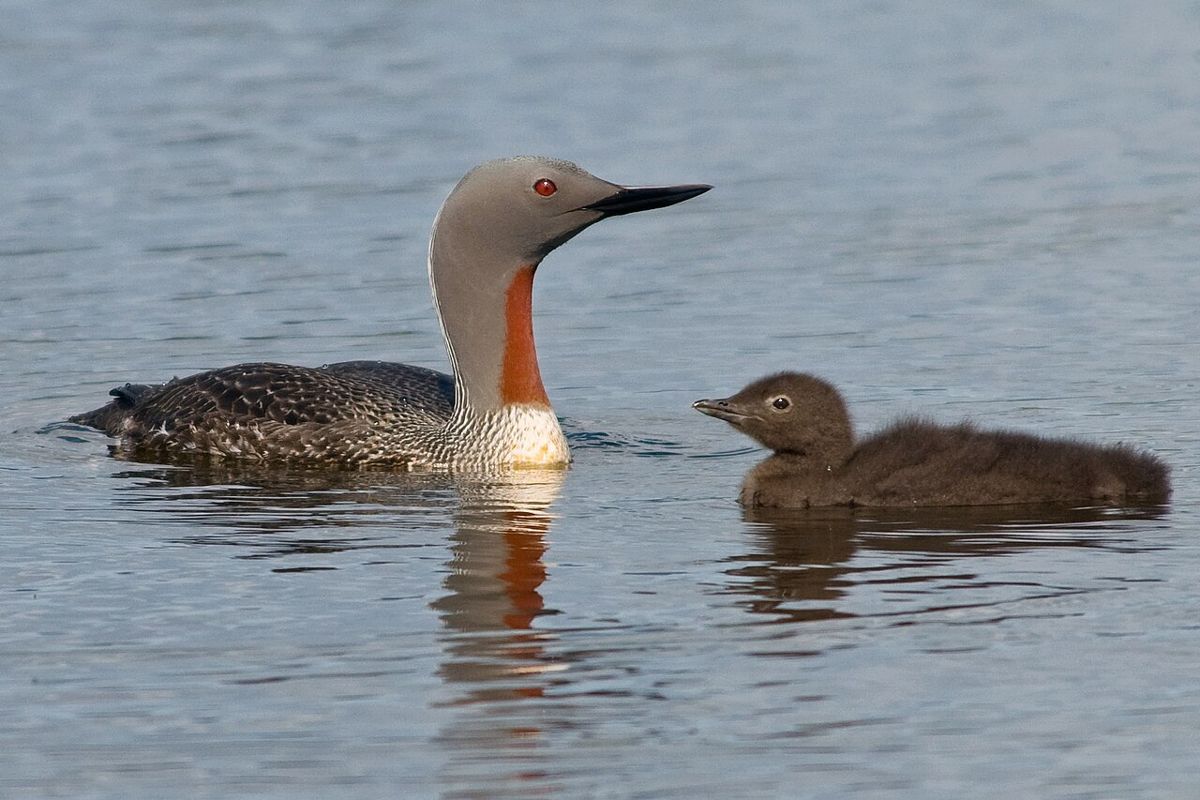
Photo: David Karnå · CC BY 3.0 (May be cropped or resized)
Gavia stellata
Basic stats
Diet
Mainly fish, with some amphibians, invertebrates and plant material
Habitat
Arctic breeding pools and northern coastal waters in winter
Range
Northern Hemisphere, breeding mainly in Arctic regions
Clutch size
Usually 2 eggs
Size
55–67cm
The red-throated loon, called the red-throated diver in Britain and Ireland, is the smallest and lightest loon, measuring fifty-five to sixty-seven centimetres. Breeding adults show the reddish throat patch that gives the species its name, together with a grey head and patterned upperparts. Winter plumage is much plainer, grey above and white below. Unlike many waterbirds it sits low in the water, and its narrow body, pointed bill and feet placed far back are adaptations for swimming and diving. (Wikipedia, general species account)
This migratory aquatic bird breeds mainly around small pools in Arctic regions of the Northern Hemisphere and winters on northern coastal waters. Fish form most of its diet, although amphibians, invertebrates and plant matter are also eaten. Pairs form long-term bonds, and both adults help build the nest, incubate the usual two eggs and feed the young. Because its legs are set far back, the bird is awkward on land; nesting therefore takes place close to water, allowing direct access for escape and feeding. (Wikipedia, general species account)
Quick answers
- What does the Red-throated Loon eat?
- Mainly fish, with some amphibians, invertebrates and plant material
- What habitat does the Red-throated Loon live in?
- Arctic breeding pools and northern coastal waters in winter
- Where is the Red-throated Loon found?
- Northern Hemisphere, breeding mainly in Arctic regions
- How many eggs does the Red-throated Loon lay?
- Usually 2 eggs
- How big is the Red-throated Loon?
- 55–67cm