
 Wildlife
of Mongolia
Demoiselle Crane
Gruidae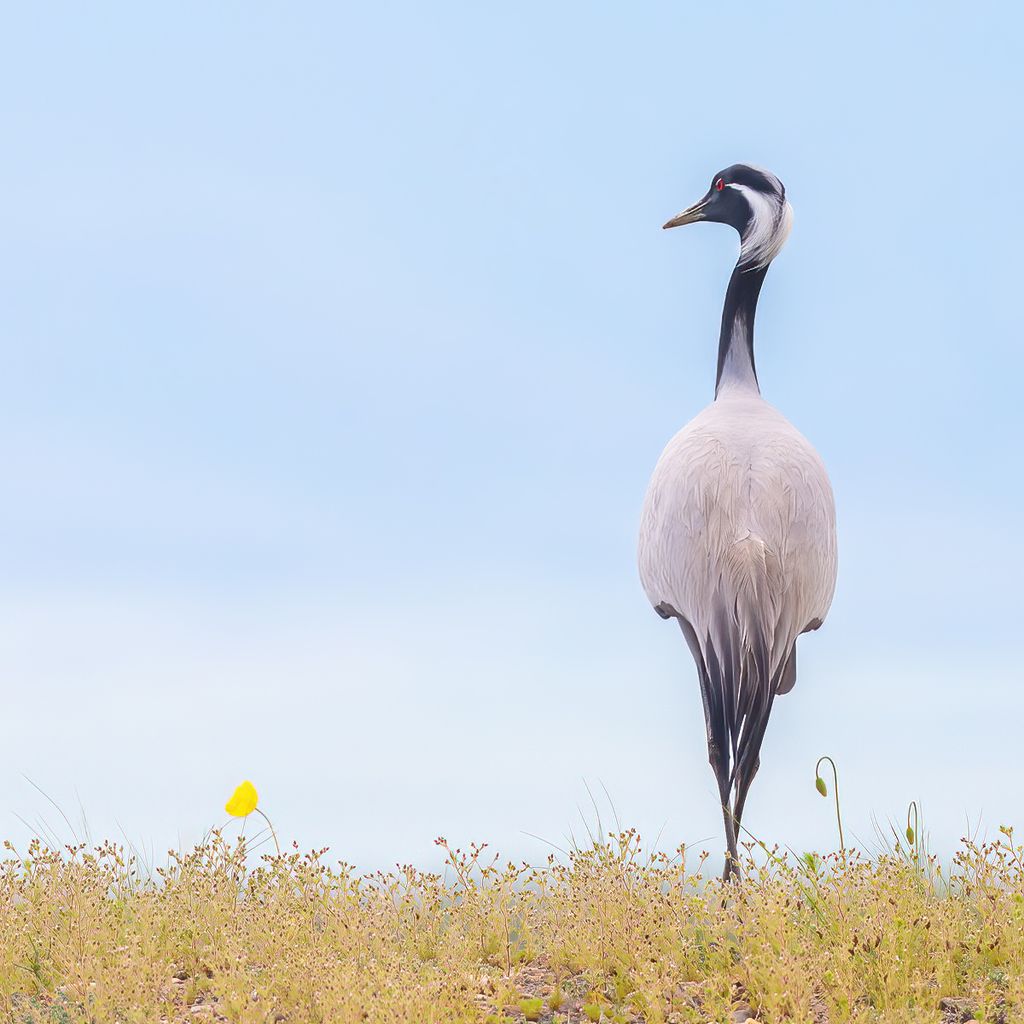
Photo: (c) egorbirder, some rights reserved (CC BY) · CC BY 4.0 (May be cropped or resized)
Grus virgo
Basic stats
Habitat
Open habitats with sparse vegetation, usually near water
Range
Central Eurasia from the Black Sea to Mongolia and northeast China; winters in Africa and the Indian subcontinent
Clutch size
Normally 2 eggs
Incubation period
27–29 days
Size
85–100cm
Wingspan
155–180cm
Weight
2–3kg
The demoiselle crane is the smallest crane, 85–100 centimetres long with a wingspan of 155–180 centimetres, weighing 2–3 kilograms. It is slightly smaller than the common crane and has similar plumage, but a long white stripe runs down the side of the neck and the black of the foreneck extends over the chest in a plume. Its trumpeting call is higher-pitched than the common crane's, and its dancing display is more balletic, with less leaping. (Wikipedia, general species account)
The species breeds in open, sparsely vegetated country, usually near water, from the Black Sea east to Mongolia and northeast China. It is migratory: birds from Mongolia and China winter in the Indian subcontinent, where they form large flocks on farmland and roost at night in shallow open water. Eggs are laid in April and May in a minimal nest on open ground; the usual clutch is two. Both sexes incubate for 27–29 days and the young fledge after 55–65 days. (Wikipedia, general species account)
Quick answers
- What habitat does the Demoiselle Crane live in?
- Open habitats with sparse vegetation, usually near water
- Where is the Demoiselle Crane found?
- Central Eurasia from the Black Sea to Mongolia and northeast China; winters in Africa and the Indian subcontinent
- How many eggs does the Demoiselle Crane lay?
- Normally 2 eggs
- How long are the eggs of the Demoiselle Crane incubated?
- 27–29 days
- How big is the Demoiselle Crane?
- 85–100cm
- What is the wingspan of the Demoiselle Crane?
- 155–180cm
- How much does the Demoiselle Crane weigh?
- 2–3kg