
 Wildlife
of Mongolia
Common Crane
Gruidae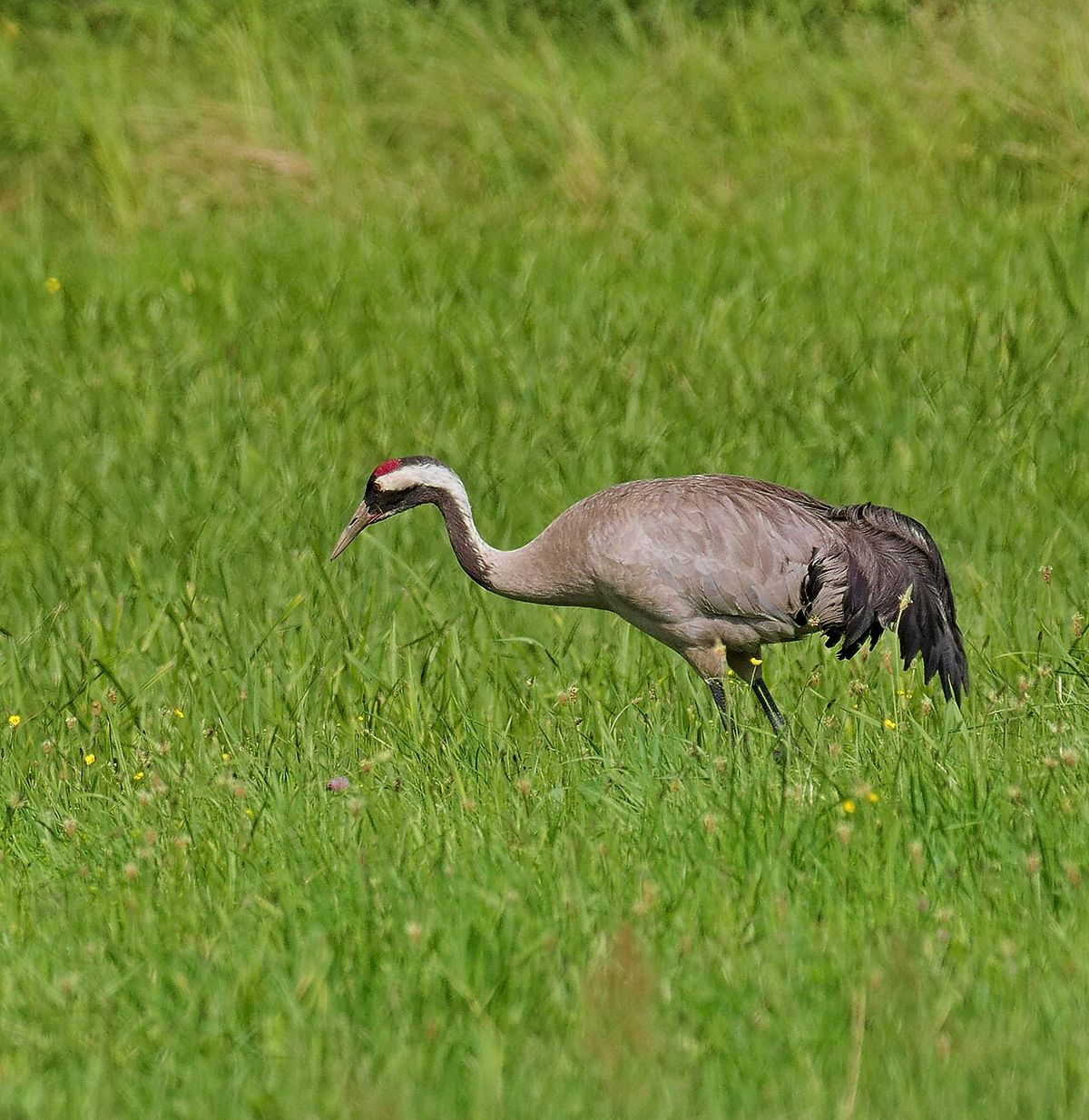
Photo: Andreas Eichler · CC BY-SA 4.0 (May be cropped or resized)
Grus grus
Basic stats
Diet
Omnivorous: roots, seeds, crops, invertebrates and small vertebrates
Habitat
Bogs, wooded swamps and wetlands; open fields in winter
Range
Breeds across Europe and northern Asia; winters farther south
The Common Crane is a tall, predominantly slate-grey crane with a blackish forehead and face, a bare red crown, and a white stripe running from behind the eye down the neck. Black flight feathers and elongated inner wing feathers create a dark, drooping rear profile when the bird is standing. Juveniles are browner and lack the vivid adult head pattern. Its loud trumpeting calls carry over long distances, and displaying birds leap and spread their wings in conspicuous dances. (Wikipedia, general species account)
Common Cranes breed in quiet bogs, wooded swamps and other wetlands, sometimes also using steppe or semi-desert where water is available. In winter they move into shallow flooded ground, meadows and cultivated country. They are omnivorous, eating roots, tubers, seeds and fruits as well as insects, worms, amphibians, rodents and other small animals. Migration connects breeding grounds across Europe and northern Asia with warmer winter areas, and travelling or feeding birds commonly occur in pairs, families or larger flocks. (Wikipedia, general species account)
Quick answers
- What does the Common Crane eat?
- Omnivorous: roots, seeds, crops, invertebrates and small vertebrates
- What habitat does the Common Crane live in?
- Bogs, wooded swamps and wetlands; open fields in winter
- Where is the Common Crane found?
- Breeds across Europe and northern Asia; winters farther south