
 Wildlife
of Mongolia
Peregrine Falcon
Falconidae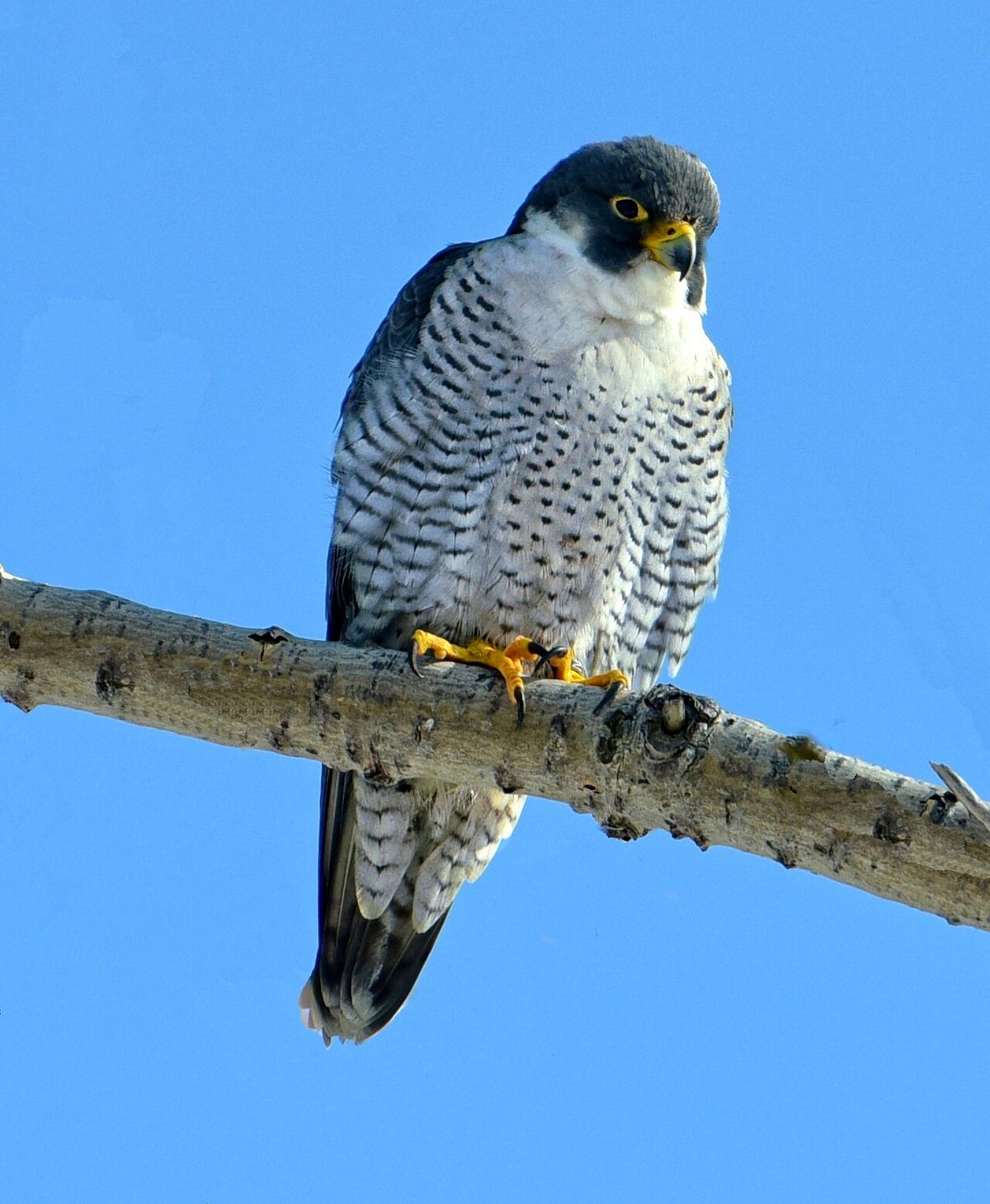
Photo: Mykola Swarnyk · CC BY-SA 3.0 (May be cropped or resized)
Falco peregrinus
Basic stats
Diet
Primarily medium-sized birds, including pigeons, waterfowl, songbirds, seabirds, and waders
Habitat
Open landscapes with elevated nesting sites, from Arctic tundra to tropical regions; also cities
Range
Nearly worldwide outside extreme polar regions, very high mountains, most tropical rainforest, and New Zealand
Size
34–58cm
Wingspan
74–120cm
Weight
Males 330–1,000g; females 700–1,500g
The Peregrine Falcon is a robust, pointed-winged raptor with a blue-grey to slate back, barred pale underparts, a black head, and a strong dark facial pattern. Adults measure 34–58 centimetres and span 74–120 centimetres. The sexes share similar markings, but females can be up to 30 percent larger: males weigh 330–1,000 grams and females 700–1,500 grams. Long, narrow wings and a barred, rounded tail create a distinctive fast-flying silhouette. (Wikipedia, Peregrine Falcon account)
Peregrines occur across an exceptionally broad global range, from Arctic tundra to the tropics, avoiding only a few extreme environments and land regions. They hunt chiefly birds, including pigeons, waterfowl, songbirds, seabirds, and waders, adjusting prey to local availability. A hunting bird may circle high before entering a steep, rapid stoop and striking airborne quarry. Both parents provision the nestlings; young fledge 42–46 days after hatching and may continue depending on their parents for as long as two months. (Wikipedia, Peregrine Falcon account)
Quick answers
- What does the Peregrine Falcon eat?
- Primarily medium-sized birds, including pigeons, waterfowl, songbirds, seabirds, and waders
- What habitat does the Peregrine Falcon live in?
- Open landscapes with elevated nesting sites, from Arctic tundra to tropical regions; also cities
- Where is the Peregrine Falcon found?
- Nearly worldwide outside extreme polar regions, very high mountains, most tropical rainforest, and New Zealand
- How big is the Peregrine Falcon?
- 34–58cm
- What is the wingspan of the Peregrine Falcon?
- 74–120cm
- How much does the Peregrine Falcon weigh?
- Males 330–1,000g; females 700–1,500g