
 Wildlife
of Mongolia
Gyrfalcon
Falconidae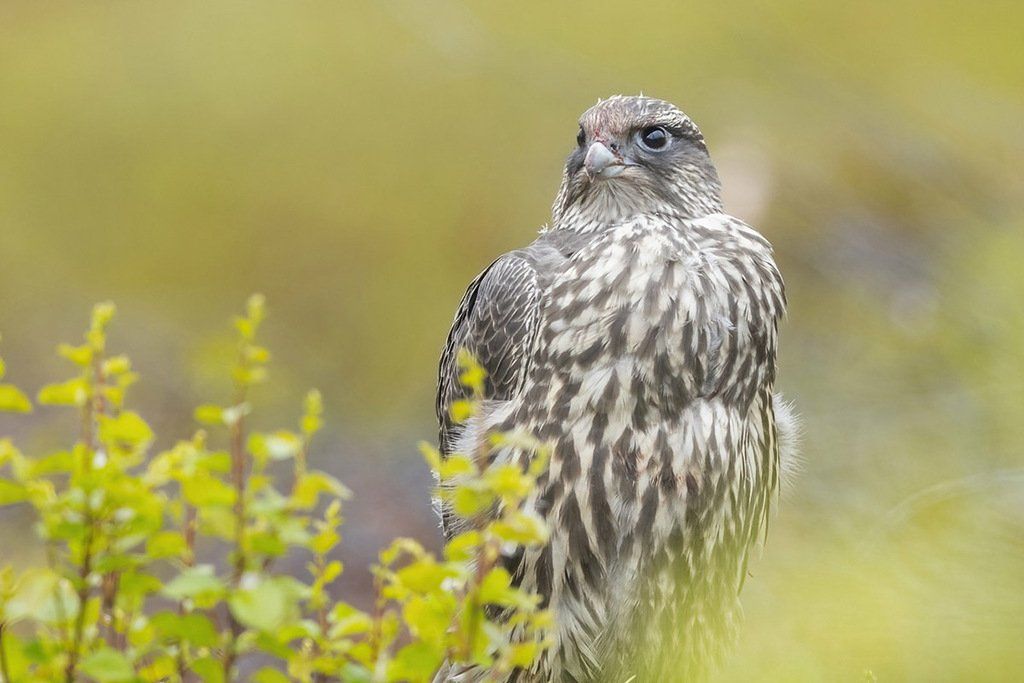
Photo: (c) egorbirder, some rights reserved (CC BY) · CC BY 4.0 (May be cropped or resized)
Falco rusticolus
Basic stats
Diet
Mostly ptarmigan, ground squirrels, hares, and other birds
Habitat
Arctic tundra cliffs, coasts, and open foraging country
Range
Holarctic, mainly north of 60 degrees
Clutch size
2–7 eggs; average 4
Incubation period
About 35 days
Size
Male about 53cm; female about 56cm
Weight
Male 800–1,300g; female 1,400–2,100g
The Gyrfalcon is the world’s largest falcon, with males averaging about 53 centimetres and 800–1,300 grams, while females average 56 centimetres and 1,400–2,100 grams. It occurs in white, grey, and dark colour forms. Like other falcons it has pointed wings, a long tail, and a notched bill, but its broad wings and great size are distinctive. On a perched bird the folded wings reach only about two-thirds down the tail. Adults have yellow cere, eye-rings, and legs; these parts are bluish in juveniles. (Animal Diversity Web account)
This Holarctic raptor inhabits Arctic tundra, usually nesting on tall cliffs while hunting over open tundra, beaches, and coasts. It seldom builds a nest, instead occupying a sheltered cliff ledge or sometimes an old raven nest. The usual clutch averages four eggs within a range of two to seven, and incubation lasts about 35 days. Gyrfalcons hunt through powerful, low coursing flights and extended tail chases. Ptarmigan, ground squirrels, and Arctic hares dominate by biomass, supplemented by ducks, small birds, mice, and voles. (Animal Diversity Web account)
Quick answers
- What does the Gyrfalcon eat?
- Mostly ptarmigan, ground squirrels, hares, and other birds
- What habitat does the Gyrfalcon live in?
- Arctic tundra cliffs, coasts, and open foraging country
- Where is the Gyrfalcon found?
- Holarctic, mainly north of 60 degrees
- How many eggs does the Gyrfalcon lay?
- 2–7 eggs; average 4
- How long are the eggs of the Gyrfalcon incubated?
- About 35 days
- How big is the Gyrfalcon?
- Male about 53cm; female about 56cm
- How much does the Gyrfalcon weigh?
- Male 800–1,300g; female 1,400–2,100g