
 Wildlife
of Mongolia
Eastern Spot-billed Duck
Anatidae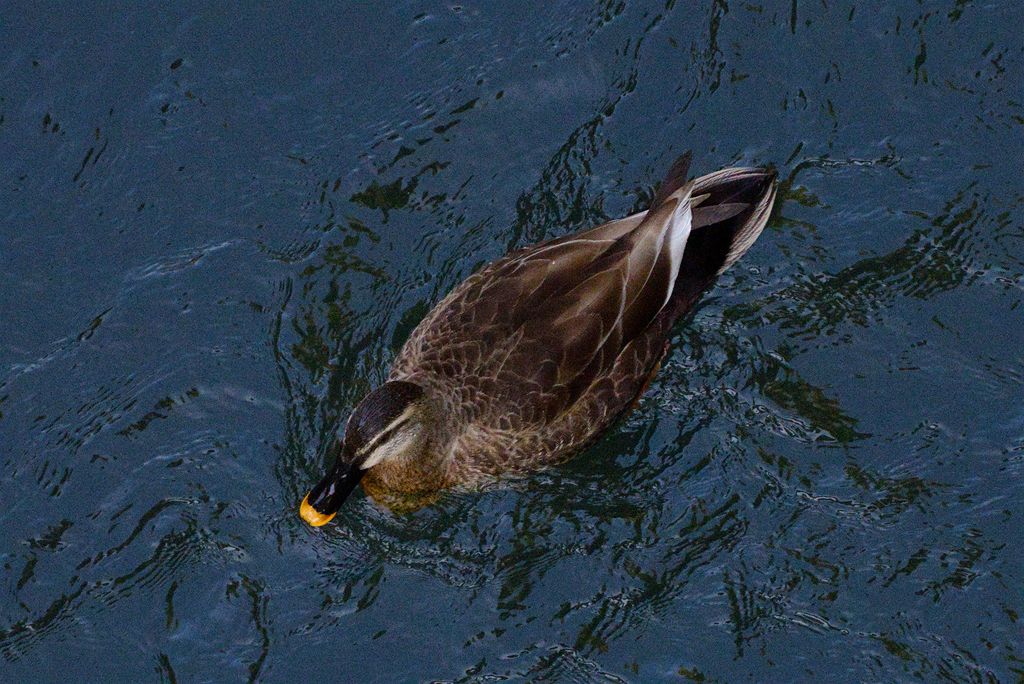
Photo: (c) Liem Malarney, some rights reserved (CC BY) · CC BY 4.0 (May be cropped or resized)
Anas zonorhyncha
Basic stats
Diet
Mainly plant food taken by dabbling
Habitat
Freshwater lakes and marshes in open country
Range
East and Southeast Asia
Clutch size
Usually 7–9 eggs
Incubation period
About 24 days
Size
55–63 cm
Wingspan
83–95 cm
Weight
790–1,500 g
The eastern spot-billed duck is a mallard-sized dabbling duck with a long neck, a scaled pattern across the grey body and a blue wing speculum. Its head and neck are paler than the body, while the black bill ends in the bright yellow spot that supplies the common name. Adults measure about fifty-five to sixty-three centimetres long, span eighty-three to ninety-five centimetres, and weigh roughly 790 to 1,500 grams. Males and females are broadly similar compared with many strongly dimorphic ducks. (Wikipedia, general species account)
This species breeds in East and Southeast Asia and occupies freshwater lakes and marshes in fairly open country. It feeds mainly on plant material by dabbling, with much feeding done in the evening or at night. Breeding timing varies with rainfall and water conditions but generally falls between April and July. The nest is concealed in vegetation on the ground near water. A normal clutch contains seven to nine eggs; incubation starts after the final egg is laid, synchronising hatching about twenty-four days later. (Wikipedia, general species account)
Quick answers
- What does the Eastern Spot-billed Duck eat?
- Mainly plant food taken by dabbling
- What habitat does the Eastern Spot-billed Duck live in?
- Freshwater lakes and marshes in open country
- Where is the Eastern Spot-billed Duck found?
- East and Southeast Asia
- How many eggs does the Eastern Spot-billed Duck lay?
- Usually 7–9 eggs
- How long are the eggs of the Eastern Spot-billed Duck incubated?
- About 24 days
- How big is the Eastern Spot-billed Duck?
- 55–63 cm
- What is the wingspan of the Eastern Spot-billed Duck?
- 83–95 cm
- How much does the Eastern Spot-billed Duck weigh?
- 790–1,500 g