
 Wildlife
of Mongolia
Common Merganser
Anatidae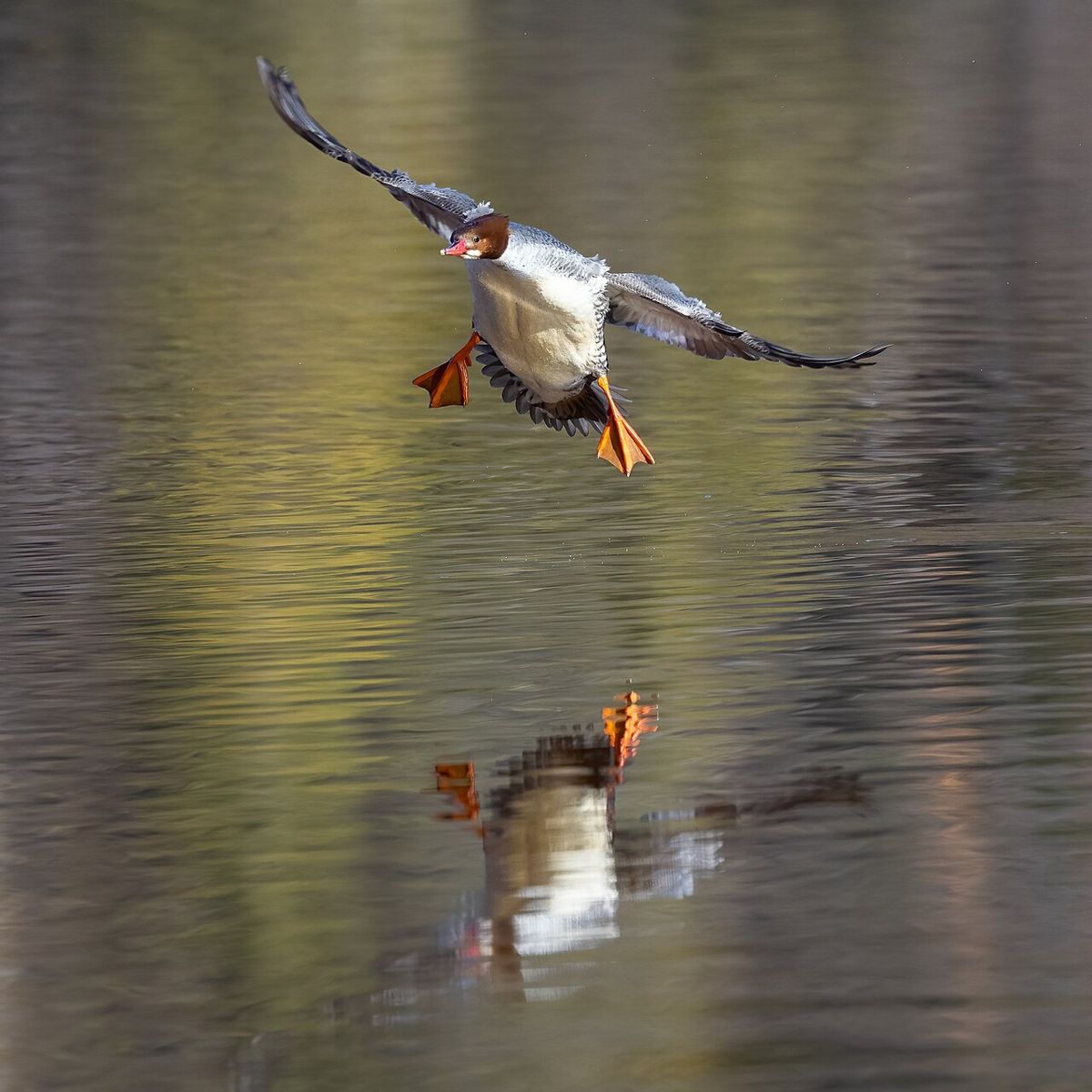
Photo: Frank Schulenburg · CC BY-SA 4.0 (May be cropped or resized)
Mergus merganser
Basic stats
Diet
Mainly fish; also aquatic invertebrates and amphibians
Habitat
Rivers and lakes in forested country
Range
Europe, Asia and North America
Clutch size
6–17 eggs
Size
58–72cm
Wingspan
78–97cm
Weight
0.9–2.1kg
The common merganser is a large diving duck, measuring 58–72 centimetres long and spanning 78–97 centimetres across the wings. Breeding males have a white body, sometimes washed salmon-pink, an iridescent green-black head, and contrasting grey rump and tail. Females and eclipse males are mainly grey with a reddish-brown head and white chin. Both sexes have a long, narrow bill with serrated edges that grip slippery prey, giving mergansers the name sawbills. (Wikipedia, general species account)
Across its range, the species occupies rivers and lakes in forested parts of Europe, Asia and North America. It dives mainly for fish but also takes molluscs, crustaceans, worms, insect larvae and amphibians. Birds may cooperate by forming a semicircle that drives fish into shallow water. Nests are usually in tree cavities, though Central Asian birds also use holes in cliffs and steep banks. A female lays six to seventeen eggs and raises one brood in a season. (Wikipedia, general species account)
Quick answers
- What does the Common Merganser eat?
- Mainly fish; also aquatic invertebrates and amphibians
- What habitat does the Common Merganser live in?
- Rivers and lakes in forested country
- Where is the Common Merganser found?
- Europe, Asia and North America
- How many eggs does the Common Merganser lay?
- 6–17 eggs
- How big is the Common Merganser?
- 58–72cm
- What is the wingspan of the Common Merganser?
- 78–97cm
- How much does the Common Merganser weigh?
- 0.9–2.1kg