
 Wildlife
of Mongolia
White-throated Bush Chat
Muscicapidae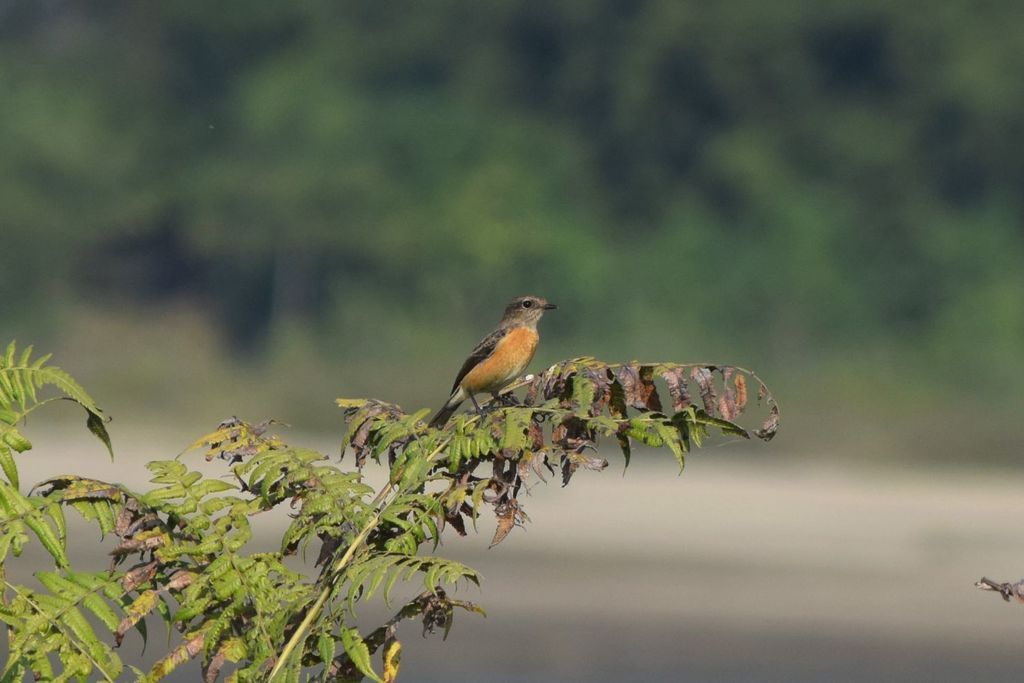
Photo: (c) Rohit, some rights reserved (CC BY-SA) · CC BY-SA 4.0 (May be cropped or resized)
Saxicola insignis
Basic stats
Diet
Invertebrates, mainly insects collected from the ground
Habitat
Alpine and subalpine zone at 2,000–3,100m, with stream gullies, bare rocks and scattered stones
Range
Breeds in eastern Kazakhstan, the extreme south of Russia (Altai) and western Mongolia; winters mainly in northern India and Nepal
The white-throated bush chat, also called Hodgson's bushchat, is larger than every other chat of the genus Saxicola. In plumage it resembles the Siberian stonechat but exceeds it in body length by 3.5–4.5 centimetres and has a proportionally longer tail. The sexes differ. The male has the head and upperparts black, with a white chin and throat, and the throat patch joins extensive white areas on the sides of the neck, one of the features that separate it from the Siberian stonechat. The contact call is a metallic tek-tek-tek, and the song is described as attractive, sweet but monotonous. (Polish Wikipedia, general species account)
It breeds in eastern Kazakhstan, the extreme south of Russia in the Altai and western Mongolia, and winters mainly in northern India and Nepal. In its breeding area it lives in the alpine and subalpine zone at 2,000–3,100 metres, favouring stream gullies, bare rocks and scattered stones, and perches on rocks or on shrub tops such as dwarf willow and dwarf birch. Birds nest from June to July in small colonies of two to ten pairs, and the diet is invertebrates, mainly insects collected from the ground. (Polish Wikipedia, general species account)
Quick answers
- What does the White-throated Bush Chat eat?
- Invertebrates, mainly insects collected from the ground
- What habitat does the White-throated Bush Chat live in?
- Alpine and subalpine zone at 2,000–3,100m, with stream gullies, bare rocks and scattered stones
- Where is the White-throated Bush Chat found?
- Breeds in eastern Kazakhstan, the extreme south of Russia (Altai) and western Mongolia; winters mainly in northern India and Nepal