
 Wildlife
of Mongolia
Common Nightingale
Muscicapidae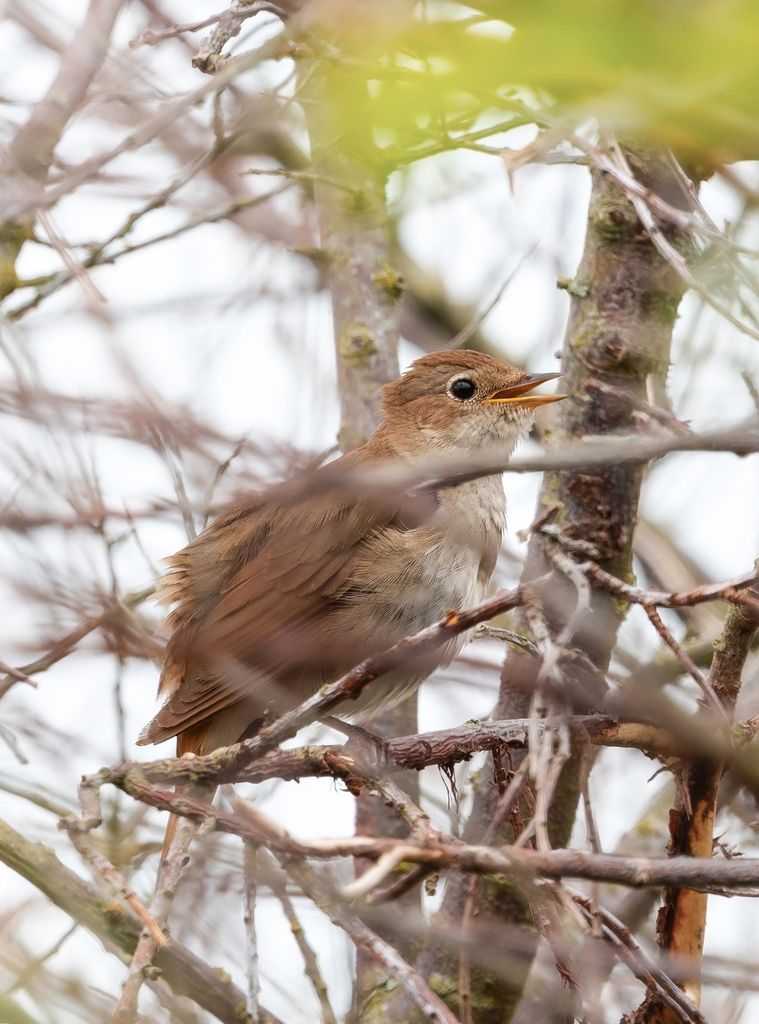
Photo: (c) Олеся, some rights reserved (CC BY) · CC BY 4.0 (May be cropped or resized)
Luscinia megarhynchos
Basic stats
Diet
Insects, larvae, spiders, worms, berries, and other fruit
Habitat
Dense low thickets and young woodland with bare ground beneath
Range
Central and southern Europe and central Asia; winters in northern and central Africa
Clutch size
4–5 eggs
Incubation period
13–14 days
Size
14–17cm
Wingspan
20–24cm
Weight
18–23g
The Common Nightingale is a compact, rather plain songbird, 14–17 centimetres long and weighing 18–23 grams. Its upperparts are brown, its underparts become paler, and its broad tail is conspicuously chestnut. Large black eyes have a narrow white ring. Males and females look similar, although males tend to be slightly larger and have broader wingspans. The modest plumage contrasts with the male's exceptionally varied song, which can contain roughly 180–260 different song types. (Animal Diversity Web, Common Nightingale account)
Common Nightingales occupy dense low thickets and young woodland where cover stands above patches of bare ground. They forage mainly on the ground for beetles, ants, insect larvae, spiders, and worms, adding berries and other fruit in autumn. The species breeds from May into June. Females place nests among twigs in dense shrubs and build them from dried leaves and grass. A clutch contains four or five eggs, incubated by the female for 13–14 days; both parents feed and protect the nestlings. (Animal Diversity Web, Common Nightingale account)
Quick answers
- What does the Common Nightingale eat?
- Insects, larvae, spiders, worms, berries, and other fruit
- What habitat does the Common Nightingale live in?
- Dense low thickets and young woodland with bare ground beneath
- Where is the Common Nightingale found?
- Central and southern Europe and central Asia; winters in northern and central Africa
- How many eggs does the Common Nightingale lay?
- 4–5 eggs
- How long are the eggs of the Common Nightingale incubated?
- 13–14 days
- How big is the Common Nightingale?
- 14–17cm
- What is the wingspan of the Common Nightingale?
- 20–24cm
- How much does the Common Nightingale weigh?
- 18–23g