
 Wildlife
of Mongolia
Sanderling
Scolopacidae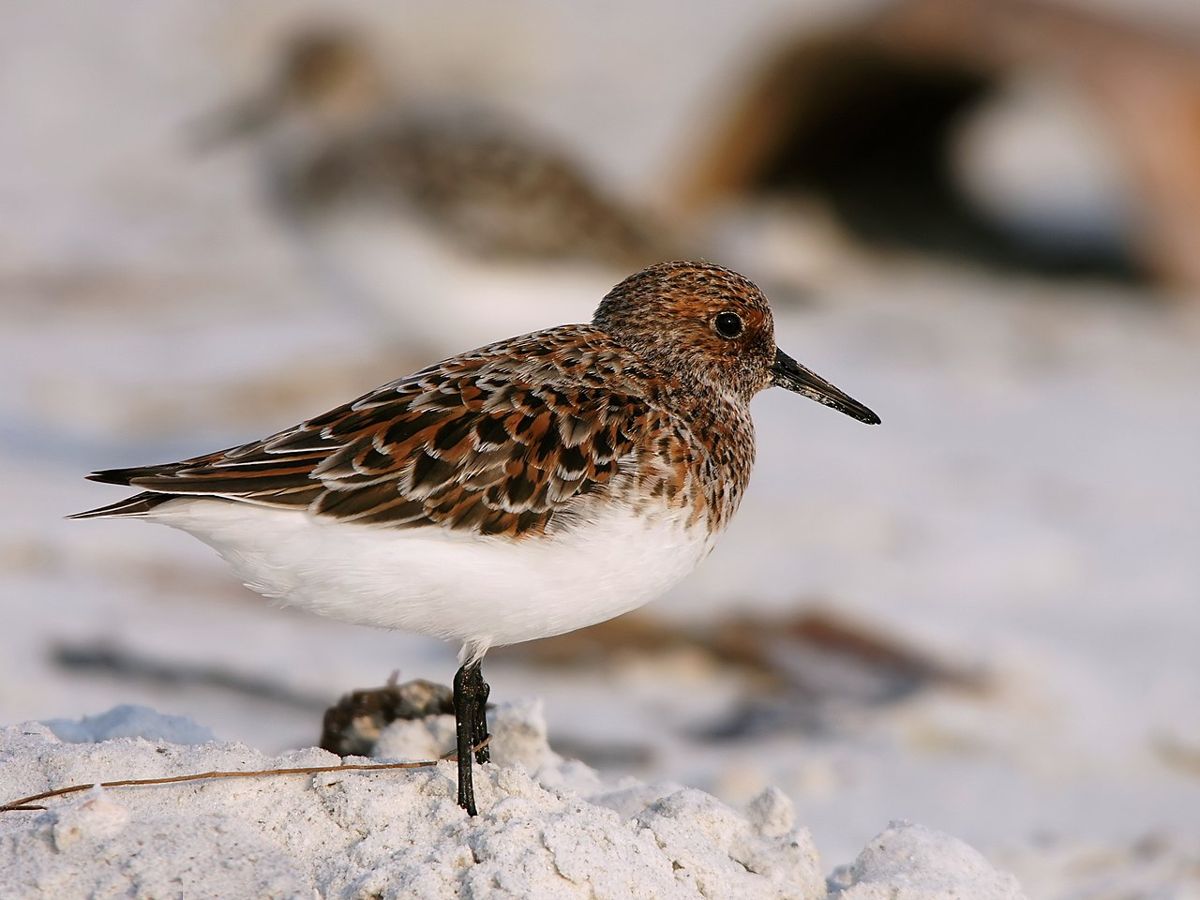
Photo: Hans Hillewaert · CC BY-SA 4.0 (May be cropped or resized)
Calidris alba
Basic stats
Diet
Small invertebrates; insects and some plant material on breeding grounds
Habitat
High-Arctic tundra when breeding; coastal mudflats and sandy beaches outside breeding
Range
Circumpolar Arctic breeder; winters south to South America, Europe, Africa and Australia
Clutch size
3–4 eggs
The sanderling is a small, compact wader with a relatively stout body and thick bill. Unlike most small sandpipers it lacks a hind toe, a structural feature once used to place it in the separate genus Crocethia. A strong white wing-bar is conspicuous in flight. On shore, its rapid leg action and repeated short runs give it a distinctive appearance as it follows retreating waves and pauses to pick food from exposed sand. (Wikipedia, general species account)
Across its range, the species breeds on very cold High-Arctic tundra and migrates long distances to coasts much farther south. Wintering birds can gather in large flocks on sandy beaches and coastal mudflats. They take small crabs and other invertebrates, while birds on the nesting grounds also eat insects and some plant material. Eggs are laid in a shallow ground scrape after arrival in late May or early June, with clutches containing three or four eggs. (Wikipedia, general species account)
Quick answers
- What does the Sanderling eat?
- Small invertebrates; insects and some plant material on breeding grounds
- What habitat does the Sanderling live in?
- High-Arctic tundra when breeding; coastal mudflats and sandy beaches outside breeding
- Where is the Sanderling found?
- Circumpolar Arctic breeder; winters south to South America, Europe, Africa and Australia
- How many eggs does the Sanderling lay?
- 3–4 eggs