 Wildlife
of Mongolia
Eurasian Woodcock
Scolopacidae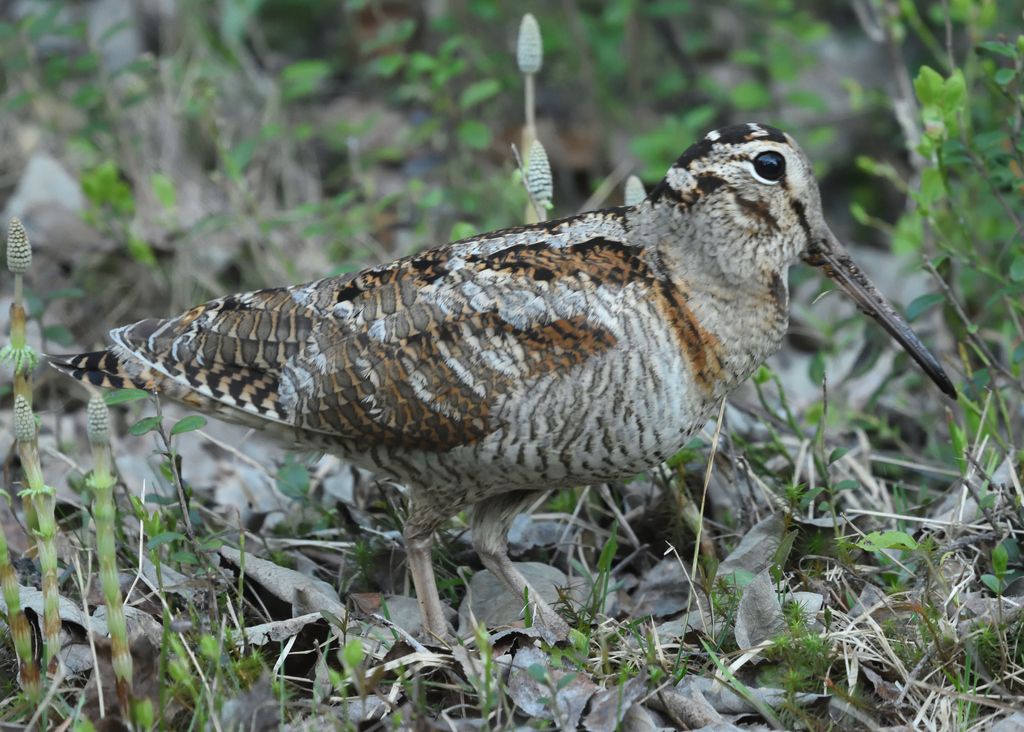
Photo: (c) Guy Babineau, some rights reserved (CC BY) · CC BY 4.0 (May be cropped or resized)
Scolopax rusticola
Basic stats
Diet
Mainly earthworms; also insects, larvae, freshwater molluscs and some seeds
Habitat
Broadleaved or mixed woodland with dense undergrowth and damp feeding areas
Range
Temperate and subarctic Eurasia
Clutch size
1–2 eggs
Incubation period
21–24 days
The Eurasian woodcock is a medium-small woodland wader patterned in reddish brown and buff, giving it effective camouflage among dead leaves. Broad black bars cross the crown, unlike the lengthwise head stripes of snipes. Its long, straight and sensitive bill probes soft soil, while large eyes set high and far back on the head provide an exceptionally broad field of view. Rounded wings and a short body complete a shape adapted to manoeuvring through woodland rather than open shorelines. (Wikipedia, general species account)
Woodcock rest by day in woodland cover and commonly feed in damp ground or pasture, probing mainly for earthworms but also taking insects, larvae, freshwater molluscs and seeds. Frozen soil can sharply restrict access to food. In spring, males perform a dusk display flight called roding. The female nests on the ground in low woodland vegetation and incubates one or two eggs for twenty-one to twenty-four days; the precocial chicks leave the lined scrape soon after hatching. (Wikipedia, general species account)
Quick answers
- What does the Eurasian Woodcock eat?
- Mainly earthworms; also insects, larvae, freshwater molluscs and some seeds
- What habitat does the Eurasian Woodcock live in?
- Broadleaved or mixed woodland with dense undergrowth and damp feeding areas
- Where is the Eurasian Woodcock found?
- Temperate and subarctic Eurasia
- How many eggs does the Eurasian Woodcock lay?
- 1–2 eggs
- How long are the eggs of the Eurasian Woodcock incubated?
- 21–24 days