
 Wildlife
of Mongolia
Pectoral Sandpiper
Scolopacidae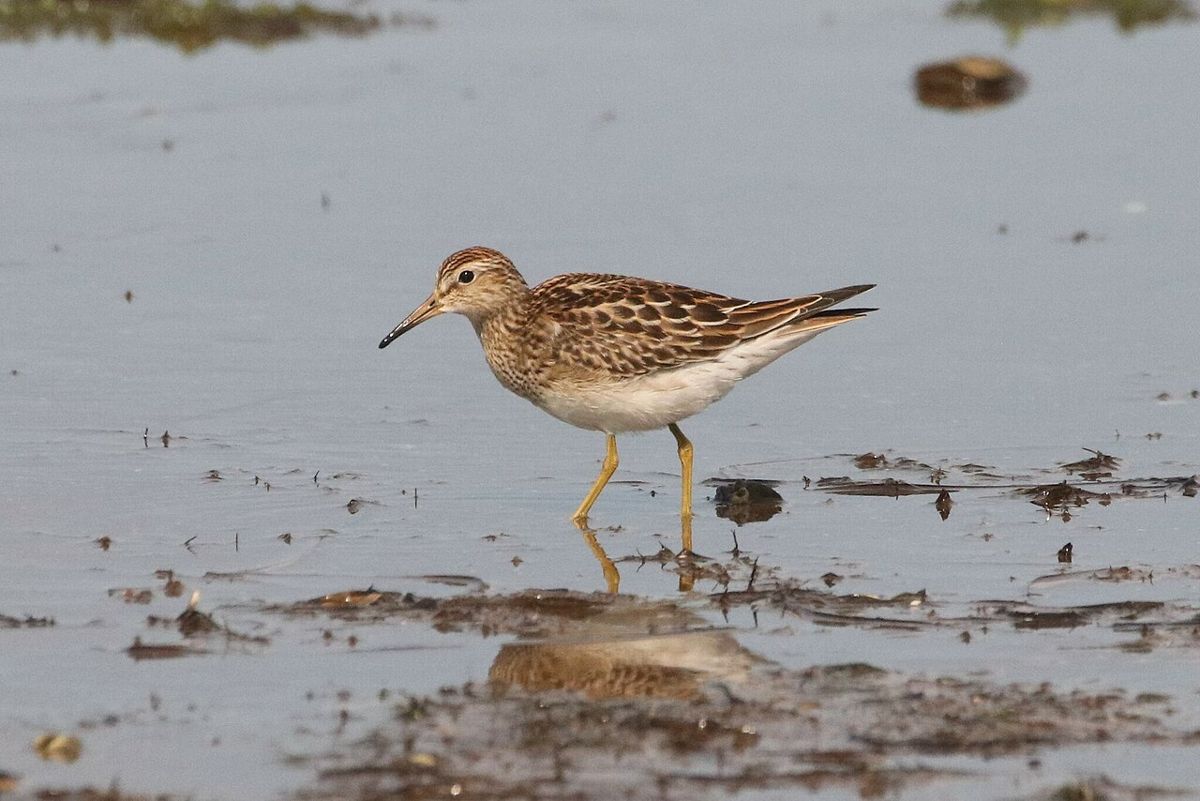
Photo: scaup · CC BY 4.0 (May be cropped or resized)
Calidris melanotos
Basic stats
Diet
Arthropods, other invertebrates and seeds
Habitat
Boggy tundra when breeding; freshwater habitats on migration and in winter
Range
Breeds in Arctic Asia and North America; winters mainly in South America, with some Asian birds reaching Oceania
Clutch size
4 eggs
Size
19–23cm
Wingspan
37–46cm
Weight
31–126g
The pectoral sandpiper is a medium-sized Calidris wader, measuring nineteen to twenty-three centimetres long with a thirty-seven to forty-six centimetre wingspan. Its back is grey-brown, becoming browner in breeding males and greyer in winter. The grey breast ends in a conspicuously sharp boundary above a white belly, the feature behind its English name. Yellowish legs, an olive bill with a dark tip, a weak eyebrow and relatively subdued crown help separate it from the similar sharp-tailed sandpiper. (Wikipedia, general species account)
This long-distance migrant breeds on boggy tundra in northern Asia and from Alaska into central Canada. Most Asian and American birds winter in South America, although some Asian breeders travel to Australia and New Zealand. During migration and winter it generally uses freshwater habitats, feeding on grassland and mudflats by sight or by probing. Its food includes flies and their larvae, spiders, crustaceans, other invertebrates and seeds. The female places four eggs in a deeply lined ground scrape that reduces heat loss in Arctic winds. (Wikipedia, general species account)
Quick answers
- What does the Pectoral Sandpiper eat?
- Arthropods, other invertebrates and seeds
- What habitat does the Pectoral Sandpiper live in?
- Boggy tundra when breeding; freshwater habitats on migration and in winter
- Where is the Pectoral Sandpiper found?
- Breeds in Arctic Asia and North America; winters mainly in South America, with some Asian birds reaching Oceania
- How many eggs does the Pectoral Sandpiper lay?
- 4 eggs
- How big is the Pectoral Sandpiper?
- 19–23cm
- What is the wingspan of the Pectoral Sandpiper?
- 37–46cm
- How much does the Pectoral Sandpiper weigh?
- 31–126g