
 Wildlife
of Mongolia
Pied Avocet
Recurvirostridae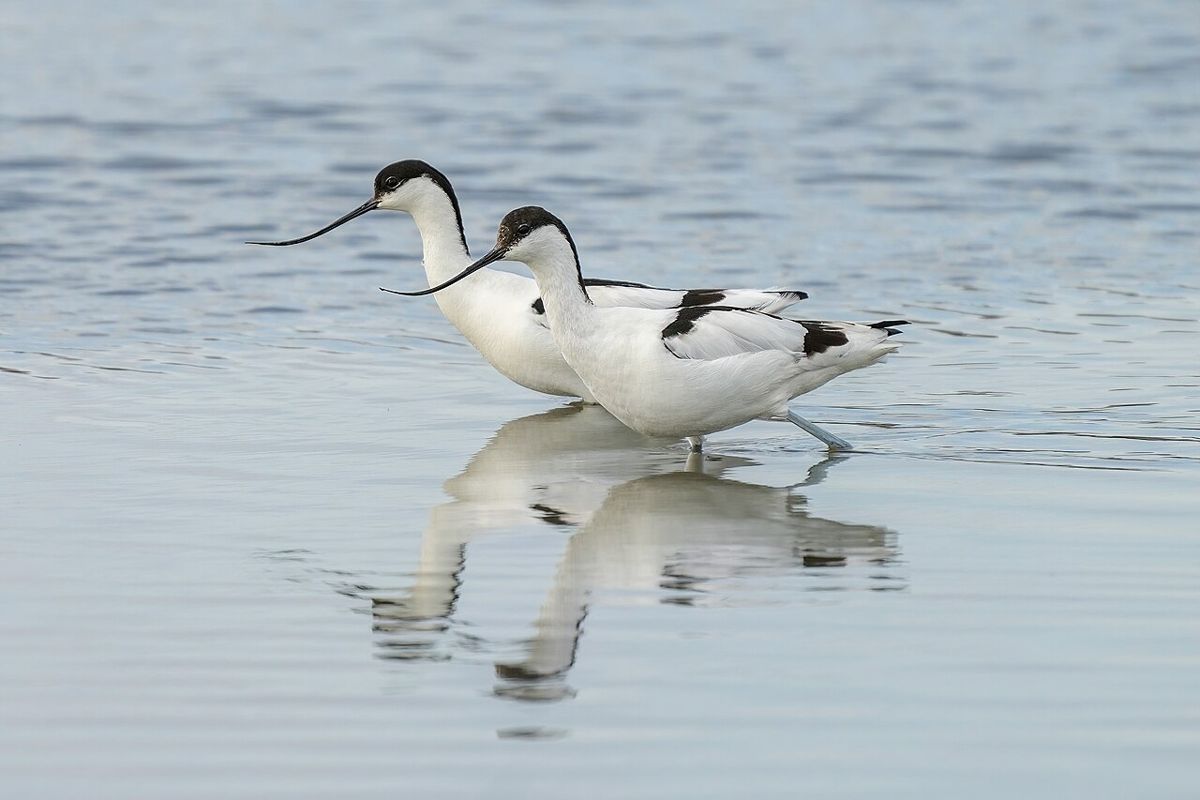
Photo: Giles Laurent · CC BY-SA 4.0 (May be cropped or resized)
Recurvirostra avosetta
Basic stats
Diet
Small aquatic invertebrates, including worms, crustaceans and molluscs
Habitat
Shallow coastal lagoons, saltmarshes and mudflats
Range
Europe, central Asia, the Indian subcontinent and Africa
Clutch size
Usually 4 eggs
The Pied Avocet is an unmistakable black-and-white wader with very long legs and a slender bill curved strongly upward. Its bold plumage, upright stance and sweeping bill action separate it readily from most other shorebirds. The scientific genus name refers directly to the backward-curving bill. It is a relatively large wader, and both its proportions and contrasting pattern remain conspicuous at distance. The sexes are broadly similar, though bill shape may differ subtly between them. (Wikipedia, general species account)
Pied Avocets feed in shallow water and on mudflats, using the upcurved bill to collect small bottom-living invertebrates such as annelid worms, crustaceans and molluscs. They often breed colonially on bare islets or dikes close to water, placing a simple scrape on the ground and usually laying four eggs. Adults defend chicks vigorously. The broad range extends through western Europe and central Asia to the Indian subcontinent and Africa; some populations migrate south, while others remain resident. (Wikipedia, general species account)
Quick answers
- What does the Pied Avocet eat?
- Small aquatic invertebrates, including worms, crustaceans and molluscs
- What habitat does the Pied Avocet live in?
- Shallow coastal lagoons, saltmarshes and mudflats
- Where is the Pied Avocet found?
- Europe, central Asia, the Indian subcontinent and Africa
- How many eggs does the Pied Avocet lay?
- Usually 4 eggs