
 Wildlife
of Mongolia
Mistle Thrush
Turdidae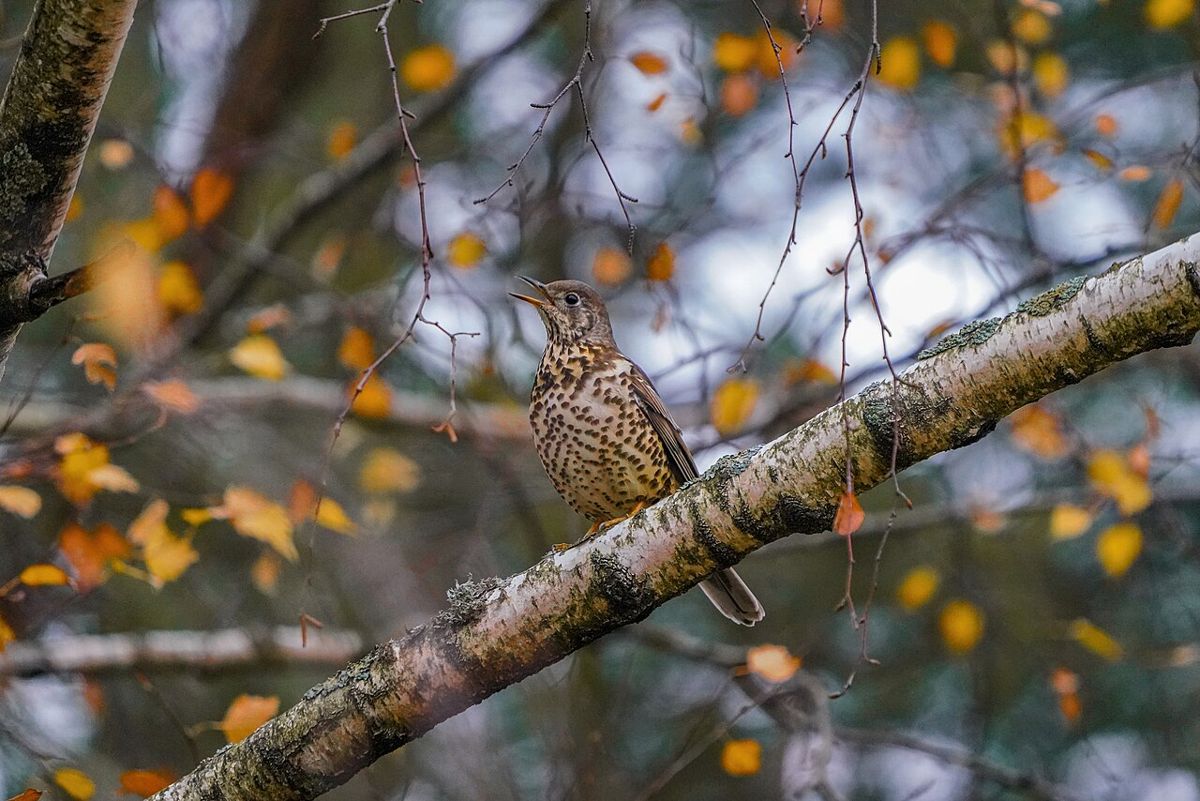
Photo: Giles Laurent · CC BY-SA 4.0 (May be cropped or resized)
Turdus viscivorus
Basic stats
Diet
Invertebrates, seeds, and berries including mistletoe, holly, rowan, and yew
Habitat
Open woodland, plantations, hedges, parks, cultivated land, and upland conifer forest
Range
Europe, temperate Asia, and North Africa
Clutch size
Usually 3–5 eggs
Incubation period
12–15 days
The Mistle Thrush is a large thrush with pale grey-brown upperparts, a grey-white chin and throat, and bold black spotting across pale yellowish and off-white underparts. Males and females look alike, and the recognised subspecies differ only slightly. The male's loud, carrying song consists of measured fluted phrases and may be delivered in wet, windy weather, inspiring the traditional name stormcock. Its main alarm or excitement call is a dry, rattling chatter, quite unlike the more musical song. (Wikipedia, Mistle Thrush account)
This thrush ranges through Europe, temperate Asia, and North Africa, using open woods, conifer forest, plantations, hedges, farmland, and urban parks. Northern and eastern birds migrate south, often in small groups. It eats invertebrates, seeds, and berries, especially mistletoe, holly, rowan, and yew, and may vigorously defend a fruiting tree in winter. The open cup nest sits against a trunk or branch fork. Three to five eggs are incubated mainly by the female for 12–15 days. (Wikipedia, Mistle Thrush account)
Quick answers
- What does the Mistle Thrush eat?
- Invertebrates, seeds, and berries including mistletoe, holly, rowan, and yew
- What habitat does the Mistle Thrush live in?
- Open woodland, plantations, hedges, parks, cultivated land, and upland conifer forest
- Where is the Mistle Thrush found?
- Europe, temperate Asia, and North Africa
- How many eggs does the Mistle Thrush lay?
- Usually 3–5 eggs
- How long are the eggs of the Mistle Thrush incubated?
- 12–15 days