
 Wildlife
of Mongolia
Fieldfare
Turdidae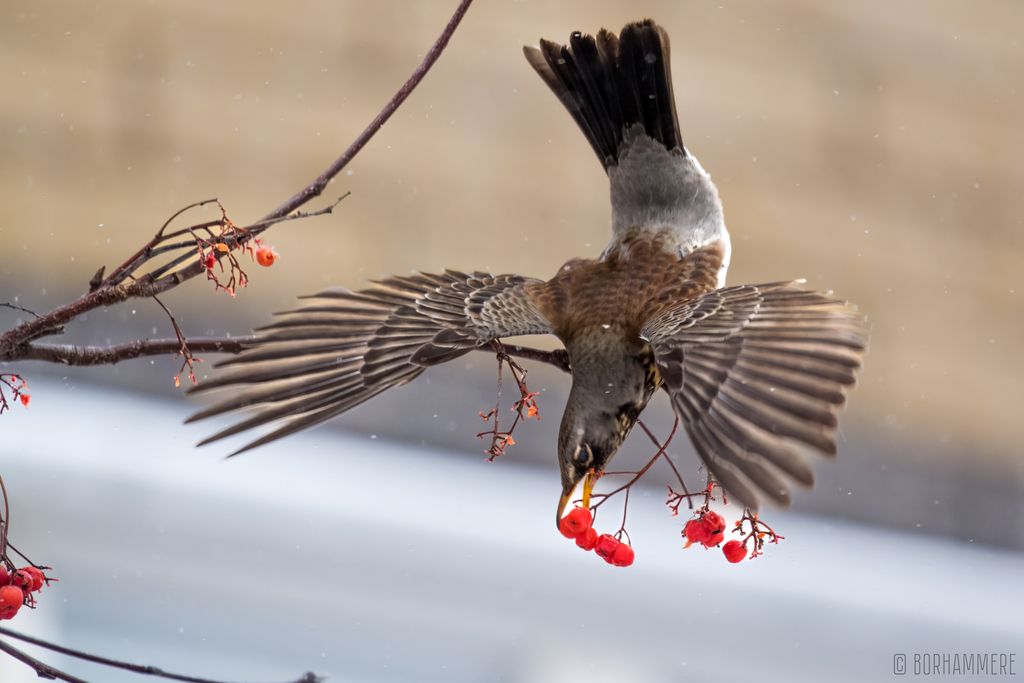
Photo: (c) Шальнов Кирилл, some rights reserved (CC BY) · CC BY 4.0 (May be cropped or resized)
Turdus pilaris
Basic stats
Diet
Molluscs, insects and earthworms in summer; berries, grain and seeds in winter
Habitat
Woodland and scrub; nests in trees, often in small colonies
Range
Breeds in northern Europe and across the Palearctic; winters in the United Kingdom, southern Europe, North Africa and the Middle East
Clutch size
5–6 eggs
The fieldfare is easily recognised by its slate-grey head, nape and rump, dark brown back, blackish tail and boldly speckled breast. In flight the white underwing-coverts and axillaries are conspicuous, and the harsh flight call, tsak tsak, is also distinctive. The male's forehead and crown are bluish-grey with a brownish-black band down the centre of each feather, the lores and under-eye regions are black, and there are faint pale streaks above the eyes. (Wikipedia, general species account)
It breeds in woodland and scrub in northern Europe and across the Palearctic and is strongly migratory, with many northern birds moving south in winter, when it is found in large numbers in the United Kingdom, southern Europe, North Africa and the Middle East. It is omnivorous, eating molluscs, insects and earthworms in summer and berries, grain and seeds in winter. Fieldfares often nest in small colonies, possibly for protection from predators, building the nest in a tree where five or six eggs are laid. (Wikipedia, general species account)
Quick answers
- What does the Fieldfare eat?
- Molluscs, insects and earthworms in summer; berries, grain and seeds in winter
- What habitat does the Fieldfare live in?
- Woodland and scrub; nests in trees, often in small colonies
- Where is the Fieldfare found?
- Breeds in northern Europe and across the Palearctic; winters in the United Kingdom, southern Europe, North Africa and the Middle East
- How many eggs does the Fieldfare lay?
- 5–6 eggs